Michigan Franchisee and Franchisor Restaurant INSURANCE
OR call us: (214) 667-2729
Michigan's franchise restaurant scene is growing fast. The state ranks as the
7th best in the U.S. for franchise business growth, with projections to add 369 new establishments in 2026 alone. That kind of expansion means hundreds of new operators are signing franchise agreements, negotiating leases, and hiring staff, often for the first time. Every one of those steps creates insurance obligations that differ depending on whether you're the franchisor collecting royalties or the franchisee flipping burgers. Getting your coverage right from day one protects your investment, keeps you compliant with Michigan law, and prevents the kind of claim that can shut down a location overnight. Restaurant insurance for Michigan franchisees and franchisors isn't a one-size-fits-all product. It's a layered strategy built around your specific role in the franchise relationship, the risks your locations face, and the state regulations that apply to food service businesses. Understanding those layers is the difference between a policy that actually pays out and one that leaves you exposed when a grease fire or slip-and-fall lawsuit hits.
Core Insurance Requirements for Michigan Restaurant Brands
Every restaurant franchise operating in Michigan must satisfy a baseline set of insurance requirements before opening its doors. These requirements come from three directions: state law, your franchise agreement, and your landlord's lease. Missing any one of them can delay your opening, trigger a franchise default, or leave you personally liable for a claim. The smartest operators treat insurance as part of their pre-opening checklist, right alongside equipment installation and health department inspections.
Michigan Workers' Compensation Laws
Michigan requires workers' compensation coverage for nearly all employers, including restaurants. If you have even one employee who isn't a sole proprietor or partner, you need a policy. Penalties for non-compliance include fines up to $1,000 per day and personal liability for any workplace injuries. For a restaurant with line cooks, dishwashers, and servers handling hot oil and sharp knives, the exposure is real. Typical premiums for restaurant workers' comp in Michigan run between $2,500 and $8,000 annually per location, depending on payroll size and claims history. Installing fire suppression systems and maintaining ServSafe certifications for managers can help reduce those premiums over time.
General Liability vs. Liquor Liability in Michigan
General liability covers the basics: customer slip-and-falls, foodborne illness claims, and property damage caused by your operations. Most franchise agreements require a minimum of $1 million per occurrence and $2 million aggregate. But if your restaurant serves alcohol, general liability alone won't protect you. Michigan's Liquor Control Code holds licensees liable for damages caused by intoxicated patrons, and recent legislative efforts aim to preserve legal protections for licensed professionals in regulated industries. A separate liquor liability policy, sometimes called dram shop coverage, fills that gap. Expect to pay $2,500 to $6,000 annually for liquor liability, depending on your alcohol-to-food sales ratio.
Franchise Agreement Compliance Standards
Your franchise agreement almost certainly dictates minimum insurance requirements. These typically include general liability, property coverage, auto liability for delivery vehicles, and umbrella policies. Many franchisors also require you to name the franchisor as an additional insured on your policies. Failing to meet these requirements can trigger a default notice, and in serious cases, termination of your franchise agreement. Review your agreement's insurance exhibit carefully before purchasing any policy.

By: Dustin Hulett
Founder & CEO of Cuisine Coverage
Comparing Franchisor and Franchisee Coverage Needs
The franchisor and franchisee sit on opposite sides of the same risk equation. Franchisors face exposure from brand-wide lawsuits, intellectual property disputes, and vicarious liability claims tied to franchisee operations. Franchisees carry the day-to-day operational risks: kitchen fires, employee injuries, customer complaints, and delivery accidents. A franchisor's insurance program typically includes directors and officers coverage, errors and omissions, and a master liability policy. The franchisee's program focuses on location-specific risks. Understanding who is responsible for what prevents costly gaps and duplicate spending.
Comparison Chart: Liability Responsibilities
| Coverage Type | Franchisor Responsibility | Franchisee Responsibility |
|---|---|---|
| General Liability | Master policy for corporate acts | Location-specific policy required |
| Workers' Compensation | Corporate employees only | All location employees |
| Property Insurance | Corporate offices/warehouses | Restaurant premises and equipment |
| Liquor Liability | Not typically carried | Required if serving alcohol |
| Umbrella/Excess | $5M-$10M typical | $1M-$5M typical |
| Cyber Liability | Brand-wide data systems | Local POS and ordering platforms |
| EPLI | Corporate HR claims | Location-level employment claims |
Protecting Physical Assets and Revenue Streams
A single kitchen fire can destroy $200,000 worth of commercial equipment in minutes. Flood damage from a burst pipe can close a location for weeks. Your property and revenue protection strategy needs to account for both the physical assets inside your restaurant and the income you lose while repairs happen.
Commercial Property and Equipment Breakdown
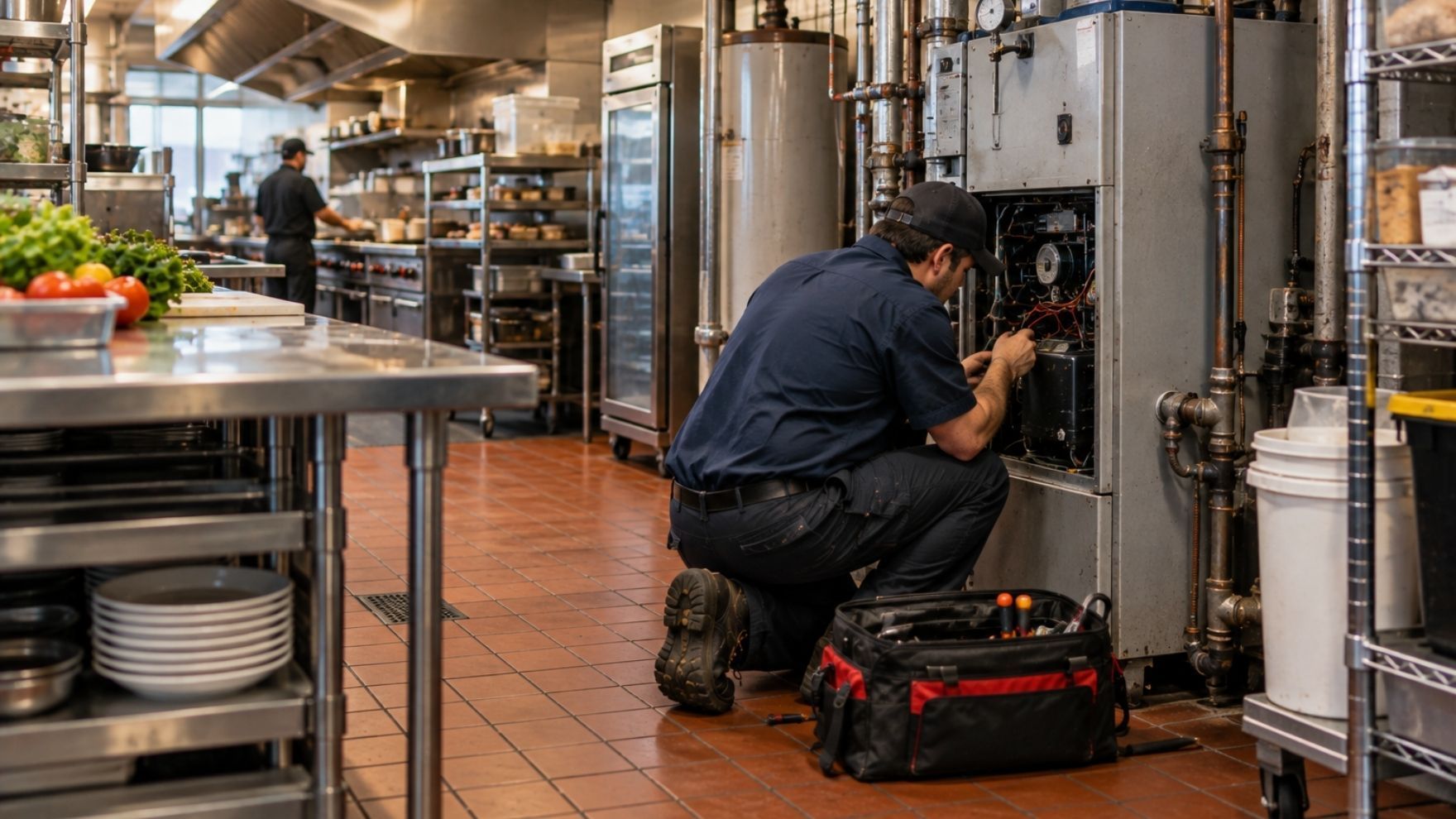
Standard commercial property insurance covers your building (if you own it), tenant improvements, furniture, and equipment against fire, theft, windstorms, and other named perils. But standard policies often exclude mechanical breakdown. A commercial fryer, walk-in cooler, or HVAC system that fails due to an electrical surge or compressor malfunction isn't a "covered peril" under most property forms. Equipment breakdown coverage, sometimes called boiler and machinery insurance, fills that gap. For a typical franchise restaurant with $150,000 to $400,000 in equipment, this endorsement costs a few hundred dollars annually and can save you from a five-figure replacement bill.
Business Interruption for Multi-Unit Operators
Business interruption insurance replaces your lost income and covers ongoing expenses like rent, loan payments, and payroll while your restaurant is closed for a covered loss. For multi-unit franchisees, this coverage is especially critical because one closed location can strain cash flow across your entire portfolio. Most policies cover income loss for up to 12 months, though you can extend that period. Make sure your policy's "period of restoration" matches realistic rebuild timelines in your area. Michigan construction timelines in 2026 often run longer than operators expect due to permitting backlogs.
Food Spoilage and Contamination Coverage
A power outage lasting 48 hours can spoil thousands of dollars in perishable inventory. Food spoilage coverage reimburses you for the value of lost inventory due to equipment failure or power interruption. Contamination coverage goes further, paying for cleanup, disposal, and even lost income if a health department order forces you to close. For restaurants storing specialty ingredients like aged proteins, imported cheeses, or house-made sauces, accurate inventory documentation is essential to getting a fair payout.
Managing Specialized Risks in the Food Service Industry
Beyond the standard property and liability coverages, franchise restaurants face risks that require specialized policies. Employment-related lawsuits and data breaches are two of the fastest-growing exposure areas for food service businesses in Michigan.
Employment Practices Liability (EPLI)
EPLI covers claims of wrongful termination, discrimination, harassment, and wage disputes brought by current or former employees. Restaurants have historically high turnover rates, and every termination creates potential exposure. Michigan franchisees with 15 or more employees are subject to federal anti-discrimination statutes, but state-level protections kick in with even fewer workers. New legislation aimed at protecting small businesses from duplicative regulation could affect compliance costs, but it doesn't eliminate your need for EPLI. Policies typically start around $1,200 annually for a single location with 20 to 30 employees.
Cyber Liability for POS and Online Ordering
If your franchise uses a point-of-sale system, accepts credit cards, or offers online ordering, you're a target for data breaches. Cyber liability insurance covers notification costs, credit monitoring for affected customers, legal defense, and regulatory fines. A single breach involving customer payment data can cost a small restaurant $50,000 to $100,000 in response expenses alone. Many franchisors now require franchisees to carry a minimum of $1 million in cyber liability coverage. Given that
small group insurance rates in Michigan have risen in 2026, bundling cyber coverage into a Business Owner's Policy can help control overall insurance spending.
Common Questions About Michigan Restaurant Insurance
FAQ: Does my franchisor provide my insurance?
Usually, no. Most franchisors require you to purchase your own insurance and provide certificates of insurance as proof. Some franchisors negotiate group rates or preferred carrier programs, but the cost and responsibility fall on the franchisee.
FAQ: How much does liquor liability cost in Michigan?
Expect to pay between $2,500 and $6,000 per year for a standalone liquor liability policy. Your exact premium depends on your alcohol sales volume, hours of operation, and claims history. Locations with late-night bar service pay more than casual dining spots.
FAQ: Do I need insurance if I only offer delivery?
Yes. Delivery operations create auto liability exposure, and you'll need hired and non-owned auto coverage if drivers use personal vehicles. You also still need general liability, workers' comp, and property coverage for your kitchen facility.
FAQ: What is an 'Additional Insured' requirement?
An additional insured endorsement extends your liability coverage to another party, typically your franchisor or landlord. It means if they're named in a lawsuit arising from your operations, your policy responds on their behalf. This is a standard requirement in most franchise and lease agreements.
FAQ: Is workers' comp mandatory for family employees?
In Michigan, sole proprietors and partners can exempt themselves from workers' comp requirements. But if you employ family members who aren't owners or partners, they generally must be covered. The rules around corporate officers and LLC members have specific exceptions, so check with your insurance agent.
The Bottom Line for Your Franchise
Michigan's franchise restaurant insurance requirements aren't optional extras. They're the financial foundation that keeps your locations open, your franchise agreement intact, and your personal assets protected. Whether you're a franchisor building a brand across the state or a franchisee opening your first location, the right coverage structure prevents small incidents from becoming business-ending events.
Start by reviewing your franchise agreement's insurance exhibit line by line. Match each requirement to a specific policy or endorsement. Then look beyond the minimums: equipment breakdown, food spoilage, EPLI, and cyber liability are the coverages that separate operators who survive a bad year from those who don't. Michigan is a top-10 powerhouse for franchise growth, and the operators who thrive here are the ones who treat insurance as a strategic investment rather than a box to check. Work with a broker who understands both Michigan regulations and franchise compliance, and get your coverage locked in before you sign your next lease.
About The Author:
Dustin Hulett
As Owner of Cuisine Coverage powered by Hulett Insurance, I specialize in protecting restaurants, bars, and hospitality businesses with smart, reliable insurance solutions. With years of experience serving the food and beverage industry, my goal is to make coverage simple, transparent, and built around the unique risks that owners face every day.
Contact Us
Business Coverage
Protection for Every Part of Your Food Business
Cuisine Coverage provides specialized insurance for restaurants, food trucks, catering services, and other hospitality businesses. We help owners protect their property, staff, and reputation with policies built around the most common industry risks.

General Liability Insurance
Protects your business from claims related to injury, property damage, or accidents that happen during operations.
General Liability
Liquor Liability Insurance
Covers alcohol-related incidents for restaurants, bars, or venues that serve or sell alcohol.
Liquor Liability
Workers Compensation Insurance
Provides wage replacement and medical benefits to employees injured on the job.
Workers Compensation
Business Interruption Insurance
Helps replace lost income and cover ongoing expenses if your business operations are temporarily halted.
Business Interruption
Product Liability Insurance
Protects against claims related to foodborne illness, contamination, or product defects.
Product Liability
Cyber Liability Insurance
Covers data breaches, online payment issues, and digital risks that can affect modern food businesses.
Cyber Liability
Serving the Food and Hospitality Industry
Insurance Solutions for Every Type of Food Business
Cuisine Coverage provides specialized insurance for restaurants, cafés, and food service professionals across the country. Whether you run a casual kitchen or a mobile food truck, we offer coverage that fits your operations and risk level.
How It Works
Insurance Made Easy for Food Business Owners
We know you don’t have time to deal with complicated insurance forms. That’s why our process is built for speed and simplicity — so you can get back to running your kitchen.
Your Insurance Questions Answered
What Restaurant and Food Business Owners Ask Most
What types of insurance do restaurants and food businesses need?
Most food businesses need general liability, property, and workers’ compensation coverage. These protect against injuries, equipment damage, and employee-related incidents. Businesses serving alcohol should also include liquor liability insurance for extra protection.
Having the right mix of policies helps reduce financial risks. We’ll help you identify the specific coverages your business needs based on your setup, size, and operations.
Do you provide insurance for food trucks and mobile kitchens?
Yes. We specialize in insurance for food trucks, trailers, and mobile vendors. Our coverage includes vehicle protection, cooking equipment, and liability for events or customer interactions.
We can also help you meet licensing and vendor requirements by issuing certificates of insurance quickly — often the same day.
How fast can I get a quote or start coverage?
In most cases, quotes are ready within 24 hours once we have your business details. After approval, coverage and certificates can be issued immediately.
Our process is fully digital but supported by real agents who review each policy for accuracy. You’ll always know exactly what you’re getting before coverage starts.
Do you offer liquor liability insurance for bars or restaurants?
Yes. We provide liquor liability insurance for bars, taverns, and restaurants that sell or serve alcohol. This coverage protects against claims involving intoxicated patrons or alcohol-related incidents.
It’s essential for maintaining compliance with local laws and protecting your business from costly lawsuits. We’ll ensure your policy meets all licensing requirements.
How can I reduce my insurance costs?
You can often lower premiums by bundling multiple coverages, maintaining clean safety records, and conducting regular policy reviews. Many insurers also offer discounts for installing safety systems and training employees.
At Cuisine Coverage, we proactively review your policy before renewal to help you keep costs down without reducing protection.
Do you help with certificates of insurance (COIs)?
Yes. We provide same-day certificates for vendors, landlords, and event partners. You can request them by phone or email anytime.
Having your COI ready keeps your business compliant and avoids delays in operations. Our team handles these requests quickly so you can stay focused on running your business.
From the Kitchen to Coverage
Real Advice for the Food and Hospitality Industry
We share tips, updates, and real-world stories from the food and insurance industries. Whether you’re managing a restaurant or rolling out a food truck, our articles give you useful guidance to protect your business and grow with confidence.
Contact Us
Phone
Location