New Jersey Franchisee and Franchisor Restaurant INSURANCE
OR call us: (214) 667-2729
Running a restaurant franchise in New Jersey means juggling tight margins, high labor costs, and a regulatory environment that doesn't leave much room for error. The state's minimum wage is set to rise again in January 2026,
reaching $16.00 per hour for most employers, which puts even more pressure on your bottom line. One underinsured slip-and-fall claim or a single foodborne illness outbreak can wipe out months of profit. Whether you're a franchisee operating a single location or a franchisor overseeing dozens of New Jersey restaurant locations, the right insurance program isn't optional: it's the financial backbone of your operation. Getting your
restaurant insurance coverage right from the start protects both your investment and your brand.
Core Insurance Requirements for NJ Franchise Owners
Every franchise restaurant in New Jersey needs a baseline set of policies before it can open its doors. Your franchisor's operations manual likely spells out minimum coverage thresholds, but New Jersey state law adds its own requirements on top of those. Understanding both layers is critical to avoiding coverage gaps that could leave you personally liable.
General Liability and Property Protection
General liability insurance covers third-party bodily injury and property damage claims. Think of a customer who slips on a wet floor or burns themselves on a hot plate. Most franchise agreements require at least $1 million per occurrence and $2 million aggregate in general liability coverage.
Property insurance protects the physical assets inside your restaurant: ovens, walk-in coolers, POS systems, custom signage, and interior buildouts. If you're leasing your space, your landlord will almost certainly require you to carry property coverage and name them as an additional insured on the policy. Don't overlook high-value equipment like commercial fryers, espresso machines, or specialized prep stations. Document everything with photos and serial numbers so your replacement value is accurate if you ever file a claim.
NJ Workers' Compensation Mandates
New Jersey law requires every employer to carry workers' compensation insurance, with no exceptions for small staff sizes. Even a single employee triggers this mandate. Restaurant kitchens are high-risk environments where burns, cuts, and repetitive strain injuries happen regularly.
Workers' comp rates in New Jersey have seen some adjustment recently. The 2025-2026 rate cycle brought modest changes that affect how premiums are calculated for restaurant classification codes. Your experience modification rate (or "mod rate") plays a big role here. A clean safety record can push your mod below 1.0, saving you thousands annually. Investing in non-slip mats, proper knife training, and burn prevention protocols pays for itself through lower premiums over time.
Meeting Your Franchisor's Minimum Standards
Your franchise agreement is a contract, and the insurance requirements inside it are binding. Most franchisors require you to carry general liability, property, workers' comp, and commercial auto coverage at minimum. Some also mandate umbrella policies with $1 million to $5 million in limits.
Franchisors set these standards to protect the broader brand and their own liability exposure. If you fail to maintain the required coverage, you could face termination of your franchise agreement. Review your Franchise Disclosure Document carefully and compare it against your current policies at least once a year. Coverage that met the minimum two years ago may fall short after a contract renewal or amendment.

By: Dustin Hulett
Founder & CEO of Cuisine Coverage
Comparing Essential vs. Optional Coverage
Not all policies carry the same weight. Some are legally required or contractually mandated, while others fill gaps that could save your business during a crisis. Here's a clear breakdown.
Comparison Chart: Standard vs. Enhanced Protection
| Coverage Type | Standard (Required) | Enhanced (Optional but Recommended) |
|---|---|---|
| General Liability | $1M per occurrence / $2M aggregate | Higher limits with umbrella policy |
| Property Insurance | Replacement cost for equipment and buildout | Equipment breakdown endorsement for mechanical failure |
| Workers' Compensation | State-mandated; covers all employees | Return-to-work programs to reduce mod rate |
| Commercial Auto | Required if you own delivery vehicles | Hired and non-owned auto for employee-owned vehicles |
| Liquor Liability | Required if you serve alcohol | Higher limits for late-night service or bar-heavy concepts |
| EPLI | Not required by law | Covers wrongful termination, harassment, discrimination claims |
| Business Interruption | Often included in BOP | Extended coverage for supply chain disruptions |
| Cyber Liability | Not typically required | Covers POS data breaches and customer payment info theft |
A
Business Owner's Policy, or BOP, bundles general liability and property coverage into a single package, often at a 10-20% discount compared to buying them separately. For many single-location franchisees, a BOP forms the foundation of their insurance program.
New Jersey presents specific risks that franchise restaurant owners in other states may not face. From strict liquor laws to aggressive employment litigation, the state's legal environment demands attention.
Liquor Liability for NJ Establishments
If your franchise serves beer, wine, or spirits, you need a dedicated liquor liability policy. New Jersey's dram shop laws hold establishments liable when an intoxicated patron causes injury to a third party. The financial exposure here is enormous.
Recent state legislation has raised the bar even further. New Jersey bill S1299 now mandates that any establishment holding an alcoholic beverage license must carry a minimum of $500,000 in liability coverage. Liquor liability premiums have been climbing across the industry, driven by larger jury awards and more frequent claims. Restaurants with late-night hours, high bar revenue percentages, or a history of incidents should consider limits well above the state minimum. A $1 million liquor liability policy is a reasonable starting point for most full-service franchise concepts.
Employment Practices Liability Insurance (EPLI)
New Jersey is one of the most employee-friendly states in the country from a litigation standpoint. Claims involving wrongful termination, wage disputes, harassment, and discrimination are common in the restaurant industry. The state's 2026 minimum wage increase adds another layer of compliance risk, as miscalculations or payroll errors can trigger lawsuits.
EPLI covers legal defense costs and settlements arising from employment-related claims. A single wrongful termination suit can cost $75,000 to $150,000 to defend, even if you win. For franchise restaurants with 15 or more employees, EPLI isn't a luxury: it's a practical necessity. Premiums typically range from $800 to $3,000 annually for a small to mid-size restaurant, depending on your claims history and staff size.
Food Contamination and Spoilage Coverage
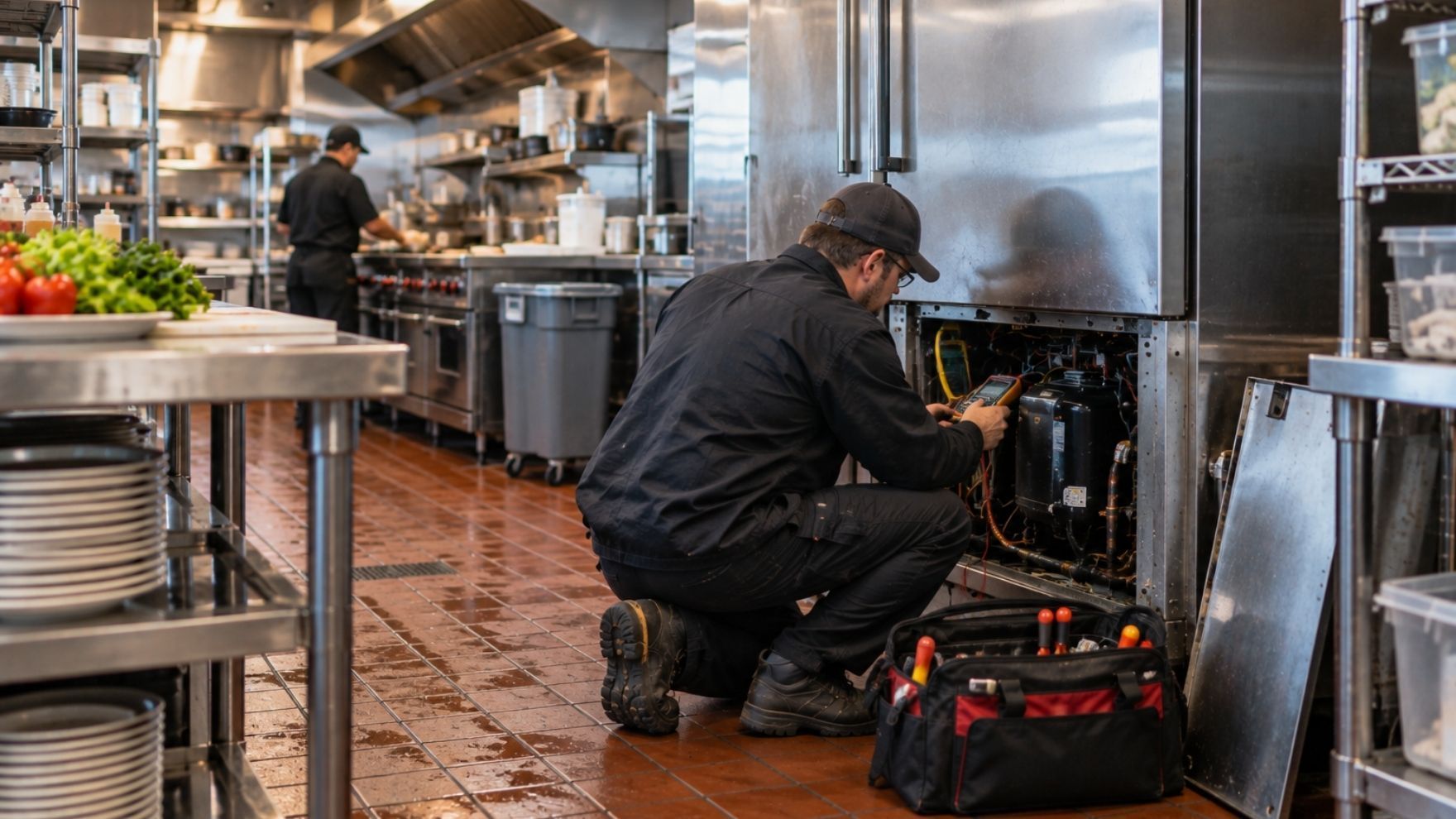
A standard property policy doesn't always cover the cost of spoiled inventory after a refrigeration failure. Food contamination and spoilage endorsements fill this gap. If a walk-in freezer dies overnight and you lose $5,000 in protein and produce, this coverage reimburses you.
Contamination coverage goes further, protecting you if a health department investigation forces a temporary closure. The policy can cover lost income during the shutdown, the cost of discarding contaminated food, and even PR expenses to rebuild customer confidence. For franchise restaurants that rely on fresh ingredients and high-volume prep, this endorsement typically costs $200 to $500 per year: a small price for significant peace of mind.
Several variables determine what you'll pay for New Jersey franchisee and franchisor restaurant insurance. Location is a big one. A franchise in downtown Newark faces different risk profiles than one in a suburban Bergen County strip mall. Flood zones, crime rates, and proximity to fire stations all factor in.
Your annual revenue and square footage affect premiums directly. A fast-casual spot doing $800,000 in annual sales will pay less than a full-service restaurant generating $2.5 million. The number of employees on your payroll drives workers' comp costs, and your claims history over the past three to five years shapes your mod rate.
Risk management practices matter too. Restaurants with ServSafe-certified managers, documented safety training programs, and fire suppression systems often qualify for premium discounts. Bundling policies into a BOP or working with a broker who specializes in franchise restaurant accounts can also reduce your total cost of coverage by 15-25%.
Common Questions About New Jersey Restaurant Insurance
Do I need a separate policy for delivery drivers?
If your employees use their own cars for deliveries, your standard commercial auto policy won't cover them. You need a hired and non-owned auto endorsement. If you use third-party delivery apps, check whether the app's insurance covers your exposure or leaves gaps.
How much does a basic policy cost for a small franchise?
A single-location franchise with 10-15 employees can expect to pay between $8,000 and $18,000 annually for a basic package including general liability, property, and workers' comp. Costs vary based on location, cuisine type, and claims history.
Does my insurance cover outdoor dining on NJ sidewalks?
Standard general liability typically extends to outdoor seating areas you control. But if you're using public sidewalk space under a municipal permit, confirm with your insurer that the area is included. Your municipality may also require a separate certificate of insurance.
Can I bundle all my coverages into one package?
Yes. A BOP combines general liability and property insurance, and many carriers let you add endorsements for equipment breakdown, spoilage, and business interruption. Workers' comp and liquor liability are usually written as separate policies, but the same carrier can often handle everything.
What happens if a storm causes a power outage?
Business interruption coverage can reimburse lost income during a forced closure, including one caused by a power outage from a storm. Food spoilage endorsements cover inventory losses. Check your policy for waiting periods, as most business interruption coverage kicks in after 24 to 72 hours.
Making the Right Choice for Your Business
Protecting a franchise restaurant in New Jersey requires more than checking boxes on a franchisor's compliance form. The state's rising wages, strict liquor laws, and active employment litigation environment create real financial exposure that generic policies won't fully address. Start with the mandated coverages: general liability, property, and workers' comp. Then layer on liquor liability if you serve alcohol, EPLI to guard against employment claims, and spoilage coverage to protect your inventory.
Work with a broker who understands both franchise requirements and New Jersey-specific risks. Ask them to review your franchise agreement alongside your policies to identify gaps. Get quotes from at least three carriers, and don't choose based on price alone: coverage terms, exclusions, and claims handling reputation matter just as much. The right insurance program won't just keep you compliant. It'll keep you open when things go wrong.
About The Author:
Dustin Hulett
As Owner of Cuisine Coverage powered by Hulett Insurance, I specialize in protecting restaurants, bars, and hospitality businesses with smart, reliable insurance solutions. With years of experience serving the food and beverage industry, my goal is to make coverage simple, transparent, and built around the unique risks that owners face every day.
Contact Us
Business Coverage
Protection for Every Part of Your Food Business
Cuisine Coverage provides specialized insurance for restaurants, food trucks, catering services, and other hospitality businesses. We help owners protect their property, staff, and reputation with policies built around the most common industry risks.

General Liability Insurance
Protects your business from claims related to injury, property damage, or accidents that happen during operations.
General Liability
Liquor Liability Insurance
Covers alcohol-related incidents for restaurants, bars, or venues that serve or sell alcohol.
Liquor Liability
Workers Compensation Insurance
Provides wage replacement and medical benefits to employees injured on the job.
Workers Compensation
Business Interruption Insurance
Helps replace lost income and cover ongoing expenses if your business operations are temporarily halted.
Business Interruption
Product Liability Insurance
Protects against claims related to foodborne illness, contamination, or product defects.
Product Liability
Cyber Liability Insurance
Covers data breaches, online payment issues, and digital risks that can affect modern food businesses.
Cyber Liability
Serving the Food and Hospitality Industry
Insurance Solutions for Every Type of Food Business
Cuisine Coverage provides specialized insurance for restaurants, cafés, and food service professionals across the country. Whether you run a casual kitchen or a mobile food truck, we offer coverage that fits your operations and risk level.
How It Works
Insurance Made Easy for Food Business Owners
We know you don’t have time to deal with complicated insurance forms. That’s why our process is built for speed and simplicity — so you can get back to running your kitchen.
Your Insurance Questions Answered
What Restaurant and Food Business Owners Ask Most
What types of insurance do restaurants and food businesses need?
Most food businesses need general liability, property, and workers’ compensation coverage. These protect against injuries, equipment damage, and employee-related incidents. Businesses serving alcohol should also include liquor liability insurance for extra protection.
Having the right mix of policies helps reduce financial risks. We’ll help you identify the specific coverages your business needs based on your setup, size, and operations.
Do you provide insurance for food trucks and mobile kitchens?
Yes. We specialize in insurance for food trucks, trailers, and mobile vendors. Our coverage includes vehicle protection, cooking equipment, and liability for events or customer interactions.
We can also help you meet licensing and vendor requirements by issuing certificates of insurance quickly — often the same day.
How fast can I get a quote or start coverage?
In most cases, quotes are ready within 24 hours once we have your business details. After approval, coverage and certificates can be issued immediately.
Our process is fully digital but supported by real agents who review each policy for accuracy. You’ll always know exactly what you’re getting before coverage starts.
Do you offer liquor liability insurance for bars or restaurants?
Yes. We provide liquor liability insurance for bars, taverns, and restaurants that sell or serve alcohol. This coverage protects against claims involving intoxicated patrons or alcohol-related incidents.
It’s essential for maintaining compliance with local laws and protecting your business from costly lawsuits. We’ll ensure your policy meets all licensing requirements.
How can I reduce my insurance costs?
You can often lower premiums by bundling multiple coverages, maintaining clean safety records, and conducting regular policy reviews. Many insurers also offer discounts for installing safety systems and training employees.
At Cuisine Coverage, we proactively review your policy before renewal to help you keep costs down without reducing protection.
Do you help with certificates of insurance (COIs)?
Yes. We provide same-day certificates for vendors, landlords, and event partners. You can request them by phone or email anytime.
Having your COI ready keeps your business compliant and avoids delays in operations. Our team handles these requests quickly so you can stay focused on running your business.
From the Kitchen to Coverage
Real Advice for the Food and Hospitality Industry
We share tips, updates, and real-world stories from the food and insurance industries. Whether you’re managing a restaurant or rolling out a food truck, our articles give you useful guidance to protect your business and grow with confidence.
Contact Us
Phone
Location