New Hampshire Franchisee and Franchisor Restaurant INSURANCE
OR call us: (214) 667-2729
Running a restaurant franchise in New Hampshire means juggling two sets of expectations: your franchisor's corporate requirements and the state's own regulatory demands. Both sides carry insurance obligations that can catch new owners off guard. A single missed coverage requirement can put your franchise agreement at risk or leave you
exposed to a six-figure claim. New Hampshire restaurant owners can expect to pay
between $3,000 and $10,000 annually for comprehensive insurance, with the final number depending on your location, menu, seating capacity, and whether you serve alcohol. Whether you're opening your first Dunkin' location in Manchester or expanding a
pizza franchise along the Seacoast, understanding how franchisee and franchisor restaurant insurance works in New Hampshire is the difference between building a real safety net and just checking a box. The stakes are higher than most new owners realize, and the details matter more than the price tag.
Essential Insurance Coverages for NH Restaurant Franchises
Every franchise restaurant needs a core set of policies, but the specifics vary based on your brand, your lease, and your state. New Hampshire has its own rules around workers' comp, liquor liability, and employer obligations that layer on top of whatever your franchisor demands. Getting the foundation right means fewer surprises when a claim hits.
General Liability and Property Protection
General liability insurance is the backbone of any restaurant policy. It covers third-party bodily injury, property damage, and personal injury claims, things like a customer slipping on a wet floor or a delivery driver damaging a neighboring storefront. Most franchisors require a minimum of $1 million per occurrence and $2 million aggregate, though some national brands push for higher limits.
Property coverage protects your building (if you own it), equipment, furniture, signage, and inventory. For franchise restaurants, pay close attention to the replacement cost of specialized kitchen equipment: commercial fryers, walk-in coolers, and point-of-sale systems can add up fast. A standard Business Owner's Policy (BOP) bundles general liability and property coverage at a lower premium than buying them separately, and it's often the most cost-effective starting point for a single-location franchise.
Your landlord will almost certainly require you to name them as an additional insured on your general liability policy. This is standard in commercial leases, but read the language carefully. Some landlords also require minimum property coverage limits or specific endorsements for fire and water damage.
Franchise-Specific Requirements and Brand Mandates
Your franchise agreement likely includes an entire section dedicated to insurance. Most franchisors spell out exact coverage types, minimum limits, and even preferred carriers. Failing to maintain these coverages can trigger a default under your agreement, giving the franchisor grounds to terminate your license.
Common franchisor mandates include umbrella or excess liability policies (often $1 million to $5 million), employment practices liability insurance (EPLI), and hired/non-owned auto coverage for employees who drive their personal vehicles on company business. Some brands also require cyber liability insurance, especially if you process credit card transactions through a franchisor-owned POS system.
One thing to keep in mind: your franchisor is typically listed as an additional insured on your policies. This means they receive notice of cancellations and policy changes, and they're protected if a claim names the brand. Don't treat this as a formality. Missing a renewal or letting coverage lapse, even briefly, can create real problems with corporate.
NH State Workers' Compensation Laws
New Hampshire requires all employers to carry workers' compensation insurance, with no minimum employee threshold. Even if you have a single part-time dishwasher, you need a policy. The state enforces this through the New Hampshire Department of Labor, and penalties for non-compliance include fines and potential criminal charges.
Workers' comp premiums in the restaurant industry tend to run higher than average because of the physical nature of the work: burns, cuts, slips, and repetitive strain injuries are common claims. Your experience modification rate (EMR) directly affects your premium. A clean claims history brings that number below 1.0 and saves you money. A string of claims pushes it higher.
Investing in safety training, proper non-slip footwear policies, and ServSafe certification for your kitchen staff can lower your EMR over time. These aren't just good practices; they're premium-reduction strategies that pay for themselves within a year or two.

By: Dustin Hulett
Founder & CEO of Cuisine Coverage
Comparing Standard vs. Enhanced Coverage Packages
Not all restaurant insurance packages are created equal. A basic BOP covers the essentials, but franchise operations often need endorsements and standalone policies that go beyond what a standard package includes. Here's how the two tiers typically compare.
Coverage Comparison Table
| Coverage Type | Standard BOP | Enhanced Franchise Package |
|---|---|---|
| General Liability | $1M per occurrence / $2M aggregate | $1M per occurrence / $2M aggregate |
| Property Coverage | Building + contents, basic perils | Building + contents, broader perils, equipment breakdown |
| Workers' Compensation | Purchased separately | Often bundled or coordinated |
| Liquor Liability | Not included | Included or available as endorsement |
| Business Interruption | Basic (limited to 12 months) | Extended, with seasonal revenue adjustments |
| EPLI | Not included | Included ($25K-$100K limits) |
| Hired/Non-Owned Auto | Not included | Included |
| Umbrella/Excess | Not included | $1M-$5M available |
| Cyber Liability | Not included | $50K-$250K limits |
| Food Spoilage | Limited ($5K-$10K) | $25K-$50K with power outage trigger |
The enhanced package costs more, but it aligns with what most national franchisors actually require. Trying to piece together a standard BOP with individual add-ons often ends up costing the same or more, with gaps between policies that can leave you exposed.
Addressing New Hampshire Specific Risks
New Hampshire's geography, climate, and liquor laws create risks that don't exist in every state. Your insurance program needs to account for these local factors, not just generic restaurant hazards.
Liquor Liability and RSA 179 Compliance
If your franchise serves alcohol, liquor liability insurance isn't optional, it's essential. New Hampshire follows a "reasonable and prudent person" standard under RSA 179, which means your staff can be held liable for serving a visibly intoxicated patron who later causes harm. The state's liquor law framework places real responsibility on servers and establishments to exercise judgment.
Liquor liability claims have been rising in cost nationally, with average settlements climbing year over year. A $1 million liquor liability policy is the minimum most franchisors require, but $2 million is increasingly common for brands with full bar service. Train your staff on responsible service practices and document that training. It matters during a claim.
Seasonal Weather and Business Interruption
New Hampshire's winters bring ice storms, heavy snow loads, and power outages that can shut down a restaurant for days. A nor'easter that knocks out power to your walk-in cooler doesn't just spoil food; it kills revenue during what might be a peak weekend.
Business interruption insurance replaces lost income and covers ongoing expenses (rent, payroll, loan payments) while your restaurant is closed due to a covered peril. Standard policies often cap this at 12 months, but the real risk for NH restaurants is shorter, more frequent disruptions. Make sure your policy includes a waiting period you can actually survive, typically 24 to 72 hours, and that it accounts for seasonal revenue fluctuations. A January closure at a ski-town franchise hits differently than the same closure in April.
Food Spoilage and Equipment Breakdown
A standard BOP might include $5,000 to $10,000 in food spoilage coverage, which sounds adequate until you price out the contents of two walk-in coolers, a chest freezer, and a prep station full of prepped proteins. Franchise restaurants with high-volume kitchens should carry $25,000 or more in spoilage coverage, with a trigger that includes utility power failure, not just on-premises equipment malfunction.
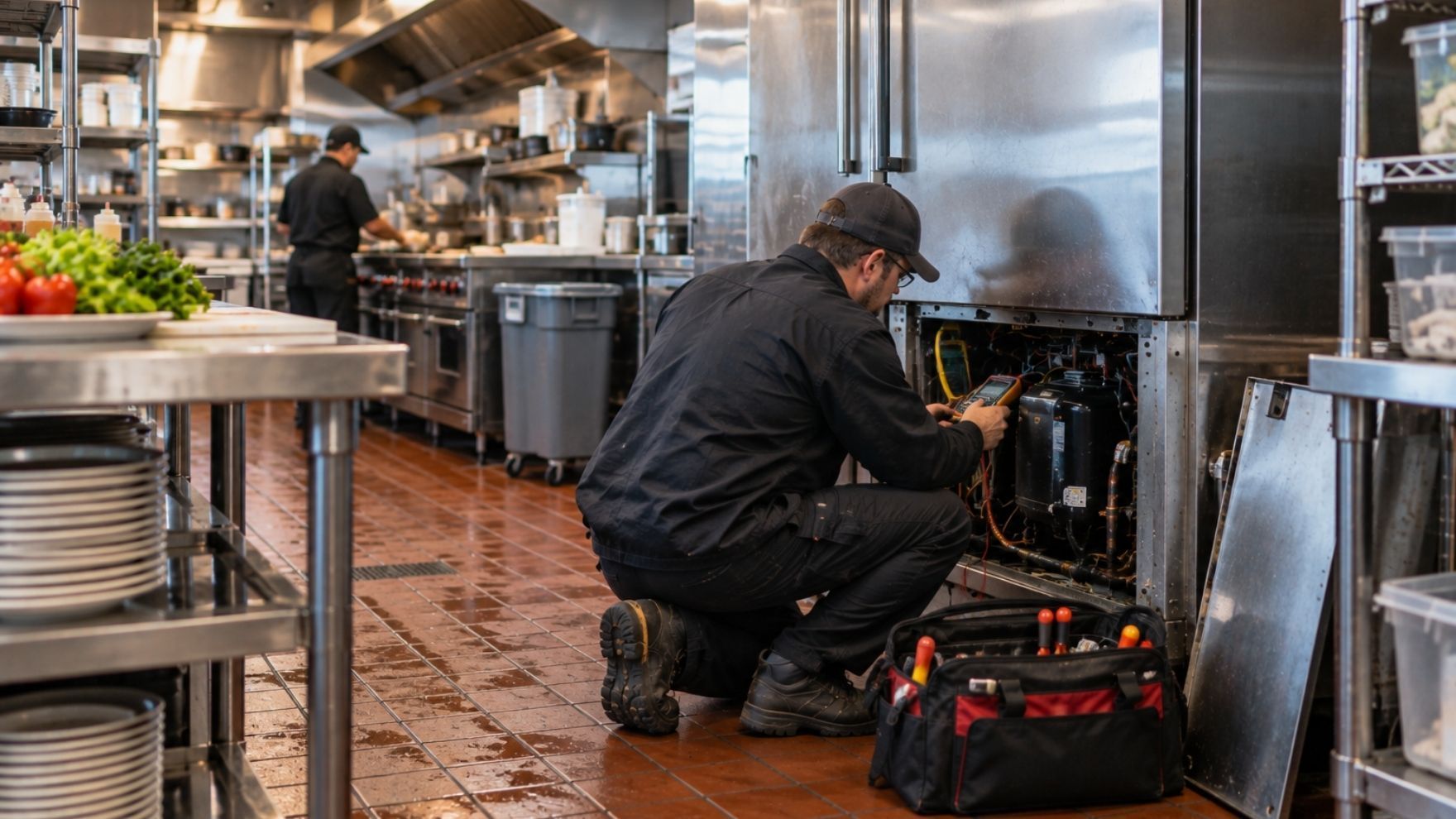
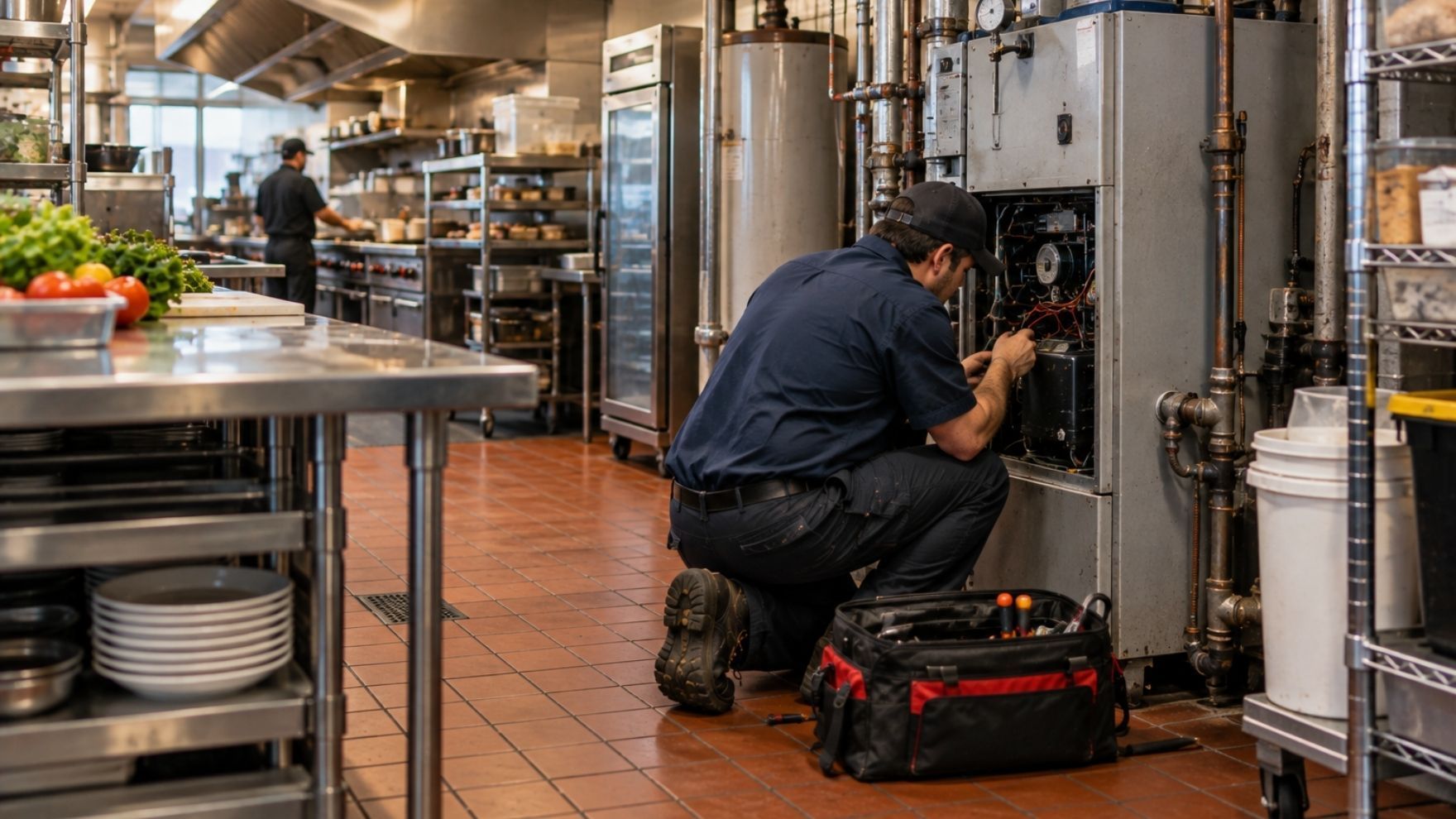
Equipment breakdown coverage is separate from standard property insurance. Your commercial pizza oven, ventilation hood, or HVAC system failing isn't a "covered peril" under most property policies. An equipment breakdown endorsement fills that gap and covers repair or replacement costs, plus any spoiled inventory caused by the failure.
Insurance carriers price restaurant policies based on several factors, and two of the biggest are your annual revenue and your total payroll. A franchise generating $1.5 million in annual sales will pay more than one doing $600,000, because higher revenue typically means more customers, more employees, and more exposure.
Your franchise fees themselves don't directly affect premiums, but they influence your financial profile. Carriers look at your total operating costs when assessing risk, and a franchisee paying 6% to 8% in royalties with thinner margins may face scrutiny around their ability to maintain coverage long-term. The hospitality insurance market in 2026 has shown some stabilization after years of rate increases, but carriers remain selective about which restaurant risks they'll write.
Bundling your policies, maintaining a clean claims record, installing fire suppression systems, and keeping your EMR low are the most reliable ways to control costs. Some franchisors have group insurance programs that offer preferred rates through specific carriers. Ask your franchisor about these before shopping independently, as the savings can be significant.
Common Questions About NH Restaurant Insurance
FAQ: What new owners need to know
Do I need insurance before I open, or can I wait until we start serving? You need active policies before your franchisor will approve your opening date, and your landlord will require proof of insurance before handing over the keys. Plan to have policies bound at least 30 days before your target opening.
Can I use the same insurance agent my franchisor recommends? You can, and sometimes you should. Franchisor-recommended agents understand the brand's requirements and can often streamline the process. That said, get at least one competing quote to make sure you're getting fair pricing.
What happens if my insurance lapses? Your franchisor gets notified, and most agreements give you a short cure period, often 10 to 30 days, before they can declare a default. Your landlord may also have the right to purchase insurance on your behalf and bill you for it at a higher rate.
Is food contamination covered under general liability? Typically, yes. If a customer gets sick from food served at your restaurant, your general liability policy covers the resulting bodily injury claim. But product recall costs and voluntary shutdowns usually require a separate food contamination or product recall endorsement.
How much umbrella coverage do I really need? Most franchise agreements require $1 million to $5 million. A good rule of thumb: your umbrella limit should at least match your annual revenue. If a catastrophic claim exceeds your primary policy limits, the umbrella is what keeps you from losing everything.
Does my policy cover delivery drivers using their own cars? Only if you carry hired and non-owned auto coverage. Personal auto policies exclude commercial use, so if an employee causes an accident while delivering food in their own vehicle, your restaurant could be liable without this endorsement.
Making the Right Choice for Your Franchise
Getting New Hampshire franchisee and franchisor restaurant insurance right isn't about finding the cheapest quote. It's about building a program that satisfies your franchise agreement, meets state requirements, and actually protects your investment when something goes wrong. Start with your franchise disclosure document and your lease, because those two contracts define your minimum coverage obligations.
Work with a broker who understands both the franchise model and New Hampshire's specific regulations. A restaurant insurance specialist familiar with NH requirements can spot gaps that a generalist might miss. Review your policies annually, especially as your revenue grows or you add locations. The coverage that worked at $500,000 in sales won't be enough at $1.2 million. Protect your franchise the same way you'd protect any major investment: thoroughly, specifically, and with your eyes open.
About The Author:
Dustin Hulett
As Owner of Cuisine Coverage powered by Hulett Insurance, I specialize in protecting restaurants, bars, and hospitality businesses with smart, reliable insurance solutions. With years of experience serving the food and beverage industry, my goal is to make coverage simple, transparent, and built around the unique risks that owners face every day.
Contact Us
Business Coverage
Protection for Every Part of Your Food Business
Cuisine Coverage provides specialized insurance for restaurants, food trucks, catering services, and other hospitality businesses. We help owners protect their property, staff, and reputation with policies built around the most common industry risks.

General Liability Insurance
Protects your business from claims related to injury, property damage, or accidents that happen during operations.
General Liability
Liquor Liability Insurance
Covers alcohol-related incidents for restaurants, bars, or venues that serve or sell alcohol.
Liquor Liability
Workers Compensation Insurance
Provides wage replacement and medical benefits to employees injured on the job.
Workers Compensation
Business Interruption Insurance
Helps replace lost income and cover ongoing expenses if your business operations are temporarily halted.
Business Interruption
Product Liability Insurance
Protects against claims related to foodborne illness, contamination, or product defects.
Product Liability
Cyber Liability Insurance
Covers data breaches, online payment issues, and digital risks that can affect modern food businesses.
Cyber Liability
Serving the Food and Hospitality Industry
Insurance Solutions for Every Type of Food Business
Cuisine Coverage provides specialized insurance for restaurants, cafés, and food service professionals across the country. Whether you run a casual kitchen or a mobile food truck, we offer coverage that fits your operations and risk level.
How It Works
Insurance Made Easy for Food Business Owners
We know you don’t have time to deal with complicated insurance forms. That’s why our process is built for speed and simplicity — so you can get back to running your kitchen.
Your Insurance Questions Answered
What Restaurant and Food Business Owners Ask Most
What types of insurance do restaurants and food businesses need?
Most food businesses need general liability, property, and workers’ compensation coverage. These protect against injuries, equipment damage, and employee-related incidents. Businesses serving alcohol should also include liquor liability insurance for extra protection.
Having the right mix of policies helps reduce financial risks. We’ll help you identify the specific coverages your business needs based on your setup, size, and operations.
Do you provide insurance for food trucks and mobile kitchens?
Yes. We specialize in insurance for food trucks, trailers, and mobile vendors. Our coverage includes vehicle protection, cooking equipment, and liability for events or customer interactions.
We can also help you meet licensing and vendor requirements by issuing certificates of insurance quickly — often the same day.
How fast can I get a quote or start coverage?
In most cases, quotes are ready within 24 hours once we have your business details. After approval, coverage and certificates can be issued immediately.
Our process is fully digital but supported by real agents who review each policy for accuracy. You’ll always know exactly what you’re getting before coverage starts.
Do you offer liquor liability insurance for bars or restaurants?
Yes. We provide liquor liability insurance for bars, taverns, and restaurants that sell or serve alcohol. This coverage protects against claims involving intoxicated patrons or alcohol-related incidents.
It’s essential for maintaining compliance with local laws and protecting your business from costly lawsuits. We’ll ensure your policy meets all licensing requirements.
How can I reduce my insurance costs?
You can often lower premiums by bundling multiple coverages, maintaining clean safety records, and conducting regular policy reviews. Many insurers also offer discounts for installing safety systems and training employees.
At Cuisine Coverage, we proactively review your policy before renewal to help you keep costs down without reducing protection.
Do you help with certificates of insurance (COIs)?
Yes. We provide same-day certificates for vendors, landlords, and event partners. You can request them by phone or email anytime.
Having your COI ready keeps your business compliant and avoids delays in operations. Our team handles these requests quickly so you can stay focused on running your business.
From the Kitchen to Coverage
Real Advice for the Food and Hospitality Industry
We share tips, updates, and real-world stories from the food and insurance industries. Whether you’re managing a restaurant or rolling out a food truck, our articles give you useful guidance to protect your business and grow with confidence.
Contact Us
Phone
Location