Franchise Business INSURANCE for Restaurant owners
OR call us: (214) 667-2729
Opening a franchise restaurant means inheriting a proven brand, a playbook for operations, and a long list of insurance obligations you didn't write. Your franchisor's agreement will spell out specific coverage types and limits, your landlord will have their own demands, and your state may layer on additional requirements. Getting the right insurance coverage for your franchise restaurant locations, from required policies and costs to contract obligations and multi-location discounts, isn't just about checking boxes. It's about protecting the investment you've made and the people who walk through your doors every day. Comprehensive insurance programs for restaurants in 2026
typically range from $3,000 to $10,000 per year, and that number shifts based on location count, menu type, and claims history. Franchise owners face a unique challenge: balancing franchisor mandates with real-world budget constraints while still closing genuine coverage gaps. The policies you carry don't just satisfy a legal requirement. They're a financial safety net that keeps a single kitchen fire or slip-and-fall lawsuit from wiping out years of work.
Essential Insurance Policies for Franchise Restaurants
Every franchise restaurant needs a core set of policies, but the details matter more than the names on the declarations page. A Business Owner's Policy (BOP) bundles general liability and property coverage into one package, and it's often the starting point. But a BOP alone won't satisfy most franchise agreements or protect you from the specific risks restaurants face daily.
General Liability and Property Coverage
General liability protects you when a customer slips on a wet floor, bites into something that shouldn't be there, or claims your signage damaged their car. Most franchise agreements require a minimum of $1 million per occurrence and $2 million aggregate. Your property coverage should account for everything from walk-in coolers and commercial fryers to custom build-outs like reclaimed wood interiors or branded decor the franchisor requires. One mistake I see often: owners insure the building's shell but forget to document specialty equipment like combi ovens, blast chillers, or commercial smokers. If a fire destroys a $40,000 piece of equipment you never listed on your policy, your insurer won't cover it.
Workers' Compensation and Employment Practices Liability
Workers' comp is mandatory in nearly every state, and restaurants have some of the highest claim rates of any industry. Burns, knife injuries, and repetitive strain from long shifts are routine. Your premiums depend on your state's classification codes and your payroll size, but expect to pay between $0.75 and $2.50 per $100 of payroll. Employment Practices Liability Insurance (EPLI) is a separate but equally critical policy. It covers wrongful termination claims, harassment allegations, and discrimination lawsuits. With restaurant turnover rates still hovering near 75%, the odds of an employment-related claim are higher than most owners realize.
Liquor Liability and Food Spoilage Protection
If your franchise serves alcohol, liquor liability coverage isn't optional. It protects you when an intoxicated customer causes harm after leaving your establishment. Rising claim severity has pushed liquor liability costs higher across the hospitality sector, making it one of the more expensive line items on your policy. Food spoilage coverage is often overlooked but pays for itself fast. A single power outage that knocks out your walk-in freezer for 48 hours can destroy thousands of dollars in inventory. Standard property policies may cap spoilage payouts at $500 unless you've added a specific endorsement.

By: Dustin Hulett
Founder & CEO of Cuisine Coverage
Understanding Franchise Disclosure Document (FDD) Requirements
Your Franchise Disclosure Document is a legal contract, and its insurance section isn't a suggestion. Failing to meet FDD insurance requirements can trigger default provisions, fines, or even termination of your franchise agreement.
Meeting Minimum Coverage Limits
Most FDDs specify exact coverage types and minimum limits. A typical requirement might include $1 million per occurrence for general liability, $1 million for auto liability, and $300,000 for property damage. Some franchisors require umbrella policies with $2 million to $5 million in additional coverage. The catch is that FDD minimums don't always reflect your actual risk. A high-traffic urban location with a full bar needs more coverage than a suburban counter-service spot. Treat the FDD as a floor, not a ceiling, and work with a broker who understands where insurance requirements fit within a franchise system.
Naming the Franchisor as an Additional Insured
Nearly every franchise agreement requires you to name the franchisor as an additional insured on your general liability and umbrella policies. This means the franchisor receives the same protection under your policy as you do if a claim arises at your location. It doesn't cost much, usually nothing extra, but forgetting to add the endorsement is one of the most common compliance failures. Your franchisor may also require a waiver of subrogation, which prevents your insurer from suing the franchisor to recover claim payments. Make sure your broker issues certificates of insurance directly to the franchisor each renewal period. Lapses in proof of coverage can trigger immediate compliance notices.
Comparison: Standard vs. Specialized Restaurant Coverage
A generic commercial policy and a restaurant-specific policy might look similar on the surface, but the gaps between them can be expensive. Standard commercial general liability covers bodily injury and property damage, but it rarely includes the food-specific endorsements restaurants need.
Table: General Liability vs. Professional Liability for Owners
| Coverage Feature | Standard General Liability | Restaurant-Specific Policy |
|---|---|---|
| Slip-and-fall claims | Covered | Covered |
| Foodborne illness lawsuits | Limited or excluded | Covered with endorsement |
| Liquor liability | Not included | Available as add-on |
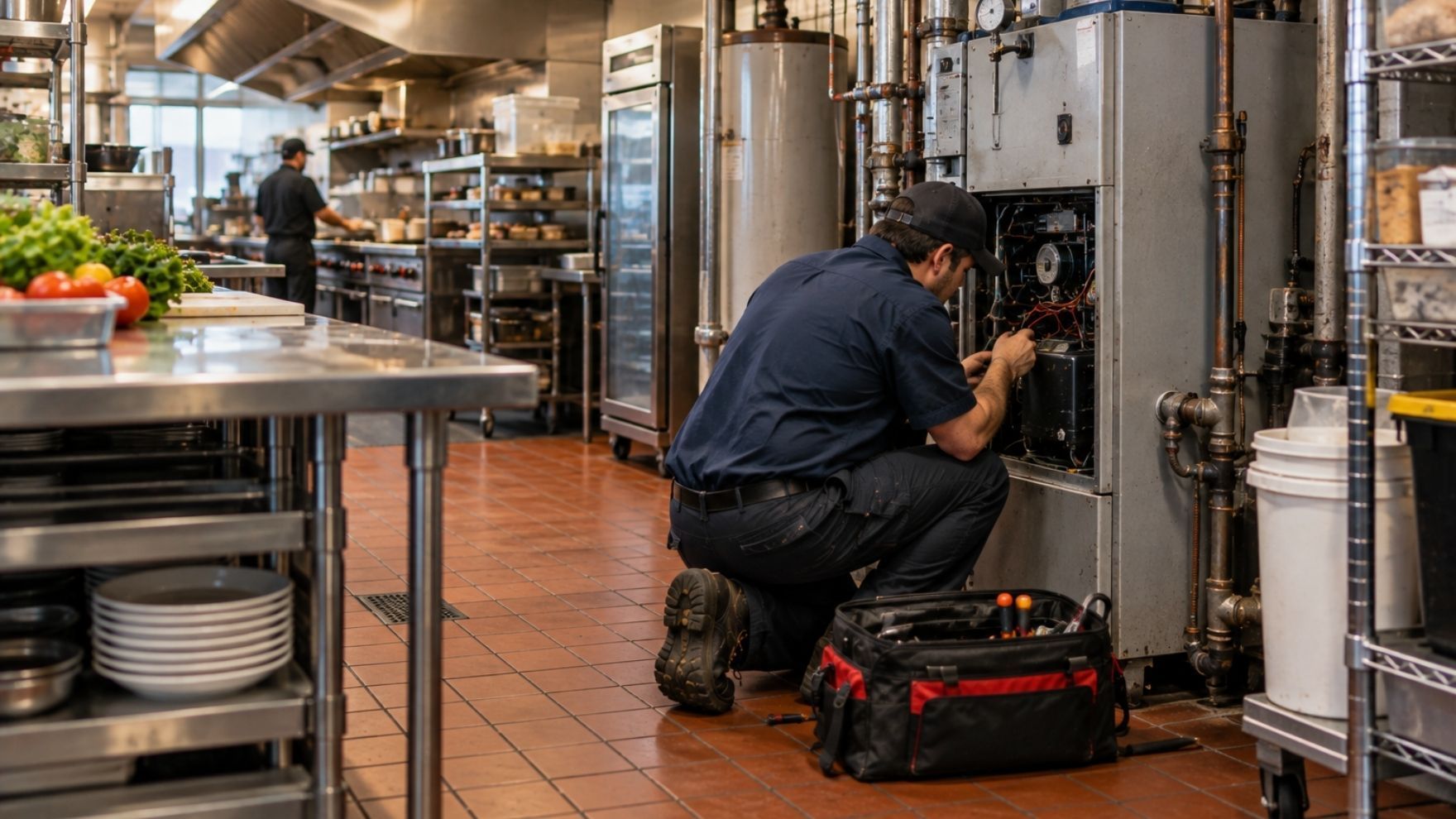
| Equipment breakdown | Not included | Covered (boilers, HVAC, ovens) |
| Food spoilage | Capped at $500 | Up to $25,000+ |
| Business interruption | Basic | Extended to cover supply chain issues |
| Hired/non-owned auto | Rarely included | Available for delivery operations |
Restaurant-specific policies also tend to include business interruption coverage that accounts for health department closures, not just fire or weather damage. If your franchise does any delivery, whether through your own drivers or third-party apps, hired and non-owned auto coverage fills a gap that standard policies ignore entirely.
Managing Risks Across Multiple Franchise Locations
Owning two, five, or twenty locations changes the insurance conversation entirely. You're no longer buying a single policy; you're building a coverage strategy.
Master Policies vs. Individual Site Coverage
A master policy covers all your locations under one contract. It simplifies administration, reduces paperwork, and often provides broader coverage than individual policies pieced together. The downside is that a major claim at one location can affect limits available for the others unless you've structured per-location sub-limits. Individual site coverage gives each location its own policy with dedicated limits. This approach costs more in total premiums but isolates risk. If Location A has a $1 million claim, Location B's coverage stays intact. Most multi-unit franchise owners land somewhere in between, using a master policy with per-location endorsements.
Economies of Scale and Premium Discounts
Insurers reward multi-location operators. Bundling five or more locations under one program can reduce per-unit premiums by 10% to 25%. You'll also have more negotiating power on deductibles and can often secure lower rates on umbrella coverage. Persistent cost pressures across the restaurant industry have
continued shaping operational budgets in 2026, making these savings meaningful. One strategy that works well: designate a single broker to manage all locations. They'll have a complete picture of your risk profile and can identify coverage overlaps or gaps that multiple brokers would miss.
Your premium isn't a random number. Insurers calculate it based on specific risk factors, and understanding them gives you some control over what you pay.
- Location matters: a restaurant in a flood zone or high-crime area pays more than one in a suburban strip mall
- Revenue and square footage directly affect your general liability premium
- Claims history is the single biggest factor; two or more claims in three years can double your rates
- Menu type plays a role: full-service restaurants with fryers and grills cost more to insure than sandwich shops
- Safety investments lower premiums: fire suppression systems, security cameras, and ServSafe-certified staff all signal lower risk to underwriters
- Your deductible choice creates a direct trade-off; raising it from $1,000 to $5,000 can cut premiums by 15% or more
The
hospitality insurance market in 2026 has shown some stabilization after years of rate increases, but carriers remain selective about which restaurant risks they'll write. A clean loss history and strong safety protocols give you the best shot at competitive pricing.
Common Questions About Franchise Insurance
Does my franchisor provide insurance for my location? No. Franchisors require you to carry your own insurance. They set the minimums, but you're responsible for purchasing and maintaining every policy.
Can I use any insurance company, or does the franchisor pick one? Most franchise agreements let you choose your insurer, but some have preferred vendors or require carriers with a minimum A.M. Best rating of A- or higher. Check your FDD for specifics.
What happens if I let a policy lapse? Your franchisor will likely receive notice of the lapse and can impose fines, place coverage on your behalf at a much higher cost, or begin default proceedings on your franchise agreement.
Is business interruption insurance required by most franchisors? Not always, but it should be. If a fire shuts your restaurant down for three months, business interruption coverage pays for lost revenue and ongoing expenses like rent and loan payments.
Do I need separate cyber liability coverage? If your POS system processes credit cards, yes. A data breach affecting customer payment information can trigger notification costs, fines, and lawsuits that general liability won't cover.
How often should I review my
franchise restaurant insurance? At minimum, annually. Review coverage whenever you open a new location, add a liquor license, start delivery service, or make significant equipment purchases. Legislative changes during franchise renewal seasons can also affect your obligations.
Making the Right Choice for Your Restaurant
The right insurance program for your franchise restaurant isn't the cheapest one or the one with the most coverage. It's the one that matches your actual risks, satisfies your franchisor's requirements, and leaves room to grow as you add locations.
Start by reading your FDD's insurance section line by line. Compare those requirements against quotes from at least three brokers who specialize in restaurant or franchise coverage. Ask each broker about coverage gaps they've seen in franchise programs, because generic policies miss restaurant-specific exposures like food contamination, equipment breakdown, and employment practices claims.
If you're operating multiple locations, push for a consolidated program that gives you per-location limits and volume discounts. Document every piece of high-value equipment, and update your property schedule whenever you remodel or add new gear. The franchise owners who handle claims well aren't the ones with the biggest policies. They're the ones who knew exactly what they had before the claim happened.
About The Author:
Dustin Hulett
As Owner of Cuisine Coverage powered by Hulett Insurance, I specialize in protecting restaurants, bars, and hospitality businesses with smart, reliable insurance solutions. With years of experience serving the food and beverage industry, my goal is to make coverage simple, transparent, and built around the unique risks that owners face every day.
Contact Us
Business Coverage
Protection for Every Part of Your Food Business
Cuisine Coverage provides specialized insurance for restaurants, food trucks, catering services, and other hospitality businesses. We help owners protect their property, staff, and reputation with policies built around the most common industry risks.

General Liability Insurance
Protects your business from claims related to injury, property damage, or accidents that happen during operations.
General Liability
Liquor Liability Insurance
Covers alcohol-related incidents for restaurants, bars, or venues that serve or sell alcohol.
Liquor Liability
Workers Compensation Insurance
Provides wage replacement and medical benefits to employees injured on the job.
Workers Compensation
Business Interruption Insurance
Helps replace lost income and cover ongoing expenses if your business operations are temporarily halted.
Business Interruption
Product Liability Insurance
Protects against claims related to foodborne illness, contamination, or product defects.
Product Liability
Cyber Liability Insurance
Covers data breaches, online payment issues, and digital risks that can affect modern food businesses.
Cyber Liability
Serving the Food and Hospitality Industry
Insurance Solutions for Every Type of Food Business
Cuisine Coverage provides specialized insurance for restaurants, cafés, and food service professionals across the country. Whether you run a casual kitchen or a mobile food truck, we offer coverage that fits your operations and risk level.
How It Works
Insurance Made Easy for Food Business Owners
We know you don’t have time to deal with complicated insurance forms. That’s why our process is built for speed and simplicity — so you can get back to running your kitchen.
Your Insurance Questions Answered
What Restaurant and Food Business Owners Ask Most
What types of insurance do restaurants and food businesses need?
Most food businesses need general liability, property, and workers’ compensation coverage. These protect against injuries, equipment damage, and employee-related incidents. Businesses serving alcohol should also include liquor liability insurance for extra protection.
Having the right mix of policies helps reduce financial risks. We’ll help you identify the specific coverages your business needs based on your setup, size, and operations.
Do you provide insurance for food trucks and mobile kitchens?
Yes. We specialize in insurance for food trucks, trailers, and mobile vendors. Our coverage includes vehicle protection, cooking equipment, and liability for events or customer interactions.
We can also help you meet licensing and vendor requirements by issuing certificates of insurance quickly — often the same day.
How fast can I get a quote or start coverage?
In most cases, quotes are ready within 24 hours once we have your business details. After approval, coverage and certificates can be issued immediately.
Our process is fully digital but supported by real agents who review each policy for accuracy. You’ll always know exactly what you’re getting before coverage starts.
Do you offer liquor liability insurance for bars or restaurants?
Yes. We provide liquor liability insurance for bars, taverns, and restaurants that sell or serve alcohol. This coverage protects against claims involving intoxicated patrons or alcohol-related incidents.
It’s essential for maintaining compliance with local laws and protecting your business from costly lawsuits. We’ll ensure your policy meets all licensing requirements.
How can I reduce my insurance costs?
You can often lower premiums by bundling multiple coverages, maintaining clean safety records, and conducting regular policy reviews. Many insurers also offer discounts for installing safety systems and training employees.
At Cuisine Coverage, we proactively review your policy before renewal to help you keep costs down without reducing protection.
Do you help with certificates of insurance (COIs)?
Yes. We provide same-day certificates for vendors, landlords, and event partners. You can request them by phone or email anytime.
Having your COI ready keeps your business compliant and avoids delays in operations. Our team handles these requests quickly so you can stay focused on running your business.
From the Kitchen to Coverage
Real Advice for the Food and Hospitality Industry
We share tips, updates, and real-world stories from the food and insurance industries. Whether you’re managing a restaurant or rolling out a food truck, our articles give you useful guidance to protect your business and grow with confidence.
Contact Us
Phone
Location