Franchise INSURANCE for Restaurant Owners
OR call us: (214) 667-2729
Opening a franchise restaurant means inheriting a brand's reputation, recipes, and operating playbook, but insurance is rarely as turnkey as the rest of the package. Most franchisors offer some form of group coverage or recommended carrier list, yet that blanket protection almost never accounts for your specific location, your local regulations, or the risks unique to your kitchen. Understanding how franchise insurance programs work for restaurant owners, from master policies and local compliance to coverage gaps and pricing, can save you thousands in premiums and prevent devastating claim denials down the road.
Whether you're signing your first franchise agreement or renewing policies on
multiple units, the details buried in your insurance program deserve the same attention you give to food costs and staffing. A policy that looks comprehensive on paper might leave you exposed to
spoilage losses, employment lawsuits, or a
data breach at your POS terminal. The difference between adequate and
inadequate coverage often comes down to understanding what the franchisor provides, what your state demands, and where the gaps hide.
Understanding Master Policies vs. Individual Franchisee Coverage
Franchise systems handle insurance in a few different ways, and the structure directly affects what you pay and what you're responsible for. Some franchisors negotiate a master policy that covers all locations under one umbrella. Others simply mandate minimum coverage levels and let each franchisee shop independently. A third model, increasingly common in 2026, is a hybrid where the franchisor secures certain lines (like general liability or umbrella coverage) at group rates while leaving property and workers' compensation to individual owners.
Your franchise disclosure document (FDD) spells out which approach your system uses, usually in Items 6 and 8. Read those sections carefully before assuming you're fully covered under a corporate program.
The Role of the Franchisor's Master Program
A master policy works like a group health plan for the entire franchise network. The franchisor negotiates terms with one or two carriers, and each franchisee pays into the program, often through a monthly fee bundled with royalties. The upside is buying power: a 500-unit pizza chain can secure general liability rates 15 to 30 percent below what a single-unit owner would pay on the open market.
The downside is limited flexibility. You typically can't adjust coverage limits, choose your deductible, or add endorsements without going through the franchisor's broker. If the master program carries a $5,000 property deductible and you'd prefer $1,000, you're usually stuck. Some master policies also include a loss-sensitive component, meaning that if your location generates more claims than average, your individual contribution rises at renewal.
Why Local Compliance Overrides Standard Templates
A franchisor headquartered in Texas might design its insurance program around Texas regulations, but if you're operating in California, New York, or Florida, the rules can differ sharply. California requires specific workers' compensation coverage through its state fund or an approved private carrier. Florida mandates certain liquor liability thresholds if you serve alcohol. New York City requires commercial tenants to carry minimum property and liability limits that often exceed what a franchise template provides.
Your landlord's lease adds another layer. Most
commercial leases require you to name the property owner as an additional insured on your general liability policy, carry a minimum of $1 million per occurrence, and sometimes maintain $2 million in aggregate coverage. If the master policy doesn't meet those thresholds, you'll need a separate policy or endorsement, and that cost falls on you.

By: Dustin Hulett
Founder & CEO of Cuisine Coverage
Essential Coverage Comparison for Restaurant Owners
Not every franchise insurance program includes the same protections. Some provide bare-minimum coverage that satisfies the franchise agreement but leaves real operational risks uninsured. Knowing what's standard versus what's enhanced helps you identify where you need to supplement.
Comparison Table: Standard vs. Enhanced Restaurant Protection
| Coverage Type | Standard (Basic Program) | Enhanced (Recommended) |
|---|---|---|
| General Liability | $1M per occurrence / $2M aggregate | $2M per occurrence / $4M aggregate |
| Property (Building/Contents) | Replacement cost, $5,000 deductible | Replacement cost, $1,000 deductible |
| Workers' Compensation | State minimum | State minimum + employer's liability $500K |
| Business Interruption | 30 days coverage | 90-180 days, with extended period of indemnity |
| Spoilage | Not included | $25K-$50K sublimit |
| EPLI | Not included | $250K-$500K limit |
| Cyber Liability | Not included | $100K-$250K for POS breach response |
| Liquor Liability | Included if alcohol served | Higher limits + assault/battery endorsement |
| Hired/Non-Owned Auto | Not included | $1M combined single limit |
The gap between these two columns represents real financial exposure. A single slip-and-fall claim can exceed $1 million in legal costs and settlement. A three-month kitchen fire closure without adequate business interruption coverage could force you to close permanently.
Franchise insurance programs tend to cover the obvious risks: someone slips on a wet floor, a fire damages the dining room, an employee gets burned on the fryer line. The less obvious risks are where franchisees get caught off guard, sometimes learning about a gap only after filing a claim and receiving a denial letter.
Spoilage and Equipment Breakdown Risks
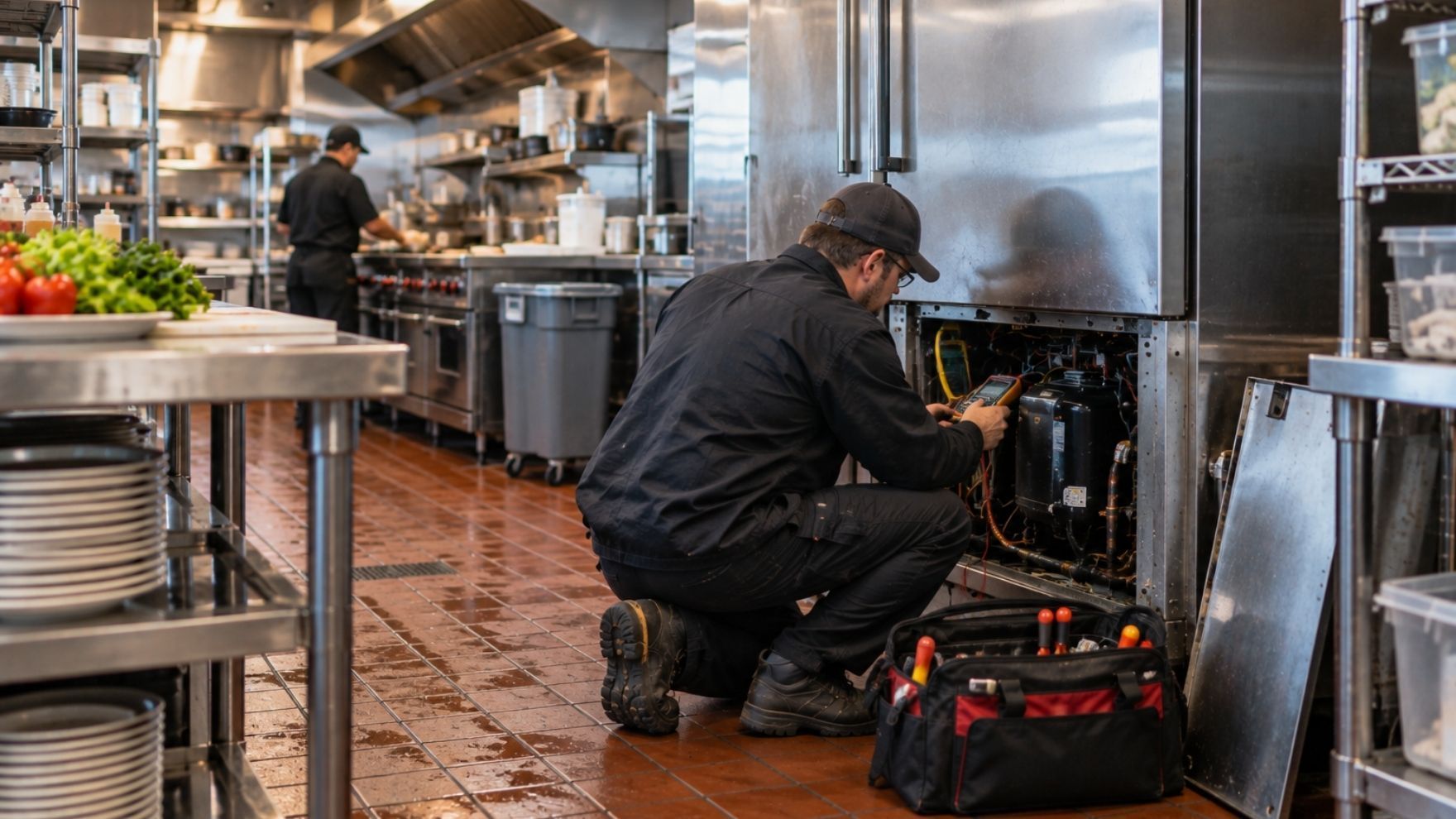
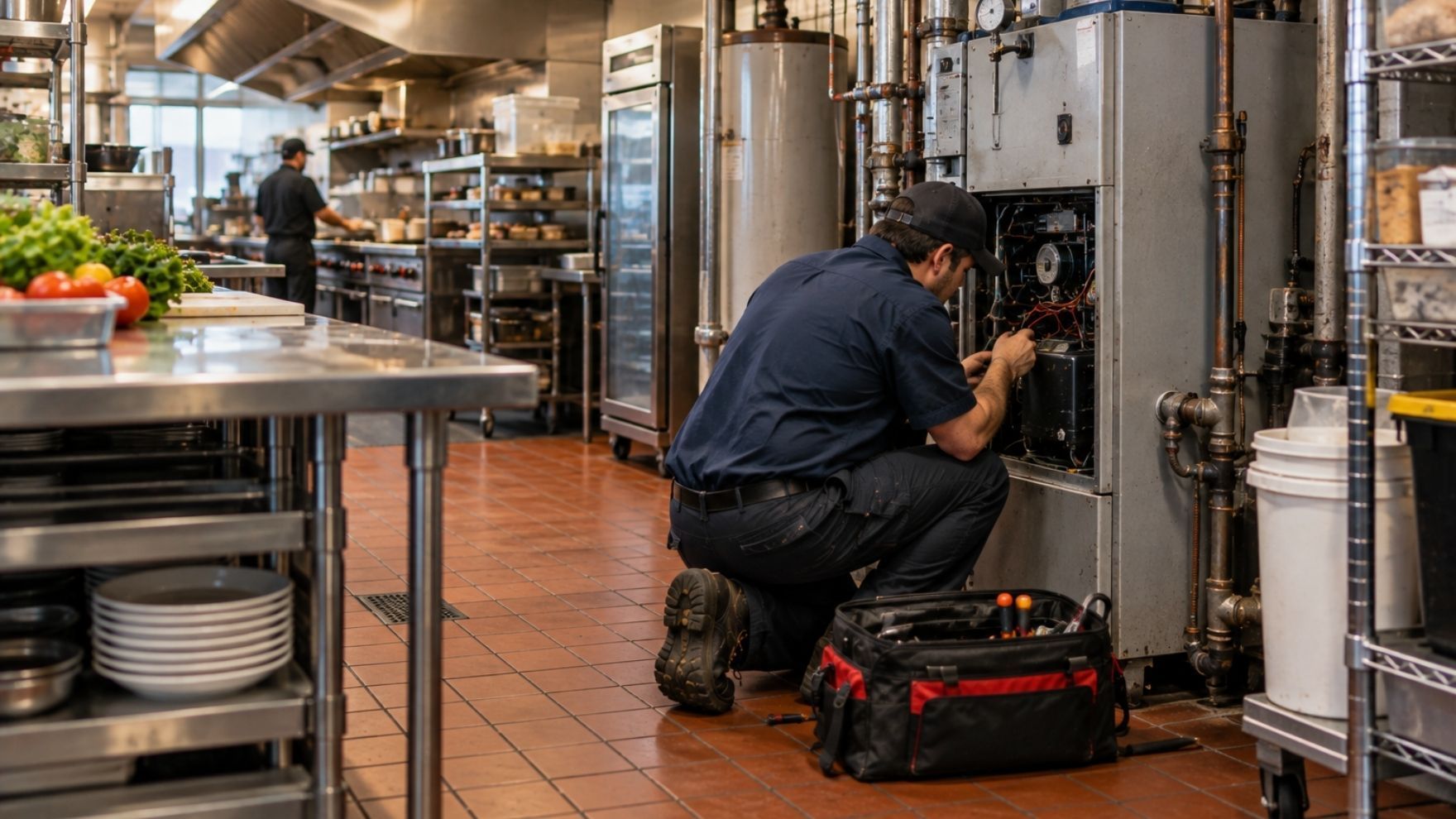
Walk-in coolers fail. Power outages happen during storms. A compressor dies on a Friday night, and by Monday morning you've lost $8,000 in protein, dairy, and produce. Standard property policies often exclude spoilage caused by mechanical breakdown unless you add a specific endorsement.
Equipment breakdown coverage (sometimes called boiler and machinery insurance) protects against the sudden failure of commercial ovens, refrigeration units, HVAC systems, and ice machines. For a restaurant carrying $150,000 to $300,000 in kitchen equipment, this endorsement typically costs $300 to $800 per year. That's a fraction of what a single compressor replacement runs, let alone the lost inventory.
If your franchise uses specialized equipment like wood-fired ovens, commercial smokers, or high-end espresso systems, make sure your property schedule lists each item with its current replacement value. Generic "contents" coverage may cap reimbursement well below what it actually costs to replace a $25,000 combi oven.
Employment Practices Liability (EPLI) in Food Service
Restaurants face more employment-related claims per capita than nearly any other industry. High turnover, tip disputes, scheduling conflicts, and a young workforce create fertile ground for allegations of harassment, discrimination, wrongful termination, and wage violations. The average EPLI claim costs between $75,000 and $125,000 to defend, even when the employer wins.
Most franchise master policies don't include EPLI. You'll need to purchase it separately or through an endorsement. A standalone EPLI policy for a single-unit restaurant with 20 to 40 employees typically runs $1,200 to $3,500 annually, depending on your state and claims history. That's a manageable cost compared to a six-figure lawsuit.
One detail that trips up franchisees: EPLI policies usually require you to follow specific HR procedures, like documenting performance issues and using written warnings, for coverage to apply. If you skip those steps and a former employee sues, the carrier may deny the claim.
Cyber Liability for Point-of-Sale (POS) Systems
Every franchise restaurant processes credit card transactions, and most now use cloud-based POS systems that store customer data. A breach at your location, whether from malware, a compromised terminal, or an employee skimming card numbers, triggers notification requirements under state data breach laws. In 2026, 49 states plus the District of Columbia have breach notification statutes with varying timelines and penalties.
Cyber liability coverage pays for forensic investigation, customer notification, credit monitoring, legal defense, and regulatory fines. For a restaurant processing $1 million to $3 million in annual card transactions, a $100,000 to $250,000 cyber policy typically costs $500 to $1,500 per year. Without it, you're absorbing those costs out of pocket while simultaneously dealing with the reputational fallout.
Factors Influencing Franchise Insurance Pricing
Premiums for restaurant franchise insurance vary widely, from $8,000 per year for a small quick-service unit to $35,000 or more for a full-service location with a bar, delivery drivers, and 50-plus employees. Understanding what drives those numbers helps you control costs without sacrificing protection.
How Revenue and Payroll Affect Premiums
General liability premiums are typically rated on gross revenue. A location generating $1.5 million in annual sales will pay roughly 40 to 60 percent more for GL coverage than one doing $800,000. Workers' compensation is rated on payroll, broken down by job classification. Kitchen staff carry higher classification rates than hosts or cashiers because of the injury risk from knives, fryers, and heavy lifting.
One common mistake: underreporting payroll at the start of the policy year to lower your initial premium. Carriers audit your books at year-end, and if actual payroll exceeds your estimate, you'll owe a lump-sum adjustment, sometimes with interest. It's better to estimate accurately from the start and budget for the real cost.
The Impact of Safety Protocols and Claims History
Your experience modification rate, or mod rate, reflects your claims history relative to similar businesses. A mod rate of 1.0 is average. Below 1.0 means fewer claims than expected, which lowers your premium. Above 1.0 means more claims, which increases it. A restaurant with a 0.85 mod rate might save 15 percent on workers' comp compared to one at 1.15.
Practical steps that lower your mod rate over time include installing fire suppression systems (required in most commercial kitchens anyway), maintaining ServSafe certifications for managers, using slip-resistant flooring and mats, and conducting documented safety training quarterly. Some carriers also offer premium credits of 5 to 10 percent for bundling policies into a Business Owner's Policy, or BOP, which combines property, general liability, and business interruption under one policy.
Common Questions About Restaurant Franchise Insurance
Can I use my own insurance broker instead of the franchisor's recommended one? Most franchise agreements allow it, as long as your coverage meets or exceeds the minimums in the FDD. An independent broker who specializes in restaurant risks may find better rates or more tailored coverage than the franchisor's preferred vendor.
Does the franchisor's master policy cover my delivery drivers? Usually not. If your employees use personal vehicles for deliveries, you need hired and non-owned auto coverage. If you operate company-owned delivery vehicles, you need a commercial auto policy. Neither is typically included in a master program.
What happens if my landlord requires higher limits than my franchise agreement? You meet the higher requirement. The landlord's lease terms take priority for your specific location. You can usually increase your liability limits or add an umbrella policy for a relatively modest additional premium, often $300 to $600 per year for an extra $1 million in coverage.
Will my premium go down if I've never filed a claim? It should. A clean claims history improves your mod rate and makes you a more attractive risk to underwriters. After three to five claim-free years, you're in a strong position to negotiate lower rates at renewal.
Do I need liquor liability even if I only serve beer and wine? Yes. Any establishment that serves alcohol, regardless of type, faces liquor liability exposure. If a patron leaves your restaurant intoxicated and causes an accident, you could be held liable under your state's dram shop laws.
Is flood damage covered under my property policy?
No. Standard commercial property policies exclude flood damage. If your location sits in a flood-prone area, you'll need a separate flood policy through the National Flood Insurance Program or a private carrier.
Making the Right Choice for Your Location
Your franchise brand gives you a head start on insurance, but it doesn't finish the job. The master policy or recommended program is a foundation, not a complete solution. Every location carries its own mix of risks shaped by geography, local laws, lease terms, menu, staffing levels, and claims history.
Start by reading your FDD's insurance requirements alongside your lease agreement. Identify where the franchise program falls short of what your landlord or state demands. Then work with a broker who understands restaurant risks to fill those gaps with endorsements or standalone policies for spoilage, EPLI, cyber liability, and hired auto coverage.
The right insurance program for your restaurant franchise isn't the cheapest one or the one with the most coverage. It's the one that matches your actual exposure, keeps you compliant with every entity that has a say in your operations, and doesn't leave you scrambling after a claim. Spend the time now to get it right, and you'll protect both your investment and your peace of mind for years to come.
About The Author:
Dustin Hulett
As Owner of Cuisine Coverage powered by Hulett Insurance, I specialize in protecting restaurants, bars, and hospitality businesses with smart, reliable insurance solutions. With years of experience serving the food and beverage industry, my goal is to make coverage simple, transparent, and built around the unique risks that owners face every day.
Contact Us
Business Coverage
Protection for Every Part of Your Food Business
Cuisine Coverage provides specialized insurance for restaurants, food trucks, catering services, and other hospitality businesses. We help owners protect their property, staff, and reputation with policies built around the most common industry risks.

General Liability Insurance
Protects your business from claims related to injury, property damage, or accidents that happen during operations.
General Liability
Liquor Liability Insurance
Covers alcohol-related incidents for restaurants, bars, or venues that serve or sell alcohol.
Liquor Liability
Workers Compensation Insurance
Provides wage replacement and medical benefits to employees injured on the job.
Workers Compensation
Business Interruption Insurance
Helps replace lost income and cover ongoing expenses if your business operations are temporarily halted.
Business Interruption
Product Liability Insurance
Protects against claims related to foodborne illness, contamination, or product defects.
Product Liability
Cyber Liability Insurance
Covers data breaches, online payment issues, and digital risks that can affect modern food businesses.
Cyber Liability
Serving the Food and Hospitality Industry
Insurance Solutions for Every Type of Food Business
Cuisine Coverage provides specialized insurance for restaurants, cafés, and food service professionals across the country. Whether you run a casual kitchen or a mobile food truck, we offer coverage that fits your operations and risk level.
How It Works
Insurance Made Easy for Food Business Owners
We know you don’t have time to deal with complicated insurance forms. That’s why our process is built for speed and simplicity — so you can get back to running your kitchen.
Your Insurance Questions Answered
What Restaurant and Food Business Owners Ask Most
What types of insurance do restaurants and food businesses need?
Most food businesses need general liability, property, and workers’ compensation coverage. These protect against injuries, equipment damage, and employee-related incidents. Businesses serving alcohol should also include liquor liability insurance for extra protection.
Having the right mix of policies helps reduce financial risks. We’ll help you identify the specific coverages your business needs based on your setup, size, and operations.
Do you provide insurance for food trucks and mobile kitchens?
Yes. We specialize in insurance for food trucks, trailers, and mobile vendors. Our coverage includes vehicle protection, cooking equipment, and liability for events or customer interactions.
We can also help you meet licensing and vendor requirements by issuing certificates of insurance quickly — often the same day.
How fast can I get a quote or start coverage?
In most cases, quotes are ready within 24 hours once we have your business details. After approval, coverage and certificates can be issued immediately.
Our process is fully digital but supported by real agents who review each policy for accuracy. You’ll always know exactly what you’re getting before coverage starts.
Do you offer liquor liability insurance for bars or restaurants?
Yes. We provide liquor liability insurance for bars, taverns, and restaurants that sell or serve alcohol. This coverage protects against claims involving intoxicated patrons or alcohol-related incidents.
It’s essential for maintaining compliance with local laws and protecting your business from costly lawsuits. We’ll ensure your policy meets all licensing requirements.
How can I reduce my insurance costs?
You can often lower premiums by bundling multiple coverages, maintaining clean safety records, and conducting regular policy reviews. Many insurers also offer discounts for installing safety systems and training employees.
At Cuisine Coverage, we proactively review your policy before renewal to help you keep costs down without reducing protection.
Do you help with certificates of insurance (COIs)?
Yes. We provide same-day certificates for vendors, landlords, and event partners. You can request them by phone or email anytime.
Having your COI ready keeps your business compliant and avoids delays in operations. Our team handles these requests quickly so you can stay focused on running your business.
From the Kitchen to Coverage
Real Advice for the Food and Hospitality Industry
We share tips, updates, and real-world stories from the food and insurance industries. Whether you’re managing a restaurant or rolling out a food truck, our articles give you useful guidance to protect your business and grow with confidence.
Contact Us
Phone
Location