Chipotle FranchiseE INSURANCE
OR call us: (214) 667-2729
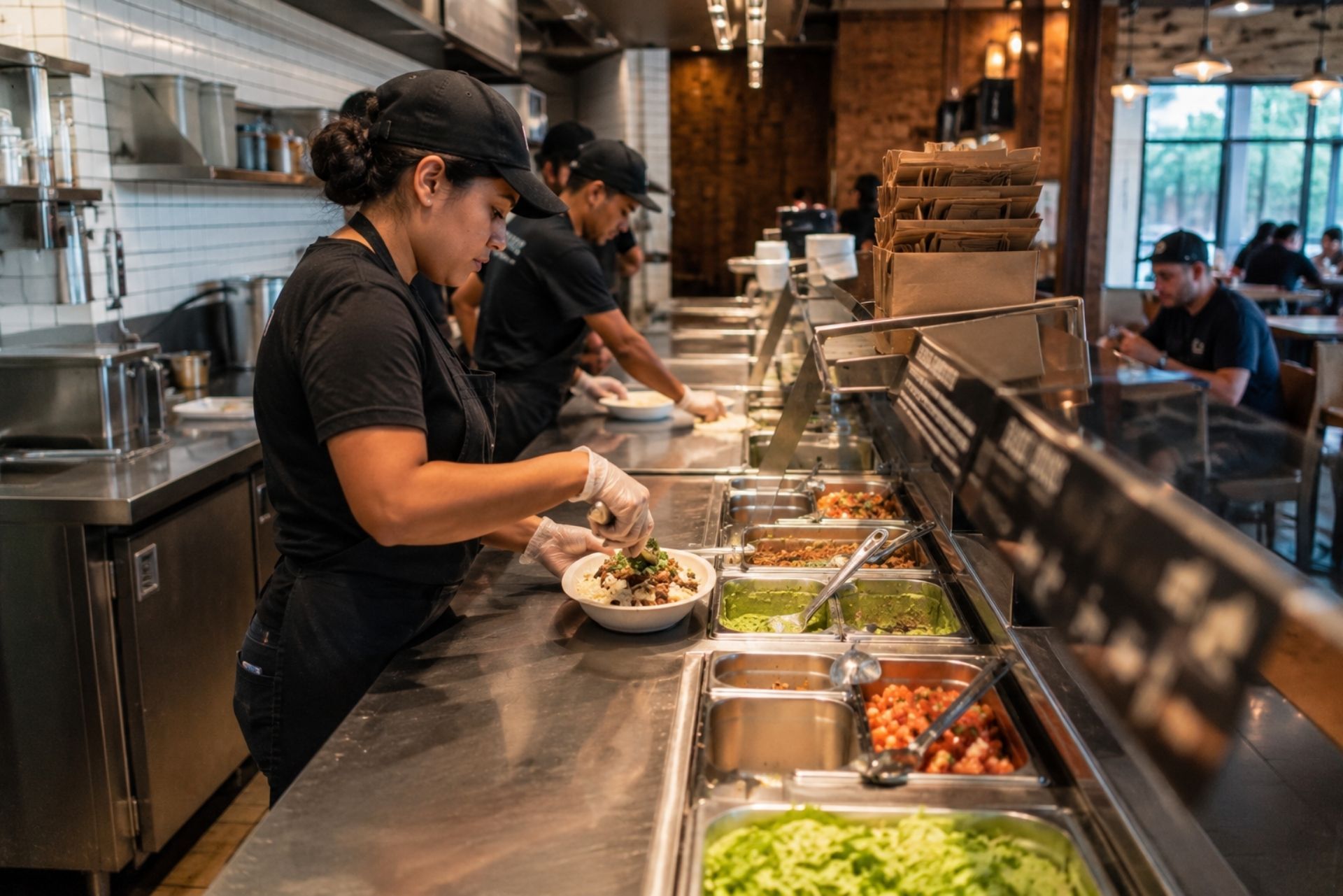
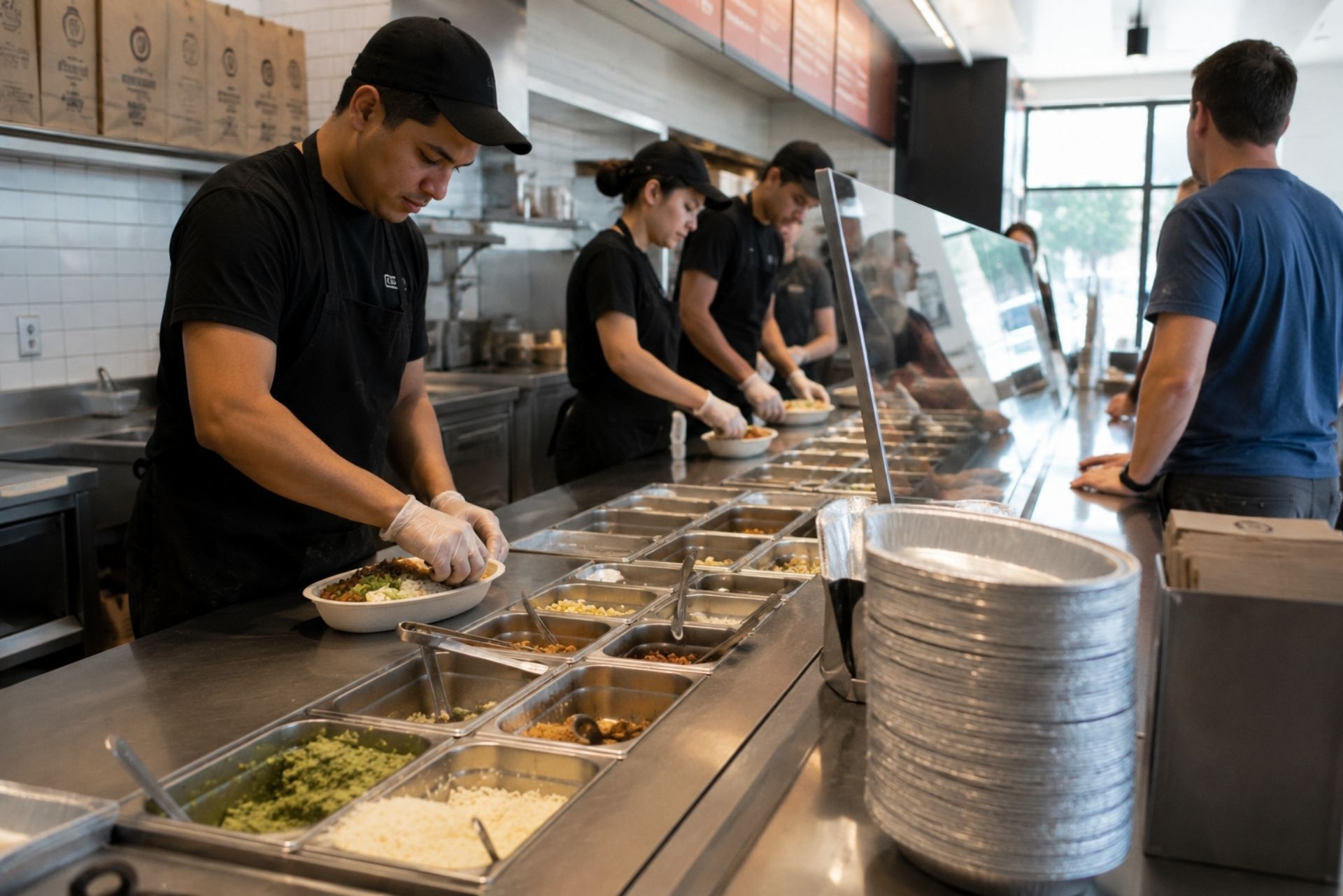
Running a Chipotle franchise means managing a fast-moving operation with high foot traffic, perishable inventory, digital ordering platforms, and dozens of employees
per location. Each of those elements carries its own insurance exposure, and the franchisor's corporate team has specific expectations about how you address them. Whether you're opening your first location or adding a second Chipotlane-equipped restaurant, understanding your insurance obligations for property, product liability, employee coverage, cyber risk, and delivery exposures isn't optional. It's baked into the
franchise agreement itself. Chipotle is equipping
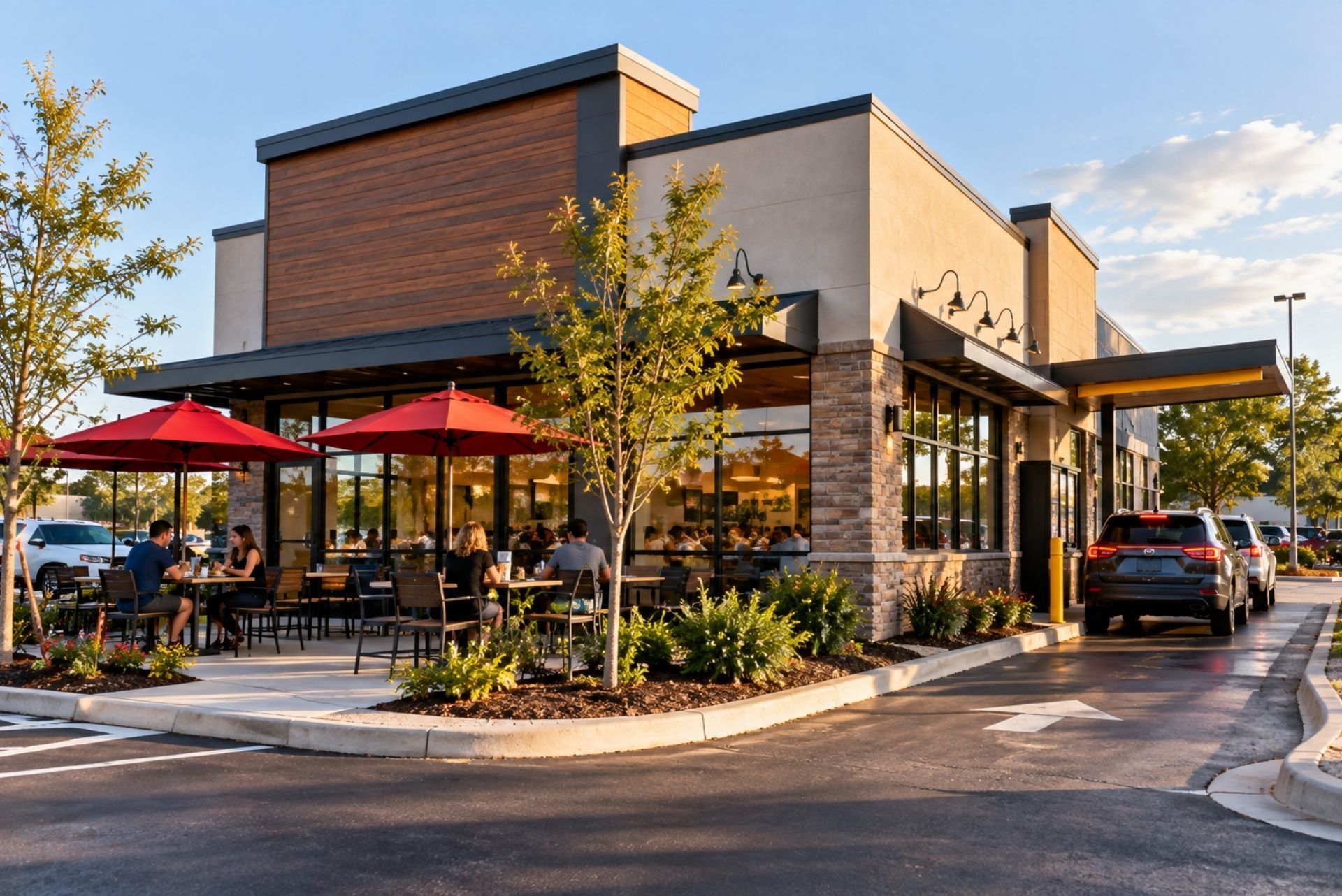
80% of new restaurants with Chipotlane drive-thru pickup windows, which increases on-premises auto traffic and raises the stakes for adequate liability coverage. Getting your insurance program right from day one protects your investment, keeps you compliant with the Franchise Disclosure Document, and prevents a single claim from derailing years of work. Here's what every franchisee needs to know about structuring the right coverage.
Mandatory Coverage for Chipotle Franchise Operations
Chipotle's corporate team doesn't leave insurance decisions entirely up to franchisees. The franchise agreement spells out minimum coverage types and limits you must carry at all times. Falling short of these requirements can trigger a default notice, so treat them as non-negotiable line items in your operating budget.
Your annual insurance spend will typically fall between $15,000 and $35,000 per location, depending on your state, claims history, and whether you bundle policies into a Business Owner's Policy (BOP). A BOP combines property and general liability into a single package, often at a 10-15% discount compared to buying each policy separately. That said, a BOP alone won't satisfy every requirement in the franchise agreement, so plan on layering additional policies on top.
General Liability and Property Damage Limits
Most franchise agreements require a minimum of $1 million per occurrence and $2 million aggregate for commercial general liability (CGL). This covers slip-and-fall injuries, third-party property damage, and advertising injury claims. Your property policy should cover the full replacement cost of the building interior, equipment, and tenant improvements. Don't overlook high-value items like Cado tortilla presses, commercial rice cookers, and custom millwork. Underinsuring your build-out by even 20% can leave you six figures short after a fire or flood.
A common mistake: franchisees insure for the depreciated value of equipment rather than replacement cost. When a $45,000 grill system needs replacing after a grease fire, a policy paying actual cash value might only cover $28,000. Specify replacement cost valuation on your property schedule and update it annually.
Workers' Compensation and State Compliance
Every state except Texas requires workers' compensation coverage, and even in Texas, Chipotle's franchise agreement may mandate it regardless. Workers' comp covers medical expenses, lost wages, and rehabilitation for employees injured on the job. Premiums are calculated using your state's classification code for fast-casual restaurants, your payroll size, and your experience modification rate (EMR).
A new franchisee typically starts with an EMR of 1.0. If you have frequent claims, that number rises, and your premiums climb with it. Installing anti-slip mats, enforcing knife safety protocols, and running regular food safety training can keep your EMR low. Some states, like California and New York, have higher base rates, so budget accordingly. Expect to pay between $2,500 and $8,000 annually per location depending on your headcount and jurisdiction.
Umbrella and Excess Liability Requirements
Chipotle typically requires an umbrella or excess liability policy of at least $5 million. This kicks in once your underlying CGL, auto, or employer's liability limits are exhausted. For a restaurant serving thousands of customers per week, a single serious injury claim can blow past a $1 million CGL limit fast. Umbrella policies are relatively affordable for the protection they provide, usually running $2,000 to $5,000 per year for a $5 million limit. Think of it as your financial backstop for catastrophic events.

By: Dustin Hulett
Founder & CEO of Cuisine Coverage
Specialized Risks in the Fast-Casual Industry
Standard policies cover the basics, but fast-casual restaurants face risks that generic coverage often misses. Chipotle's model, with its emphasis on fresh ingredients, high employee counts, and digital sales channels, creates exposures that require specialized endorsements or standalone policies.
Food Contamination and Spoilage Protection
A single foodborne illness outbreak can generate millions in liability claims and destroy customer trust overnight. Product liability insurance covers bodily injury claims from contaminated food, but you also need spoilage coverage for inventory losses. If a walk-in cooler fails on a Friday night and you lose $3,000 in fresh produce, chicken, and steak, spoilage coverage reimburses that loss. Typical restaurant insurance packages include spoilage endorsements starting around $500 annually, with limits of $10,000 to $25,000.
Product recall coverage is a separate consideration. If a supplier ships contaminated cilantro or tainted avocados, you may need to pull inventory and shut down temporarily. A product recall policy covers the cost of removing affected items, notifying customers, and lost business income during the disruption.
Employment Practices Liability Insurance (EPLI)
With 25 to 50 employees per location, the odds of facing a discrimination, harassment, or wrongful termination claim are real. EPLI covers legal defense costs and settlements arising from employment-related allegations. The restaurant industry sees a disproportionate number of these claims due to high turnover, young workforces, and fast-paced management decisions.
EPLI premiums for a single restaurant location typically run $1,200 to $3,500 per year. Your policy should cover claims from current employees, former employees, and job applicants. One thing to keep in mind: EPLI policies often have a retroactive date, meaning they won't cover incidents that occurred before the policy's effective date. Get this coverage in place before you hire your first crew member.
Cyber Liability for Digital Ordering Systems
Chipotle's digital sales now represent a significant share of total revenue, and your franchise location processes credit card data, stores customer information, and connects to third-party delivery platforms daily. A data breach at a single location can expose thousands of payment records. Cyber liability insurance covers breach notification costs, credit monitoring for affected customers, forensic investigation expenses, and regulatory fines.
Policies typically start at $1,000 to $2,500 annually for $1 million in coverage. PCI-DSS compliance is a separate obligation, but having cyber insurance demonstrates to both the franchisor and your payment processor that you're prepared for digital threats.
Comparing Required vs. Recommended Coverage
Not every policy your broker suggests is mandated by the franchise agreement. Understanding the difference helps you prioritize spending without leaving gaps.
| Coverage Type | Required by Franchise Agreement | Recommended | Typical Annual Cost |
|---|---|---|---|
| Commercial General Liability | Yes, $1M/$2M minimum | Higher limits available | $3,000 - $7,000 |
| Property Insurance | Yes, replacement cost | Include equipment breakdown | $2,500 - $6,000 |
| Workers' Compensation | Yes (most states) | Always carry it | $2,500 - $8,000 |
| Umbrella/Excess Liability | Yes, $5M minimum | $10M for high-traffic locations | $2,000 - $5,000 |
| Product Liability | Yes, often within CGL | Standalone for higher limits | Included in CGL or $1,500+ |
| EPLI | Sometimes required | Strongly recommended | $1,200 - $3,500 |
| Cyber Liability | Increasingly required | Essential for digital sales | $1,000 - $2,500 |
| Hired/Non-Owned Auto | Yes, if delivery exists | Required for Chipotlane traffic | $500 - $1,500 |
| Business Interruption | Yes, typically | Critical for income protection | $1,000 - $3,000 |
Hired and non-owned auto coverage deserves special attention. If employees ever drive their personal vehicles for restaurant business, even a quick supply run, your standard auto policy won't cover an accident. This endorsement fills that gap.
The FDD is your blueprint for understanding exactly what Chipotle expects from franchisees. Item 8 of the FDD specifically addresses insurance obligations, and it's one of the most scrutinized sections during the onboarding process.
Identifying Minimum Policy Limits
Item 8 lists each required coverage type along with minimum per-occurrence limits, aggregate limits, and any deductible caps. Don't skim this section. Some franchisors cap deductibles at $5,000 or $10,000 to ensure franchisees can actually afford to file a claim. If your policy has a $25,000 deductible to save on premiums, you may violate the franchise agreement.
Review the FDD alongside your insurance broker. A broker experienced in franchise restaurant insurance can map each FDD requirement to a specific policy provision and flag any gaps. Chipotle's international expansion also means the FDD evolves regularly, so check for updates each renewal period.
Naming Chipotle Mexican Grill, Inc. as Additionally Insured
The franchise agreement requires you to name Chipotle Mexican Grill, Inc. as an additional insured on your CGL, umbrella, and often your property policies. This gives the corporate entity certain rights under your policy, including the ability to receive notice of cancellation and to be defended under your policy if a claim names both you and the franchisor.
Your insurance carrier will issue an additional insured endorsement, usually at no extra cost. Request a certificate of insurance (COI) listing Chipotle as additional insured and send it to the corporate compliance team before your opening date. Late or missing COIs are one of the most common compliance issues new franchisees face, and they're entirely preventable.
Common Questions About Chipotle Insurance
Does my landlord also need to be listed as additional insured? Yes. Most commercial leases require the landlord or property management company to appear as additional insured on your CGL policy. This is separate from the Chipotle corporate requirement, so your COI will list multiple additional insureds.
Can I use any insurance carrier, or does Chipotle require specific companies? The franchise agreement typically doesn't mandate a specific carrier, but it may require a minimum financial strength rating, usually A.M. Best A- VII or higher. Work with a broker who can confirm your carrier meets this threshold.
What happens if I let a policy lapse? A coverage lapse can trigger a default notice under the franchise agreement. Chipotle can require you to cure the default within a set timeframe, and repeated lapses could jeopardize your franchise rights. Set up autopay and calendar your renewal dates.
How do I handle insurance for third-party delivery drivers? Drivers from DoorDash, Uber Eats, or similar platforms are typically covered under the platform's own insurance. Your hired and non-owned auto policy covers your employees using personal vehicles. Confirm this distinction with your broker to avoid paying for overlapping coverage.
Will bundling policies save money? A BOP combining property and general liability usually saves 10-15% compared to standalone policies. Adding an umbrella to the same carrier can yield further discounts. Ask your broker about package pricing.
What This Means for Your Business
Your Chipotle franchise insurance program isn't just a compliance checkbox. It's the financial foundation that lets you operate confidently, knowing a kitchen fire, a slip-and-fall lawsuit, or a data breach won't wipe out your investment. Start by reading Item 8 of the FDD line by line, then sit down with a broker who specializes in franchise restaurant coverage. Match every FDD requirement to a specific policy, confirm your additional insured endorsements are in place, and review your property and equipment schedules annually to keep pace with rising replacement costs.
The franchisees who avoid costly surprises are the ones who treat insurance as an active part of their business strategy, not a set-it-and-forget-it expense. Build your coverage right, review it every year, and keep your COIs current. That discipline pays for itself the first time you need to file a claim.
About The Author:
Dustin Hulett
As Owner of Cuisine Coverage powered by Hulett Insurance, I specialize in protecting restaurants, bars, and hospitality businesses with smart, reliable insurance solutions. With years of experience serving the food and beverage industry, my goal is to make coverage simple, transparent, and built around the unique risks that owners face every day.
Contact Us
Business Coverage
Protection for Every Part of Your Food Business
Cuisine Coverage provides specialized insurance for restaurants, food trucks, catering services, and other hospitality businesses. We help owners protect their property, staff, and reputation with policies built around the most common industry risks.

General Liability Insurance
Protects your business from claims related to injury, property damage, or accidents that happen during operations.
General Liability
Liquor Liability Insurance
Covers alcohol-related incidents for restaurants, bars, or venues that serve or sell alcohol.
Liquor Liability
Workers Compensation Insurance
Provides wage replacement and medical benefits to employees injured on the job.
Workers Compensation
Business Interruption Insurance
Helps replace lost income and cover ongoing expenses if your business operations are temporarily halted.
Business Interruption
Product Liability Insurance
Protects against claims related to foodborne illness, contamination, or product defects.
Product Liability
Cyber Liability Insurance
Covers data breaches, online payment issues, and digital risks that can affect modern food businesses.
Cyber Liability
Serving the Food and Hospitality Industry
Insurance Solutions for Every Type of Food Business
Cuisine Coverage provides specialized insurance for restaurants, cafés, and food service professionals across the country. Whether you run a casual kitchen or a mobile food truck, we offer coverage that fits your operations and risk level.
How It Works
Insurance Made Easy for Food Business Owners
We know you don’t have time to deal with complicated insurance forms. That’s why our process is built for speed and simplicity — so you can get back to running your kitchen.
Your Insurance Questions Answered
What Restaurant and Food Business Owners Ask Most
What types of insurance do restaurants and food businesses need?
Most food businesses need general liability, property, and workers’ compensation coverage. These protect against injuries, equipment damage, and employee-related incidents. Businesses serving alcohol should also include liquor liability insurance for extra protection.
Having the right mix of policies helps reduce financial risks. We’ll help you identify the specific coverages your business needs based on your setup, size, and operations.
Do you provide insurance for food trucks and mobile kitchens?
Yes. We specialize in insurance for food trucks, trailers, and mobile vendors. Our coverage includes vehicle protection, cooking equipment, and liability for events or customer interactions.
We can also help you meet licensing and vendor requirements by issuing certificates of insurance quickly — often the same day.
How fast can I get a quote or start coverage?
In most cases, quotes are ready within 24 hours once we have your business details. After approval, coverage and certificates can be issued immediately.
Our process is fully digital but supported by real agents who review each policy for accuracy. You’ll always know exactly what you’re getting before coverage starts.
Do you offer liquor liability insurance for bars or restaurants?
Yes. We provide liquor liability insurance for bars, taverns, and restaurants that sell or serve alcohol. This coverage protects against claims involving intoxicated patrons or alcohol-related incidents.
It’s essential for maintaining compliance with local laws and protecting your business from costly lawsuits. We’ll ensure your policy meets all licensing requirements.
How can I reduce my insurance costs?
You can often lower premiums by bundling multiple coverages, maintaining clean safety records, and conducting regular policy reviews. Many insurers also offer discounts for installing safety systems and training employees.
At Cuisine Coverage, we proactively review your policy before renewal to help you keep costs down without reducing protection.
Do you help with certificates of insurance (COIs)?
Yes. We provide same-day certificates for vendors, landlords, and event partners. You can request them by phone or email anytime.
Having your COI ready keeps your business compliant and avoids delays in operations. Our team handles these requests quickly so you can stay focused on running your business.
From the Kitchen to Coverage
Real Advice for the Food and Hospitality Industry
We share tips, updates, and real-world stories from the food and insurance industries. Whether you’re managing a restaurant or rolling out a food truck, our articles give you useful guidance to protect your business and grow with confidence.
Contact Us
Phone
Location