McDonald's FranchiseE INSURANCE
OR call us: (214) 667-2729
Opening a McDonald's franchise means stepping into one of the most recognized brands on the planet, but it also means accepting a complex set of insurance obligations. Between property coverage, liability protection, employee-related policies, and newer risks tied to delivery and digital ordering, the insurance portfolio for a single McDonald's location can involve a dozen or more policy types. Getting this right isn't optional: McDonald's corporate sets strict minimums, and falling short can put your franchise agreement at risk.
The good news is that McDonald's doesn't leave franchisees to figure this out alone. The company operates a
captive insurance program through Golden Arches Insurance Ltd. (GAIL), which partners with Zurich Insurance Company to offer standardized coverage options. That said, understanding what's required, what's recommended, and what gaps you'll need to fill on your own is critical before you sign a lease or flip on the fryers. This guide breaks down the property, liability, drive-through, delivery, employee, and
franchise-specific insurance requirements you'll face as a McDonald's franchisee in 2026.
Mandatory Insurance Requirements for McDonald's Franchisees
McDonald's corporate mandates specific insurance types and minimum coverage limits for every franchisee. These aren't suggestions. They're baked into your franchise agreement, and failing to maintain them can trigger default provisions. The requirements cover three primary areas: liability, property, and employee-related coverage.
General Liability and Property Damage Limits
Your commercial general liability (CGL) policy is the backbone of your insurance program. McDonald's typically requires a minimum of $1 million per occurrence and $2 million in aggregate coverage. This protects you if a customer slips on a wet floor, bites into something that causes injury, or suffers harm on your premises.
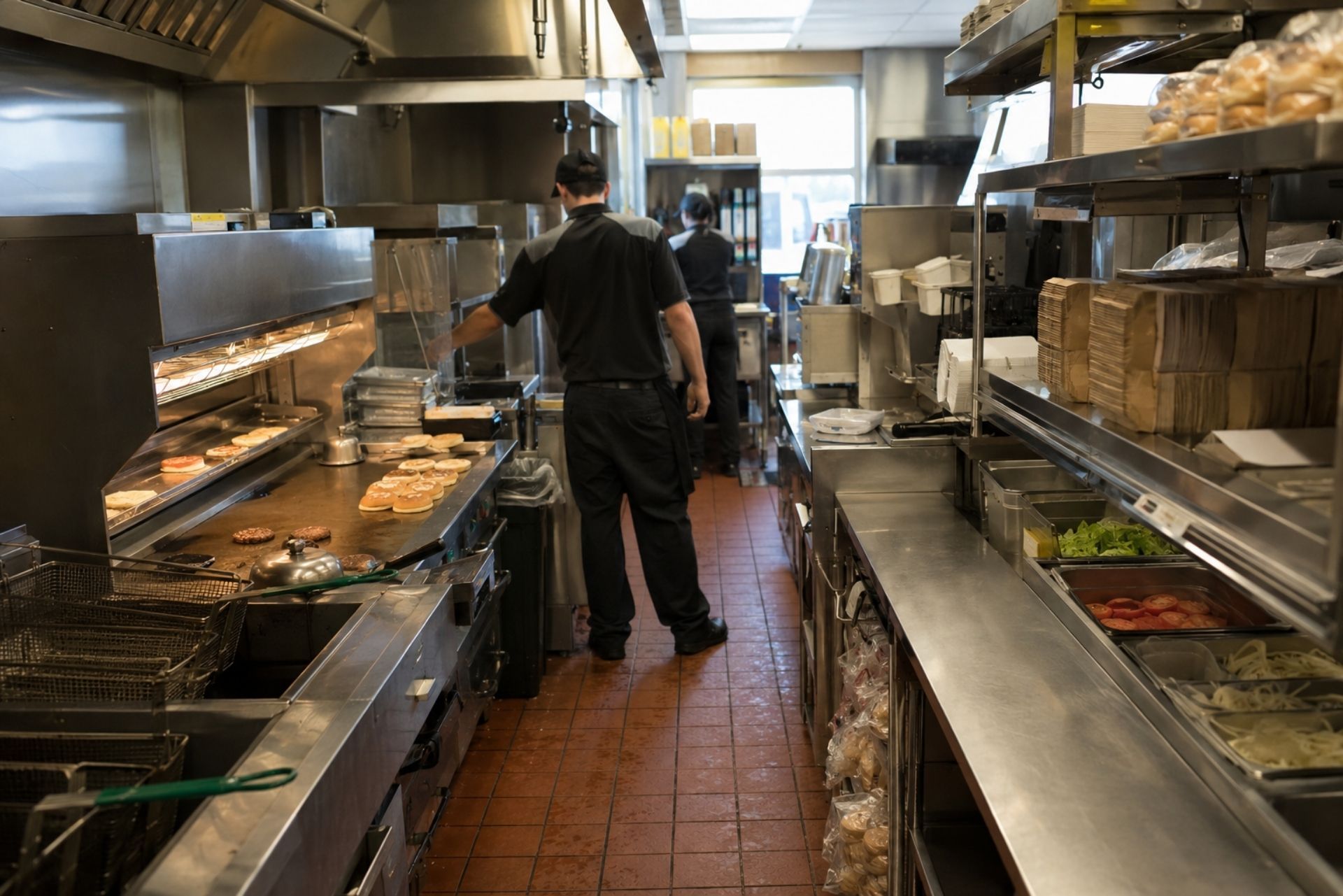
Property insurance must cover the full replacement cost of the building (if you own it), all equipment, inventory, signage, and tenant improvements. A single McDonald's kitchen contains hundreds of thousands of dollars in
specialized equipment, from multi-vat fryers to automated drink dispensers.
Underinsuring this equipment is one of the most common mistakes new franchisees make, because replacement costs in 2026 often exceed what owners estimated when they first opened. Recent
quarterly results from McDonald's reflect continued capital investment across the system, which means equipment values keep climbing.
Business Interruption and Equipment Breakdown
Business interruption insurance covers your lost income if a covered event, like a fire or severe storm, forces you to close temporarily. McDonald's requires this coverage because a dark restaurant still generates ongoing costs: rent, loan payments, and employee obligations don't pause because your dining room is gutted.
Equipment breakdown coverage (sometimes called mechanical breakdown) is separate from standard property insurance. Your property policy covers damage from external causes like fire or vandalism. Equipment breakdown covers internal failures: a compressor that burns out, a POS system that short-circuits, or a walk-in cooler that fails overnight and ruins $5,000 in perishable inventory. Most franchisees bundle this with their property policy, but you should confirm the sublimits are high enough to cover your most expensive pieces of equipment.
Workers' Compensation and Employer Liability
Every state requires workers' compensation insurance for employees, and McDonald's locations are no exception. A typical franchise employs 30 to 60 people across shifts, many of them working around hot oil, sharp equipment, and slippery floors. Workers' comp covers medical expenses and lost wages when an employee is injured on the job.
Employer liability insurance, which usually comes packaged with your workers' comp policy, protects you if an employee sues you for a workplace injury beyond what workers' comp covers. Premiums vary significantly by state. Texas and California, for example, have very different rate structures and regulatory environments. Your experience modification rate (or "mod rate") also matters: a clean safety record can lower your premium by 10% to 25%, while frequent claims will push it higher. Investing in workplace injury prevention programs pays off directly through lower insurance costs.

By: Dustin Hulett
Founder & CEO of Cuisine Coverage
Standard vs. Recommended Coverage Levels
McDonald's sets the floor, but many experienced franchisees carry coverage well above the minimums. The gap between "required" and "smart" can be significant.
Comparison Chart: Basic Franchise Requirements vs. Comprehensive Protection
| Coverage Type | Minimum Required | Recommended Level |
|---|---|---|
| General Liability | $1M per occurrence / $2M aggregate | $2M per occurrence / $5M aggregate |
| Property Insurance | Full replacement cost | Full replacement cost + equipment floater |
| Business Interruption | 12 months of projected income | 18-24 months of projected income |
| Workers' Compensation | State statutory limits | State limits + $1M employer liability |
| Umbrella/Excess Liability | $5M (varies by market) | $10M+ for high-traffic locations |
| Cyber Liability | Often not required | $1M minimum |
| EPLI | Often not required | $1M per claim |
| Commercial Auto | State minimums for owned vehicles | $1M combined single limit |
The umbrella policy deserves special attention. A $5 million umbrella might satisfy the franchise agreement, but a serious injury lawsuit at a busy location can easily exceed that.
Multi-unit operators often carry $10 million or more in umbrella coverage. The incremental cost of raising your umbrella from $5 million to $10 million is often just $1,500 to $3,000 per year, which is a small price for that level of protection.
Protecting Your Assets Against Modern Risks
Traditional property and liability coverage won't protect you from every threat a McDonald's franchise faces in 2026. Three categories of risk have grown sharply in recent years.
Cyber Liability for Digital Ordering Systems
McDonald's mobile app, kiosk ordering, and third-party delivery platforms process millions of transactions daily across the system. Your location handles customer payment data, employee personal information, and connects to McDonald's corporate network. A data breach or ransomware attack at the store level can trigger notification costs, legal fees, and regulatory fines.
Cyber liability insurance covers these exposures. Most policies include breach response services, forensic investigation costs, and third-party liability for compromised customer data. A $1 million cyber policy for a single franchise location typically runs $1,200 to $3,000 per year, depending on your revenue and security practices. Given that the average cost of a small business data breach exceeds $150,000, this is one of the best-value policies you can carry.
Employment Practices Liability Insurance (EPLI)
EPLI protects you against claims of wrongful termination, discrimination, harassment, and wage-and-hour violations. McDonald's franchisees have faced significant employment-related litigation in recent years, and individual franchisees can be named as defendants even when claims target the broader system.
With 30 to 60 employees and high turnover rates typical of quick-service restaurants, the odds of facing at least one employment claim over a five-year period are uncomfortably high. EPLI policies for a single McDonald's location generally cost $2,500 to $6,000 annually. The policy covers defense costs even if the claim is baseless, which matters because employment defense attorneys charge $300 to $500 per hour.
Commercial Auto for Delivery and Operations
If your franchise operates delivery vehicles, you need a commercial auto policy. But even if you don't own delivery vehicles, you should carry hired and non-owned auto (HNOA) coverage. This protects you when employees use their personal cars for business errands: bank deposits, supply runs, or catering deliveries.
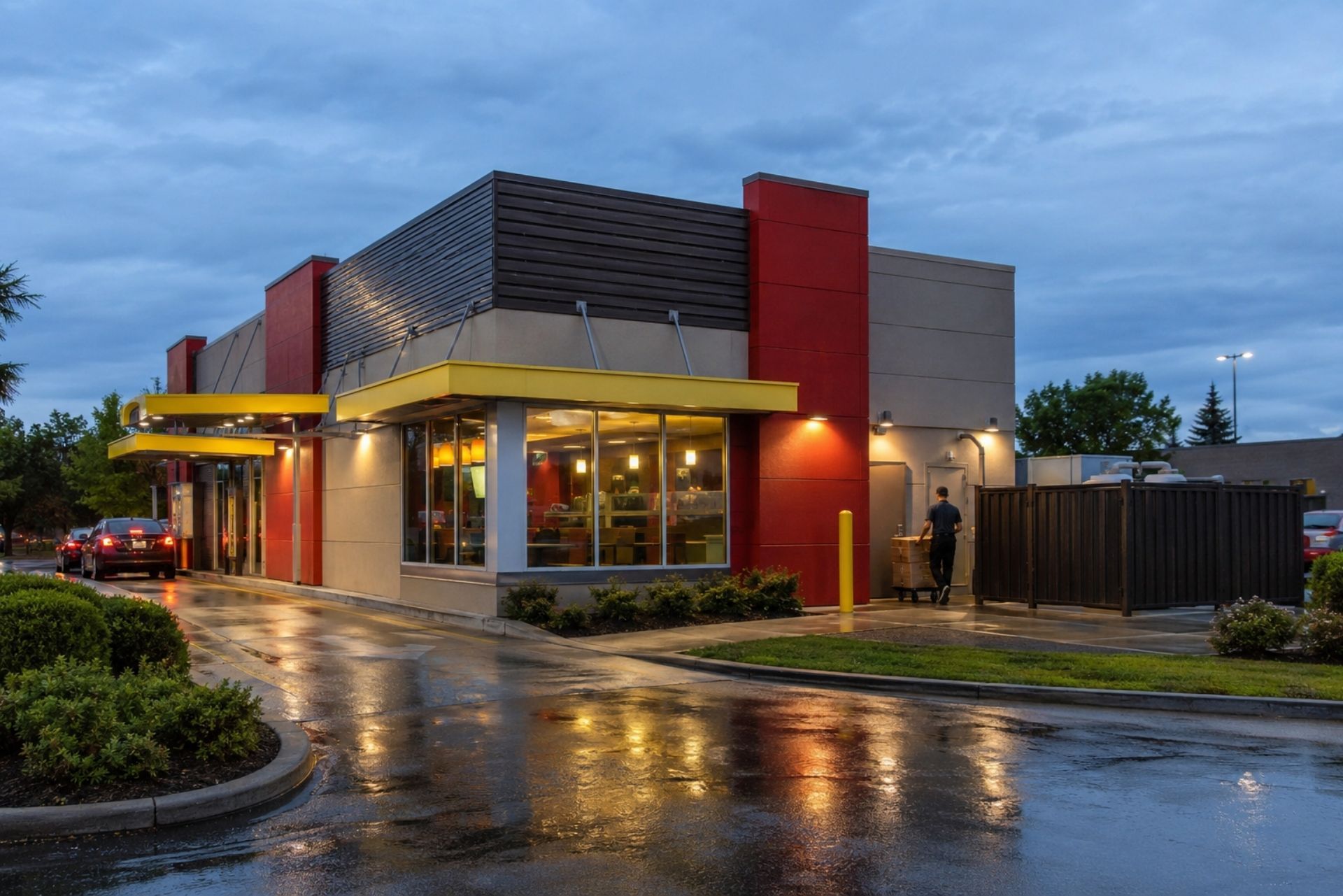
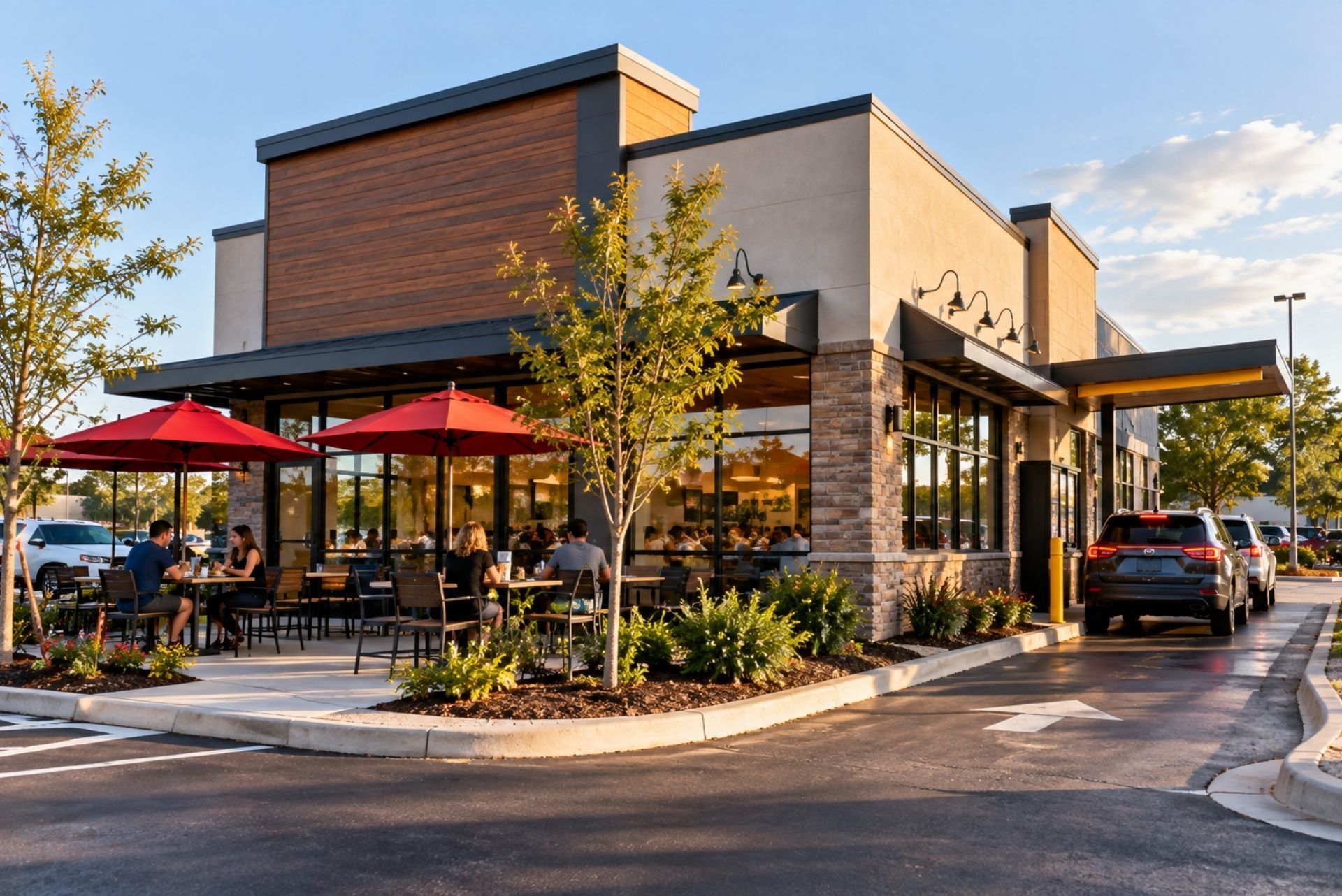
Some McDonald's locations also face drive-through-related liability claims involving vehicle damage or customer injuries in the
drive-through lane. Your general liability policy may cover some of these incidents, but a gap can exist if the claim involves vehicle-to-vehicle contact. Talk to your broker about whether your GL and auto policies coordinate properly for drive-through scenarios.
Your total insurance spend as a McDonald's franchisee will depend on several variables. Location is the biggest driver: a franchise in a flood zone or high-crime area will cost more to insure than one in a suburban strip mall. Annual revenue matters too, since many premiums are calculated as a rate per $1,000 of sales.
Your claims history has a direct impact. Franchisees with clean loss runs, meaning few or no claims over the past three to five years, qualify for better rates. Conversely, a single large claim can increase your premiums for years. Safety investments like fire suppression systems, security cameras, and anti-slip flooring can earn premium credits. Bundling multiple coverage types into a Business Owner's Policy (BOP) often saves 10% to 15% compared to purchasing each policy separately.
Multi-unit operators have an advantage here. Insuring five or ten locations under a single program gives you more negotiating power and typically results in lower per-location costs. The GAIL captive program through McDonald's is designed to provide this kind of scale, but you should still compare quotes from independent brokers who specialize in franchise insurance. McDonald's financial performance in 2026 has remained strong, which means underwriters view the brand favorably, and that helps keep rates competitive
Common Questions for New Franchise Owners
Does McDonald's provide the insurance for me?
Not exactly. McDonald's offers access to its captive insurance program, GAIL, which provides standardized coverage options at group rates. You're still responsible for purchasing and maintaining the policies. Think of GAIL as a buying group, not a free benefit.
How much does a typical policy cost per year?
Total insurance costs for a single McDonald's franchise typically range from $15,000 to $40,000 per year, depending on location, revenue, claims history, and the coverage levels you choose. High-revenue locations in urban areas with delivery operations will land at the higher end.
What happens if I don't meet the minimum coverage limits?
McDonald's can declare you in default of your franchise agreement. This can lead to forced corrective action, financial penalties, or in extreme cases, termination of your franchise rights. Your field consultant will periodically verify your insurance certificates.
Do I need separate insurance for my drive-thru?
You don't need a standalone drive-through policy, but you should confirm that your general liability and property policies explicitly cover drive-through operations. Incidents involving vehicles, signage damage, and pedestrian injuries near the drive-through lane are common claim types that some standard policies handle poorly.
Is food spoilage covered under standard property insurance?
Most property policies include a food spoilage sublimit, but it's often capped at $10,000 to $25,000. If your walk-in freezer fails and you lose a full inventory, the loss can exceed $30,000. Ask your broker about increasing the spoilage sublimit or adding an equipment breakdown endorsement that specifically covers refrigeration failure.
Making the Right Choice for Your Restaurant
Insurance for a McDonald's franchise isn't a single policy: it's a portfolio of coverages that work together to protect your investment, your employees, and your customers. The franchise agreement sets the baseline, but smart operators build beyond those minimums based on their specific risks.
Start by working with a broker who understands franchise insurance and the McDonald's system specifically. Groups like the American Franchise Services Association can connect you with specialists who know the GAIL program inside and out. Review your coverage annually, not just at renewal. Adding a delivery program, remodeling your dining room, or expanding your hours all change your risk profile.
The most expensive insurance mistake isn't paying too much in premiums. It's discovering a coverage gap after a loss has already happened. Get your policies right from the start, revisit them as your business evolves, and treat insurance as a core operating cost, not an afterthought.
About The Author:
Dustin Hulett
As Owner of Cuisine Coverage powered by Hulett Insurance, I specialize in protecting restaurants, bars, and hospitality businesses with smart, reliable insurance solutions. With years of experience serving the food and beverage industry, my goal is to make coverage simple, transparent, and built around the unique risks that owners face every day.
Contact Us
Business Coverage
Protection for Every Part of Your Food Business
Cuisine Coverage provides specialized insurance for restaurants, food trucks, catering services, and other hospitality businesses. We help owners protect their property, staff, and reputation with policies built around the most common industry risks.

General Liability Insurance
Protects your business from claims related to injury, property damage, or accidents that happen during operations.
General Liability
Liquor Liability Insurance
Covers alcohol-related incidents for restaurants, bars, or venues that serve or sell alcohol.
Liquor Liability
Workers Compensation Insurance
Provides wage replacement and medical benefits to employees injured on the job.
Workers Compensation
Business Interruption Insurance
Helps replace lost income and cover ongoing expenses if your business operations are temporarily halted.
Business Interruption
Product Liability Insurance
Protects against claims related to foodborne illness, contamination, or product defects.
Product Liability
Cyber Liability Insurance
Covers data breaches, online payment issues, and digital risks that can affect modern food businesses.
Cyber Liability
Serving the Food and Hospitality Industry
Insurance Solutions for Every Type of Food Business
Cuisine Coverage provides specialized insurance for restaurants, cafés, and food service professionals across the country. Whether you run a casual kitchen or a mobile food truck, we offer coverage that fits your operations and risk level.
How It Works
Insurance Made Easy for Food Business Owners
We know you don’t have time to deal with complicated insurance forms. That’s why our process is built for speed and simplicity — so you can get back to running your kitchen.
Your Insurance Questions Answered
What Restaurant and Food Business Owners Ask Most
What types of insurance do restaurants and food businesses need?
Most food businesses need general liability, property, and workers’ compensation coverage. These protect against injuries, equipment damage, and employee-related incidents. Businesses serving alcohol should also include liquor liability insurance for extra protection.
Having the right mix of policies helps reduce financial risks. We’ll help you identify the specific coverages your business needs based on your setup, size, and operations.
Do you provide insurance for food trucks and mobile kitchens?
Yes. We specialize in insurance for food trucks, trailers, and mobile vendors. Our coverage includes vehicle protection, cooking equipment, and liability for events or customer interactions.
We can also help you meet licensing and vendor requirements by issuing certificates of insurance quickly — often the same day.
How fast can I get a quote or start coverage?
In most cases, quotes are ready within 24 hours once we have your business details. After approval, coverage and certificates can be issued immediately.
Our process is fully digital but supported by real agents who review each policy for accuracy. You’ll always know exactly what you’re getting before coverage starts.
Do you offer liquor liability insurance for bars or restaurants?
Yes. We provide liquor liability insurance for bars, taverns, and restaurants that sell or serve alcohol. This coverage protects against claims involving intoxicated patrons or alcohol-related incidents.
It’s essential for maintaining compliance with local laws and protecting your business from costly lawsuits. We’ll ensure your policy meets all licensing requirements.
How can I reduce my insurance costs?
You can often lower premiums by bundling multiple coverages, maintaining clean safety records, and conducting regular policy reviews. Many insurers also offer discounts for installing safety systems and training employees.
At Cuisine Coverage, we proactively review your policy before renewal to help you keep costs down without reducing protection.
Do you help with certificates of insurance (COIs)?
Yes. We provide same-day certificates for vendors, landlords, and event partners. You can request them by phone or email anytime.
Having your COI ready keeps your business compliant and avoids delays in operations. Our team handles these requests quickly so you can stay focused on running your business.
From the Kitchen to Coverage
Real Advice for the Food and Hospitality Industry
We share tips, updates, and real-world stories from the food and insurance industries. Whether you’re managing a restaurant or rolling out a food truck, our articles give you useful guidance to protect your business and grow with confidence.
Contact Us
Phone
Location