Jimmy John's Franchise INSURANCE
OR call us: (214) 667-2729
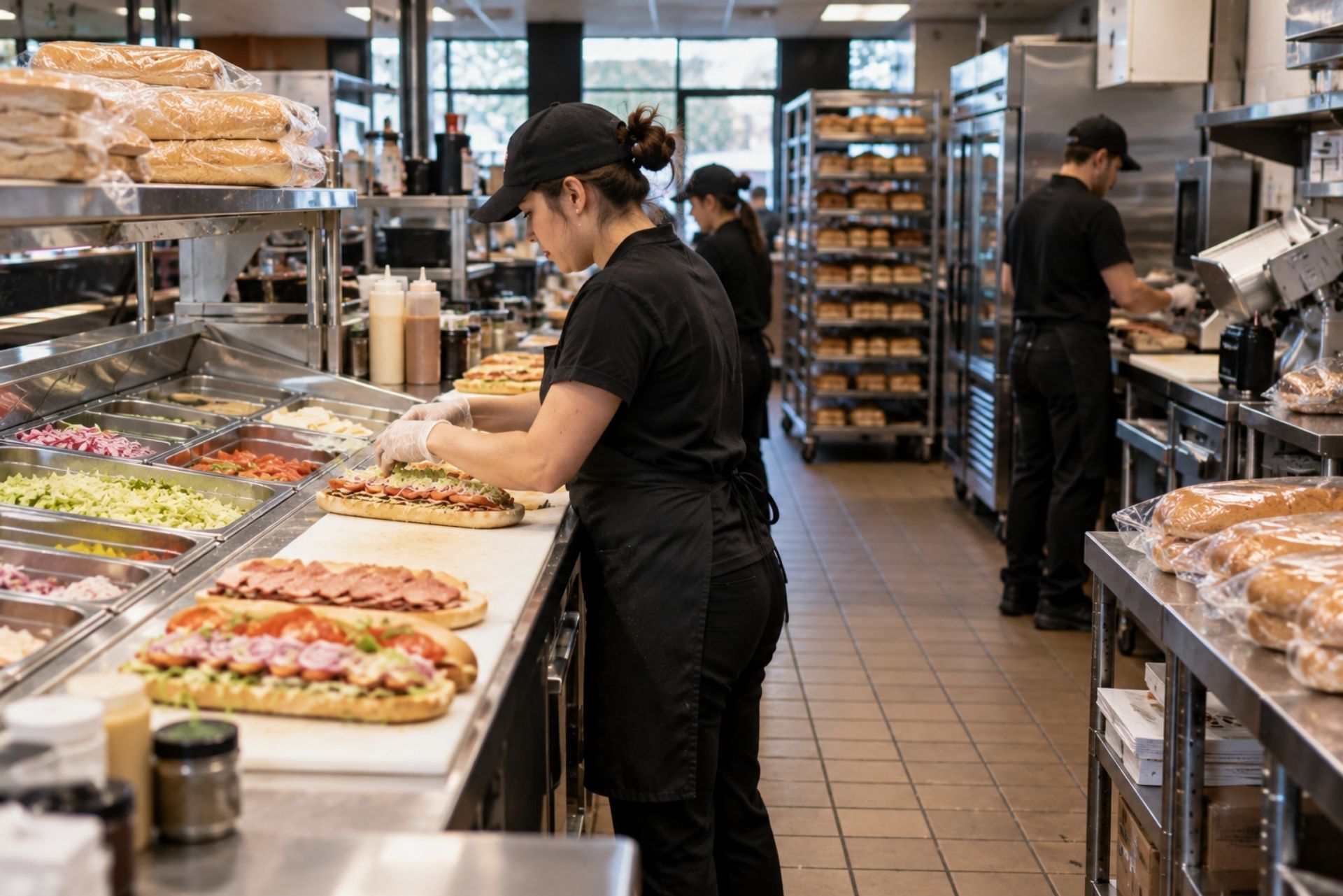
Most new Jimmy John's owners spend months on site selection, build-out, and hiring, then treat insurance as a box to check the week before opening. That's backwards. The brand's whole identity is built around speed, and speed on public roads, in a busy kitchen, and through an online ordering system creates exposures that a generic restaurant policy won't fully cover.
A sandwich shop that leans on delivery isn't just a food business. It's also a small transportation operation with employee drivers, a payment processor holding customer data, and a kitchen full of slicers that can take a fingertip off in a second. Each of those risks needs its own coverage, and the franchisor expects you to prove it before you open your doors.
This guide walks through what Jimmy John's franchise insurance looks like in practice. It covers the policies, the limits, the endorsements that trip people up, and the coverage gaps that show up after a claim, when it's too late to fix them.
Understanding Jimmy John's Insurance Requirements
Your franchise agreement sets minimum insurance requirements, and your lease almost always adds a second layer. You'll need to satisfy both, and the stricter one wins.
The baseline for most restaurant franchise systems in 2026 includes Commercial General Liability (CGL) limits of $1 million per occurrence and $2 million aggregate. Beyond that, expect requirements covering:
- Commercial general liability with the franchisor named as additional insured
- Hired and non-owned auto (HNOA) for delivery exposure
- Property coverage at full replacement cost
- Business interruption for an extended loss period
- Workers' compensation at statutory limits for your state
- Umbrella or excess liability sitting above the primary policies
Budget is real, too. Initial insurance costs at a traditional location range from $11,500 to $20,000, typically covering the first year of premiums for required policies.
One thing to keep in mind: your landlord will likely ask for additional insured status, a waiver of subrogation, and minimum limits that may match or exceed the franchisor's. If your lease includes a personal guarantee, push to tie it to a capped dollar amount or a burn-off period. Insurance protects the business entity. A personal guarantee puts your house on the line if the business can't cover a gap.
By: Dustin Hulett
Founder & CEO of Cuisine Coverage
Core Liability Protection for Sandwich Shop Owners
Liability coverage pays when someone outside your business is hurt or suffers a loss because of your operations. For a sandwich shop, that means customers, delivery recipients, vendors, and anyone who walks past your patio. The two policies below handle different kinds of claims, and confusing them is one of the most common mistakes new owners make.
General Liability and Foodborne Illness
General liability covers bodily injury and property damage. The classic restaurant claim is a slip on a wet floor near the soda fountain, but for a sandwich concept the bigger exposure is food. Sprouts, deli meats, and cut produce all carry contamination risk. A listeria or E. coli complaint tied to your location can turn into a five-figure claim quickly, and a cluster of illnesses can reach six figures.
Make sure your policy includes products and completed operations coverage, since food leaving your store in a delivery bag falls under that. Ask whether foodborne illness claims are subject to any sublimit.
Franchisors also require specific endorsements. Coverage must often include "primary and non-contributory" endorsements, creating a financial firewall between the franchisee and the franchisor. In plain terms, your policy pays first, and the franchisor's insurer doesn't have to chip in. Missing this endorsement is a frequent reason certificates get rejected during franchisor compliance reviews.
Professional Liability for Franchise Operations
Professional liability (errors and omissions) covers financial harm from advice or services, not physical injury. Most single-unit sandwich shops don't need a standalone E&O policy. The nuance shows up as you grow.
Multi-unit operators who run catering contracts, manage other franchisees' stores, or provide training services can face claims a CGL policy won't touch. A corporate client who says your missed catering order cost them a client event is one example. The more relevant cousin for most owners is Employment Practices Liability Insurance (EPLI). It covers wrongful termination, harassment, and wage-related discrimination claims. With high turnover and a young workforce, EPLI is often a smarter spend than E&O for a growing operator.
The High Risk of Freaky Fast Delivery
Delivery is the single biggest liability exposure in this franchise. Your drivers are on the road during lunch rush, often in personal vehicles, and under real pressure to move fast. A single serious accident can generate damages that dwarf a year of sales, so this is where your coverage needs to be tightest.
Hired and Non-Owned Auto Insurance (HNOA)
HNOA is a critical requirement because it protects the franchise entity if an employee causes an accident while using a personal vehicle for business. Franchisees are typically required to carry HNOA with a combined single limit of at least $1,000,000 per accident.
Here's what that means for you. When a driver rear-ends someone during a delivery, the driver's personal auto policy responds first. Many personal policies exclude delivery for compensation, though, and even when they pay, their limits may run out fast. The injured party's attorney will then sue your business, because that's where the money is. HNOA steps in to defend and pay on behalf of your company.
The catch is that HNOA doesn't cover damage to the driver's own car, and it doesn't make the driver's personal policy valid. If you own any delivery vehicles outright, they need a commercial auto policy, not HNOA.
Managing Driver Safety and MVR Checks
Underwriters price delivery risk heavily on who's behind the wheel. A clean, documented driver program lowers premiums and gives you a defense if a claim lands. Build yours around these steps:
- Pull a Motor Vehicle Record (MVR) before hiring any driver, and re-check it every year.
- Set written disqualifiers, such as a DUI in the past five years or multiple at-fault accidents.
- Verify personal auto insurance at hire and at every renewal, keeping copies of declarations pages on file.
- Inspect vehicles for working lights, brakes, and tires on a set schedule.
- Ban phone use while driving, and route orders so drivers aren't checking apps on the move.
Keep signed acknowledgments of each policy. In a lawsuit, a documented safety program helps counter negligent hiring and negligent supervision claims.
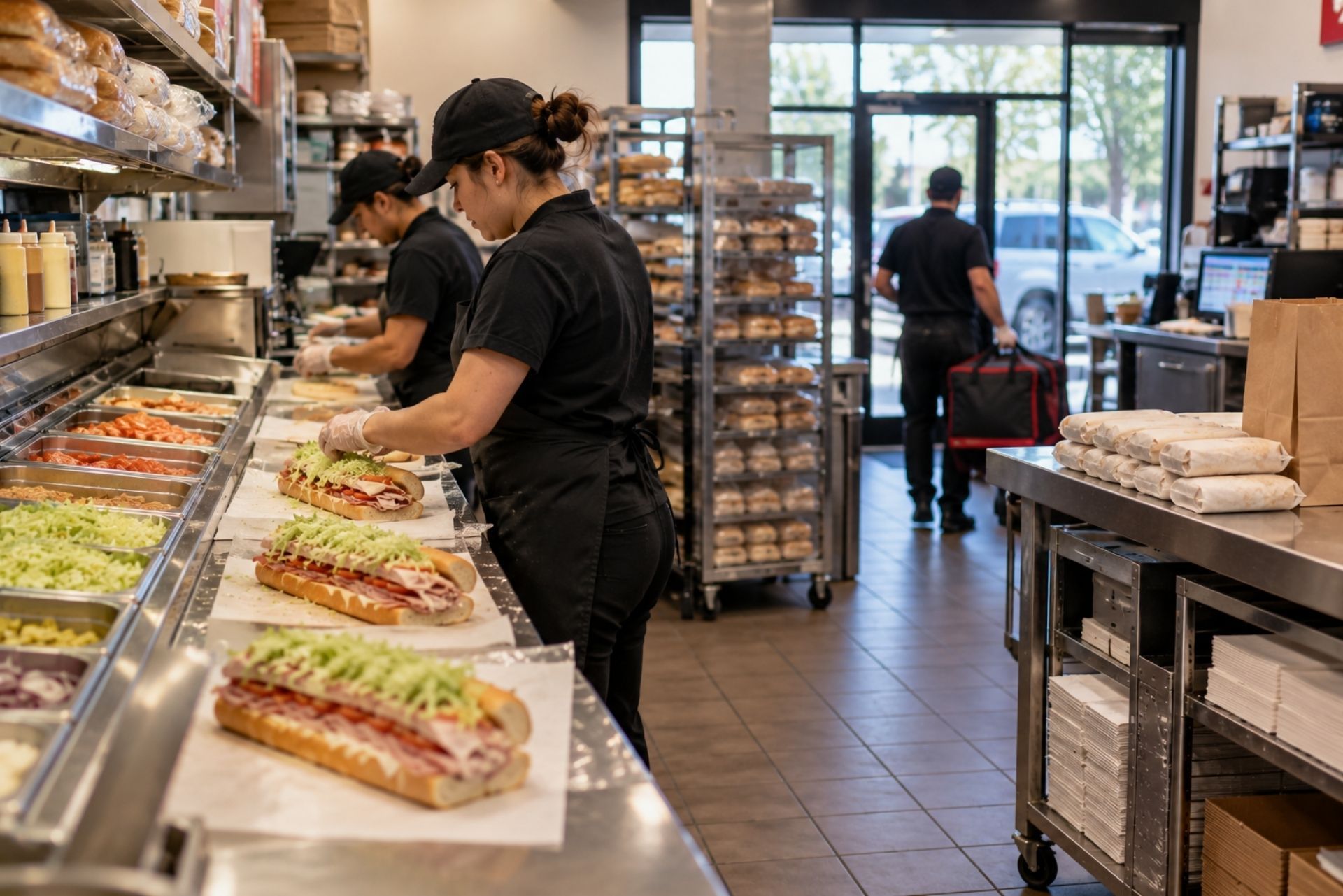
Protecting the Shop: Property and Equipment Coverage
Property insurance protects the physical assets you paid to build: equipment, fixtures, signage, and improvements to the leased space. For a franchise, the requirement isn't just "have property coverage." It's "have the right form at the right value."
Equipment and fixtures at a Jimmy John's location are valued between $120,000 and $215,000, and franchisees must carry property insurance for full replacement value. Policies are generally required on a "special cause of loss" form, covering all real property, fixtures, and equipment at full replacement cost value. Special form covers any direct physical loss that isn't specifically excluded, which is far broader than a named-perils policy.
The common mistake is underinsuring. Owners pick a round number at opening and never update it. When a grease fire guts the kitchen, the coinsurance clause cuts the payout because the insured value fell below the required percentage.
Document your high-value specialized equipment with photos, serial numbers, and invoices. That includes meat slicers, bread proofers, walk-in coolers, the POS terminals, and branded signage. Don't forget tenant improvements like custom counters and the franchise-standard décor package. Those build-out costs are yours to replace, not the landlord's.
Business Interruption and Spoilage Coverage
A fire doesn't just destroy equipment. It shuts your doors while rent, loan payments, and key employee wages keep coming due. Business interruption (BI) coverage replaces lost net income and pays continuing expenses during the restoration period.
Franchise agreements can require BI coverage for at least 12 months of sustained losses. That's not excessive. Permitting, contractor scheduling, equipment lead times, and franchisor re-opening approval can stretch a rebuild well past six months.
Pair BI with spoilage coverage, sometimes called food contamination or equipment breakdown coverage. A compressor failure in your walk-in overnight can ruin an entire delivery of meats, cheeses, and produce. Without spoilage coverage, that loss comes straight out of your pocket. Ask whether power outages from off-site utility failures are included, since many base policies exclude them.
Workers' Compensation and Employee Safety
Workers' comp is required by law in nearly every state once you have employees. It pays medical bills and lost wages for work-related injuries, and it generally protects you from being sued by the injured worker. Jimmy John's crews face a predictable set of risks, which makes prevention practical.
The big three claim types in sandwich shops are slicer lacerations, slips and falls behind the counter, and delivery-related injuries. That last one surprises owners. If a driver gets hurt in a crash during a delivery, that's a workers' comp claim, separate from any auto liability claim the other driver brings. One accident can trigger both policies.
State rules vary. Texas lets most private employers opt out of workers' comp, though doing so strips away key legal defenses. Ohio, Washington, North Dakota, and Wyoming run monopolistic state funds, so you must buy through the state rather than a private carrier. Your franchise agreement may require coverage even where state law doesn't.
Your premium is based on payroll and job classification codes. Misclassifying drivers as kitchen staff, or the reverse, causes painful audit bills at year-end. Keep payroll records clean by role. Slicer guards, cut-resistant gloves, anti-slip mats, and a written return-to-work program all reduce claim frequency and help your experience modifier over time.
Cyber Liability in a Digital Ordering World
Most Jimmy John's orders now come through apps, online ordering, and third-party platforms. That means your store handles card data, customer addresses, and loyalty account information every day. A breach doesn't require a hacker targeting you specifically. It usually starts with a phishing email to a manager or a compromised POS login.
Cyber liability insurance covers costs that general liability excludes, including:
- Breach response, such as forensic investigation, customer notification, and credit monitoring
- PCI fines and assessments from card brands after a payment data breach
- Ransomware and extortion payments and negotiation
- Business income loss when your POS or ordering system goes down
- Third-party liability when customers sue over exposed data
Here's the nuance. Franchise systems often run shared technology, and your agreement may assign breach responsibility to you even when the vulnerability sits in a vendor's software. Read the technology section of your franchise agreement and match coverage to it.
Social engineering fraud deserves its own question to your broker. If a manager wires money to a fake "supplier" after a spoofed email, many cyber policies won't pay unless you've added that specific coverage. Turn on multi-factor authentication for email and POS admin accounts. Carriers increasingly require it just to quote.
Comparing Essential vs. Comprehensive Coverage
Meeting franchisor minimums keeps you compliant. It doesn't always keep you solvent. This table shows where a bare-minimum program and a stronger one differ for a typical single-unit location.
| Coverage Area | Essential (Minimum) | Comprehensive (Recommended) |
|---|---|---|
| General Liability | $1M / $2M with required endorsements | Same, plus no foodborne illness sublimit |
| HNOA | $1M combined single limit | $1M plus umbrella sitting above it |
| Property | Special form, replacement cost | Plus scheduled equipment and tenant improvements |
| Business Interruption | 12 months | 12+ months with extended period of indemnity |
| Spoilage | Often excluded | Included, with off-premises power failure |
| Workers' Comp | Statutory limits | Statutory plus stronger employer's liability limits |
| Cyber | Often skipped | Breach response, PCI, social engineering |
| EPLI | Often skipped | Included, with wage and hour defense if available |
| Umbrella | Franchisor minimum | Higher limit sized to delivery volume |
Many owners start with a Business Owner's Policy (BOP), which bundles general liability, property, and business interruption at a lower combined price. A BOP is a reasonable foundation. The gap is that BOPs have eligibility caps and may carry lower sublimits, so confirm each component meets the franchise standard before you sign.
Insurance pricing for a sandwich franchise isn't random. Underwriters weigh a handful of factors, and several are within your control.
Delivery volume drives the largest swing. A store doing heavy delivery in a dense metro area will pay noticeably more for HNOA and umbrella coverage than a location focused on walk-in and catering. Location matters too: states with higher litigation rates, such as parts of Florida, California, and New York, tend to carry higher liability pricing.
Factors that raise your cost:
- High delivery percentage and long delivery radius
- Drivers with violations on their MVRs
- Prior claims at your store or other units you own
- Older buildings or shared walls with higher-risk tenants
Factors that can lower it:
- Bundling property, liability, and BI into a BOP
- Fire suppression over cooking equipment, with current inspection tags
- ServSafe certification for managers and documented food safety logs
- Higher deductibles on property, if your cash reserves can absorb them
- A written driver safety program with annual MVR reviews
Shop through a broker who writes restaurant franchise business regularly. They'll know which carriers accept heavy delivery exposure and which ones decline it outright.
Common Questions About Jimmy John's Insurance
These are the questions new franchisees ask most often, answered in plain language.
Do I need commercial auto if my drivers use their own cars? Not usually. You need hired and non-owned auto coverage, which protects your business when employees drive personal vehicles for work. Commercial auto is only required if the business owns or leases vehicles.
Why did the franchisor reject my insurance certificate? The most common reasons are a missing additional insured endorsement, no primary and non-contributory wording, or limits below the requirement. Send your broker the exact insurance section of your franchise agreement before binding coverage.
Can my landlord require different insurance than the franchisor? Yes. Leases often have their own limits and endorsements, and you have to meet both sets. Negotiate lease requirements before signing, not after.
Will insurance cover a claim if a driver was speeding? Generally, yes, HNOA still responds to the liability claim. A pattern of ignored violations, though, can expose you to negligent supervision allegations and make future coverage harder to get.
How much does insurance cost for a new Jimmy John's? Initial insurance costs for a traditional location typically run $11,500 to $20,000, covering roughly the first year of required policies. Your actual price depends on state, delivery volume, and claims history.
Is cyber insurance required by the franchise?
It depends on your agreement and current system standards. Even if it isn't mandatory, payment data and online ordering make it a smart addition for most owners.
The Bottom Line for New Franchisees
The franchisor's requirements give you a baseline, not a finish line. General liability with the right endorsements, HNOA at $1 million or more, special form property at full replacement value, and twelve months of business interruption keep you compliant. Workers' comp, cyber, EPLI, and spoilage coverage keep a bad week from becoming a closed store.
Get your franchise agreement and lease in front of a restaurant-focused broker early, ideally before the lease is signed. Have them compare both documents line by line against the quote. Then treat your driver program, food safety logs, and equipment inventory as living records, not opening-day paperwork.
Fast delivery is the brand promise. Insurance built around that promise, with documented safety practices behind it, is what lets you keep delivering it for years.
About The Author:
Dustin Hulett
As Owner of Cuisine Coverage powered by Hulett Insurance, I specialize in protecting restaurants, bars, and hospitality businesses with smart, reliable insurance solutions. With years of experience serving the food and beverage industry, my goal is to make coverage simple, transparent, and built around the unique risks that owners face every day.
Contact Us
Business Coverage
Protection for Every Part of Your Food Business
Cuisine Coverage provides specialized insurance for restaurants, food trucks, catering services, and other hospitality businesses. We help owners protect their property, staff, and reputation with policies built around the most common industry risks.

General Liability Insurance
Protects your business from claims related to injury, property damage, or accidents that happen during operations.
General Liability
Liquor Liability Insurance
Covers alcohol-related incidents for restaurants, bars, or venues that serve or sell alcohol.
Liquor Liability
Workers Compensation Insurance
Provides wage replacement and medical benefits to employees injured on the job.
Workers Compensation
Business Interruption Insurance
Helps replace lost income and cover ongoing expenses if your business operations are temporarily halted.
Business Interruption
Product Liability Insurance
Protects against claims related to foodborne illness, contamination, or product defects.
Product Liability
Cyber Liability Insurance
Covers data breaches, online payment issues, and digital risks that can affect modern food businesses.
Cyber Liability
Serving the Food and Hospitality Industry
Insurance Solutions for Every Type of Food Business
Cuisine Coverage provides specialized insurance for restaurants, cafés, and food service professionals across the country. Whether you run a casual kitchen or a mobile food truck, we offer coverage that fits your operations and risk level.
How It Works
Insurance Made Easy for Food Business Owners
We know you don’t have time to deal with complicated insurance forms. That’s why our process is built for speed and simplicity — so you can get back to running your kitchen.
Your Insurance Questions Answered
What Restaurant and Food Business Owners Ask Most
What types of insurance do restaurants and food businesses need?
Most food businesses need general liability, property, and workers’ compensation coverage. These protect against injuries, equipment damage, and employee-related incidents. Businesses serving alcohol should also include liquor liability insurance for extra protection.
Having the right mix of policies helps reduce financial risks. We’ll help you identify the specific coverages your business needs based on your setup, size, and operations.
Do you provide insurance for food trucks and mobile kitchens?
Yes. We specialize in insurance for food trucks, trailers, and mobile vendors. Our coverage includes vehicle protection, cooking equipment, and liability for events or customer interactions.
We can also help you meet licensing and vendor requirements by issuing certificates of insurance quickly — often the same day.
How fast can I get a quote or start coverage?
In most cases, quotes are ready within 24 hours once we have your business details. After approval, coverage and certificates can be issued immediately.
Our process is fully digital but supported by real agents who review each policy for accuracy. You’ll always know exactly what you’re getting before coverage starts.
Do you offer liquor liability insurance for bars or restaurants?
Yes. We provide liquor liability insurance for bars, taverns, and restaurants that sell or serve alcohol. This coverage protects against claims involving intoxicated patrons or alcohol-related incidents.
It’s essential for maintaining compliance with local laws and protecting your business from costly lawsuits. We’ll ensure your policy meets all licensing requirements.
How can I reduce my insurance costs?
You can often lower premiums by bundling multiple coverages, maintaining clean safety records, and conducting regular policy reviews. Many insurers also offer discounts for installing safety systems and training employees.
At Cuisine Coverage, we proactively review your policy before renewal to help you keep costs down without reducing protection.
Do you help with certificates of insurance (COIs)?
Yes. We provide same-day certificates for vendors, landlords, and event partners. You can request them by phone or email anytime.
Having your COI ready keeps your business compliant and avoids delays in operations. Our team handles these requests quickly so you can stay focused on running your business.
From the Kitchen to Coverage
Real Advice for the Food and Hospitality Industry
We share tips, updates, and real-world stories from the food and insurance industries. Whether you’re managing a restaurant or rolling out a food truck, our articles give you useful guidance to protect your business and grow with confidence.
Contact Us
Phone
Location