Soul Food Restaurant INSURANCE
OR call us: (214) 667-2729
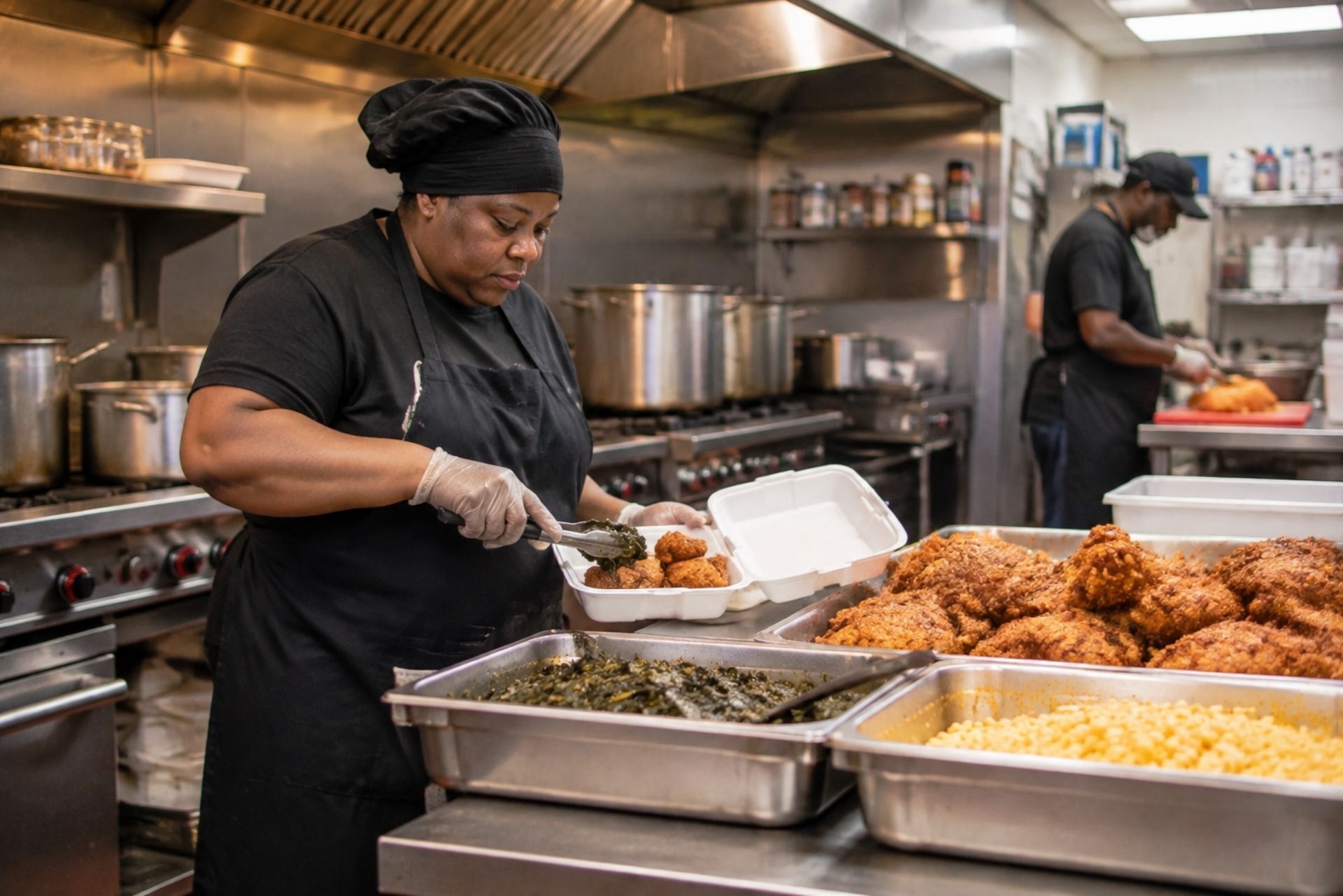
Picture a Saturday after-church rush. The fryer is running hot, fried catfish and wings are moving fast, and a pan of oxtails is holding on the steam table. Then a server slips on grease tracked out of the kitchen, or your walk-in cooler dies overnight with three days of collards, smoked turkey necks, and prepped chitterlings inside. You can survive a crowded dining room. Events like these are what close restaurants.
Soul food kitchens carry a risk profile that generic restaurant policies often misjudge. Long braises, heavy frying, smokers out back, and high-volume buffet-style service create specific exposures that your coverage has to match. This guide covers what you need: liability, property, equipment breakdown, foodborne illness protection, and workers' comp. It also explains what these policies cost in 2026 and where operators lose money by buying the wrong mix.
The Importance of Specialized Insurance for Soul Food Restaurants
Specialized coverage matters because your kitchen's hazards differ from those of a salad bar or a coffee shop. Underwriters know this, and they price for it.
Industry analysis notes that soul food establishments face unique exposures from heavy reliance on deep fryers, steam tables, and specialized equipment like smokers. That's a direct description of your back of house. Hot oil, grease buildup in hoods, long hot-holding times for mac and cheese and candied yams, and open flames all show up on an underwriter's checklist.
The most common mistake I see is an owner buying a "restaurant package" off a website without disclosing the smoker in the parking lot or the 24-hour hold on braised meats. When a claim hits, the carrier reviews the application. If the fire started in an undisclosed smoker, you're in for a long fight, and possibly a denial.
There's a business case beyond claims, too. Landlords, lenders, catering clients, and event venues will ask for proof of insurance before they sign anything. A clean certificate showing proper limits tells a church that books your catering for 300 guests that you're a serious operator. Insurance is part of how you earn that trust.
Here's what a properly built program typically includes:
- General liability for customer injuries and property damage
- Foodborne illness and spoilage endorsements for food safety events
- Commercial property for your building, buildout, and contents
- Equipment breakdown for mechanical and electrical failures
- Workers' compensation for staff injuries
- Liquor liability if you serve alcohol

By: Dustin Hulett
Founder & CEO of Cuisine Coverage
Essential Liability Coverages for Daily Operations
Liability coverage protects you when someone outside your business claims you caused them harm. For a soul food spot, the two biggest sources of those claims are the dining room floor and the food itself.
General Liability: Protecting Against Slips and Falls
General liability covers third-party bodily injury and property damage. A customer slips near the buffet line where gravy spilled. A delivery driver trips on a loose mat by the back door. A hot pan of peach cobbler gets set down too close to a child. These are general liability claims.
Most landlords require limits of $1 million per occurrence and $2 million aggregate, and they'll usually want to be named as an additional insured. Read your lease carefully. Some leases require primary and non-contributory wording or a waiver of subrogation, and your policy needs matching endorsements or you're technically in breach. If your lease also includes a personal guarantee, push back on liability indemnity language that goes beyond what your policy actually covers.
One nuance owners miss: general liability excludes your employees' injuries (that's workers' comp) and alcohol-related incidents (that's liquor liability). If you serve beer or wine with Sunday brunch, you need a separate liquor policy.
That matters more in some states than others. In South Carolina, Act 42, effective January 1, 2026, gives restaurants a path to lower the mandatory $1 million liquor liability requirement. Under the law, operators can reduce the required limit by $250,000 by ending alcohol service by midnight, and by another $100,000 for mandatory server training. Keeping alcohol under 40% of total revenue earns another $100,000 reduction. For a soul food restaurant where alcohol is a side business, those steps can trim real dollars.
Foodborne Illness Endorsements: Managing Food Safety Risks
Your general liability policy will usually respond if a customer sues after getting sick. What it won't cover is your own loss: the food you throw out, the days you're closed while the health department investigates, and the cost of restoring your reputation.
That's where a foodborne illness or food contamination endorsement comes in. Depending on the carrier, it can cover:
- Cleanup and sanitizing costs after a contamination event
- Lost income during a health department-ordered shutdown
- Spoiled or discarded inventory
- Advertising and public relations to rebuild trust after an outbreak
Soul food menus include some high-risk items. Chitterlings require careful cleaning and are a known source of contamination. Potato salad and deviled eggs sit in the danger zone if cooling isn't tracked. Large batches of greens and beans need proper cooling before refrigeration. A single bad batch at a holiday catering event can produce dozens of sick guests and a six-figure exposure.
Check the sublimits on these endorsements. Many are small compared to what a real closure costs, so ask your agent what a two-week shutdown would look like against the limit.
Protecting Your Kitchen: Property and Equipment Breakdown
Property coverage handles physical damage from events like fire, theft, and storms. Equipment breakdown handles internal failure. You need both, because each one excludes what the other covers.
Commercial Property Insurance for Buildings and Contents
Commercial property insurance covers your building (if you own it), your tenant improvements, furniture, inventory, and kitchen equipment. For tenants, the buildout is the piece people forget. If you spent money on a custom brick wall, reclaimed wood bar top, or vintage family photos framed throughout the dining room, those count as improvements and betterments. Insure them at replacement cost.
Frying is the big driver here. Restaurants using open flames and deep fryers face higher property premiums than cold-prep establishments. Grease fires in hood systems remain one of the most common causes of serious kitchen losses.
Document everything before you need it. Keep a running inventory with photos, serial numbers, and purchase receipts for your:
- Commercial deep fryers and pressure fryers
- Smokers and offset pits
- Steam tables and hot-holding cabinets
- Convection ovens, ranges, and flat-tops
- Walk-in coolers and reach-in freezers
- Large cast iron and specialty cookware
Underinsurance is a quiet killer. If your policy has a coinsurance clause and you've insured a $300,000 kitchen for $150,000, you may only collect a fraction of even a small claim. Have your values reviewed annually, especially after equipment upgrades. Ask your agent to add business income coverage too, so payroll and rent keep getting paid while you rebuild.
Equipment Breakdown: When Deep Fryers and Walk-ins Fail
A standard property policy covers your walk-in cooler if a fire destroys it. It won't cover the compressor burning out on a 95-degree July night. That's mechanical failure, and it requires equipment breakdown coverage.
Think about what's in your walk-in on a Friday. Cases of chicken, prepped oxtails, smoked meats, cleaned chitterlings, and gallons of greens. A compressor failure can wipe out that inventory and force you to close for the weekend. Equipment breakdown pays for the repair or replacement, and when paired with spoilage coverage, the lost food.
It also covers power surges that fry control boards in fryers, ovens, and POS systems. For a small operation, adding equipment breakdown and food spoilage typically runs $42 to $83 more per month. Compare that to one lost weekend of sales.
Workers' Compensation: Caring for Your Kitchen and Service Staff
Workers' compensation pays for medical bills and lost wages when employees get hurt on the job. In nearly every state, it's mandatory once you have employees, though the exact threshold varies by state. Operating without it can bring fines, stop-work orders, and personal liability for an injured worker's costs.
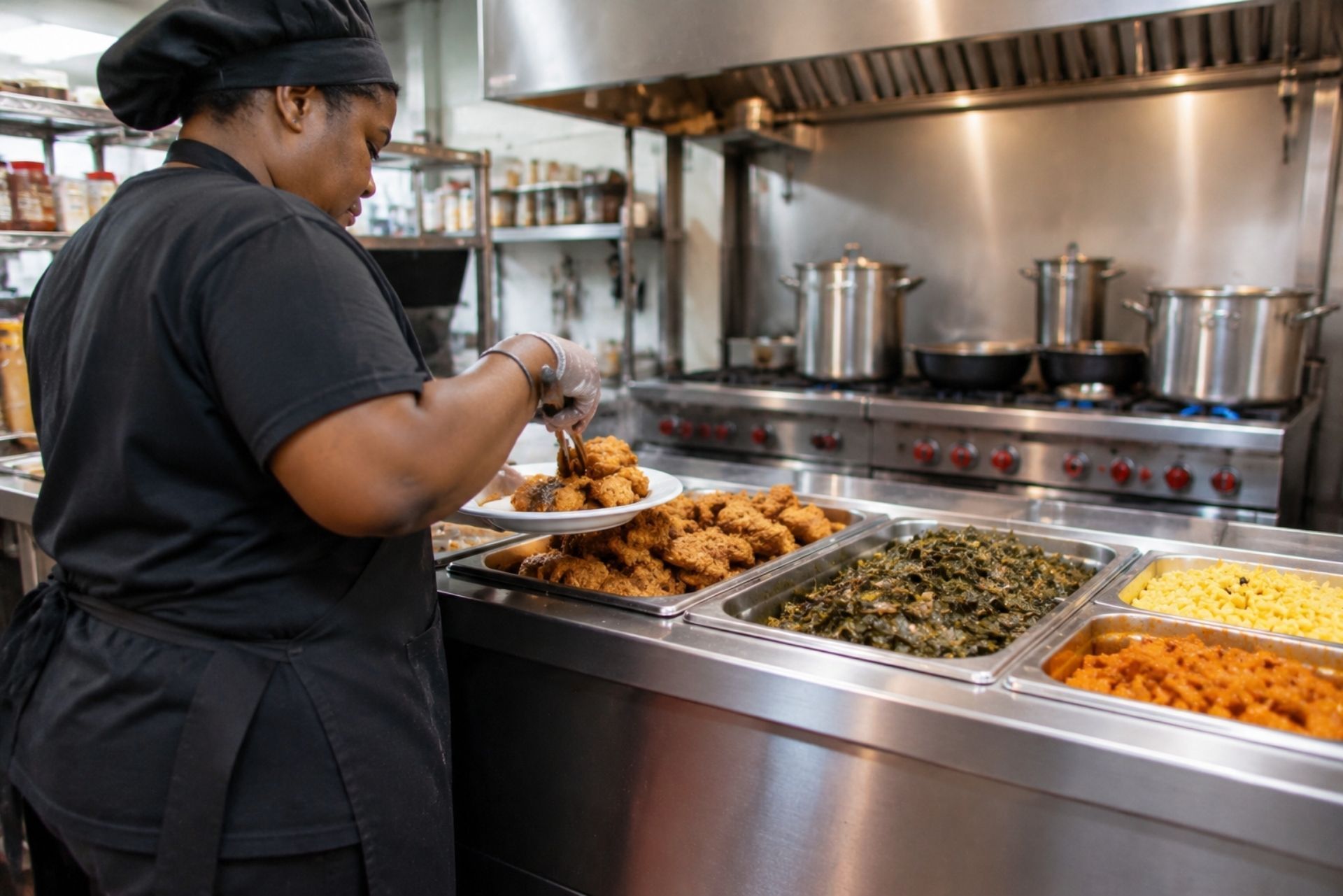
Soul food kitchens produce a predictable set of injuries. Hot oil burns from fryers. Cuts from breaking down whole chickens or cleaning catfish. Back strains from lifting stockpots of greens or 50-pound bags of cornmeal. Slips on greasy floors near the dish pit. Servers carrying heavy plates of smothered pork chops and sides develop repetitive strain over time.
Premiums are calculated based on payroll and job classification codes. Kitchen staff usually carry higher rates than front-of-house or clerical roles, so make sure your payroll is classified correctly. I regularly see owners overpaying because a cashier or bookkeeper was lumped into the cook classification. The reverse also happens, and that gets caught at the year-end audit, producing a surprise bill.
A few practices that keep claims and costs down:
- Install anti-slip mats and enforce non-slip footwear for every kitchen shift.
- Train staff on fryer safety, including filtering and changing oil only when it's cooled.
- Use proper cut-resistant gloves for butchering and fish cleaning.
- Report every injury right away, even minor ones, so claims don't escalate.
- Build a return-to-work program with light-duty tasks like prep or hosting.
That last point matters. An injured line cook who returns to light duty in a week costs far less than one who stays out for two months. Your experience modification rate improves, and your premiums follow.
Comparing Core Coverages: A Quick Reference Guide
Here's a side-by-side breakdown to help you see where each policy starts and stops. Use it to spot gaps in your current program.
| Coverage | What It Covers | Soul Food Example | What It Won't Cover |
|---|---|---|---|
| General Liability | Customer injuries, third-party property damage | Guest slips near the buffet line | Employee injuries, alcohol incidents |
| Foodborne Illness Endorsement | Your cleanup, lost income, spoiled stock after contamination | Health department closure after a bad potato salad batch | Losses without a contamination event |
| Commercial Property | Building, buildout, equipment, inventory from fire, theft, storms | Grease fire damages hood and fryers | Mechanical breakdown, floods (usually) |
| Equipment Breakdown | Mechanical and electrical failure, power surges | Walk-in compressor fails overnight | Normal wear, fire damage |
| Workers' Compensation | Employee medical bills and lost wages | Cook burned by fryer oil | Customer injuries |
| Liquor Liability | Claims tied to serving alcohol | Overserved guest causes a crash | Food-related injuries |
| Business Owner's Policy (BOP) | Bundled GL, property, business income | Small spot wanting one policy | Workers' comp, liquor, often auto |
Two other policies deserve a look. Employment practices liability (EPLI) covers claims of wrongful termination, harassment, or discrimination, which are common in high-turnover restaurant staffs. Hired and non-owned auto coverage protects you when an employee uses their own car for catering drops or supply runs. Your general liability policy excludes those auto accidents.
Analyzing the Cost of Soul Food Restaurant Insurance
What you pay depends on your size, location, menu, and claims history. Here's a 2026 baseline: general liability for restaurants typically ranges from $900 to $4,000 annually. In major markets like Chicago, combined liability and property quotes for soul food restaurants start at roughly $1,153 per year.
Those numbers rise fast once you add workers' comp, liquor liability, and higher property values. And costs are a real pressure point right now. A 2025 industry report found that 42% of restaurant operators said their business wasn't profitable, citing a squeeze from rising labor, insurance, and food costs. Every dollar you save on premiums without creating a coverage gap goes straight to your margin.
Factors That Drive Premium Prices
Carriers price your policy on a handful of variables. Knowing them lets you control the ones you can.
- Cooking methods: Deep frying, smoking, and open-flame cooking raise property premiums.
- Fire protection: A UL 300-compliant hood suppression system and regular hood cleaning carry real weight.
- Location: Urban areas, high-crime ZIP codes, and storm-prone regions cost more.
- Revenue and payroll: Higher sales and more staff mean more exposure.
- Alcohol sales: The bigger your bar revenue share, the higher your liquor premium.
- Claims history: Prior losses, especially fires or food illness events, push rates up for years.
- Catering and events: Off-site work adds liability and auto exposure.
- Building age: Older wiring and plumbing increase property risk.
Ways to Lower Your Annual Insurance Costs
Cutting premiums shouldn't mean dropping coverage you'll need later. These moves reduce cost while keeping protection intact.
- Bundle general liability, property, and business income into a BOP if your size qualifies.
- Keep your hood suppression system inspected and your hoods professionally cleaned on schedule, and save every report.
- Get managers and kitchen leads ServSafe certified, and keep certificates on file for underwriters.
- Raise your property deductible if you have the cash reserves to absorb small losses.
- Classify workers' comp payroll correctly, splitting kitchen, front-of-house, and office roles.
- Pay annually instead of monthly to avoid installment fees.
- If you're in South Carolina, use Act 42's risk-mitigation steps, like a midnight alcohol cutoff and server training, to lower your required liquor limit.
- Shop your policy every two to three years through an independent broker who writes restaurant business.
One caution: the cheapest quote often excludes foodborne illness, spoilage, or equipment breakdown. Compare policies line by line, not just by price.
Frequently Asked Questions About Soul Food Insurance
Does my landlord need to be on my policy? Most commercial leases require you to list the landlord as an additional insured on your general liability. Your agent can add this by endorsement and send a certificate.
Is a BOP enough for a soul food restaurant? A BOP is a solid starting point, but it doesn't include workers' comp, liquor liability, or usually equipment breakdown. Most operators need to add those separately.
Will my insurance cover food that spoils during a power outage? Only if you've added spoilage coverage, and some policies require the outage to originate on your premises. Ask your agent to explain the off-premises power failure terms.
Why would a restaurant insurance claim get denied? Common reasons include undisclosed equipment like smokers, missed hood cleanings, and lapsed coverage from late payments. Accurate applications and good maintenance records prevent most denials.
Do I need workers' comp if I only have part-time staff? In most states, yes, since part-timers usually count toward the employee threshold. Check your state's rules, because requirements vary.
Should I use a specialized restaurant broker? A broker who writes restaurant accounts will know which carriers accept heavy frying and smokers. That knowledge usually means better terms than a general agent can find.
Securing the Future of Your Soul Food Establishment
Soul food runs on tradition, family recipes, and long hours over hot oil and slow-simmering pots. Your insurance program should be built around those realities, not a generic template. Specialized soul food restaurant coverage brings together general liability, property, equipment breakdown, foodborne illness protection, and workers' comp into one plan that fits how your kitchen operates.
Start with a full inventory of your equipment and buildout. Pull your lease and confirm what limits and endorsements it requires. Then sit down with a broker who understands restaurants, disclose everything, including that smoker out back, and compare quotes by coverage, not just price.
The goal isn't buying the most insurance. It's making sure one bad night, a fryer fire, a dead compressor, or a sick table, never takes away what you've built.
About The Author:
Dustin Hulett
As Owner of Cuisine Coverage powered by Hulett Insurance, I specialize in protecting restaurants, bars, and hospitality businesses with smart, reliable insurance solutions. With years of experience serving the food and beverage industry, my goal is to make coverage simple, transparent, and built around the unique risks that owners face every day.
Contact Us
Business Coverage
Protection for Every Part of Your Food Business
Cuisine Coverage provides specialized insurance for restaurants, food trucks, catering services, and other hospitality businesses. We help owners protect their property, staff, and reputation with policies built around the most common industry risks.

General Liability Insurance
Protects your business from claims related to injury, property damage, or accidents that happen during operations.
General Liability
Liquor Liability Insurance
Covers alcohol-related incidents for restaurants, bars, or venues that serve or sell alcohol.
Liquor Liability
Workers Compensation Insurance
Provides wage replacement and medical benefits to employees injured on the job.
Workers Compensation
Business Interruption Insurance
Helps replace lost income and cover ongoing expenses if your business operations are temporarily halted.
Business Interruption
Product Liability Insurance
Protects against claims related to foodborne illness, contamination, or product defects.
Product Liability
Cyber Liability Insurance
Covers data breaches, online payment issues, and digital risks that can affect modern food businesses.
Cyber Liability
Serving the Food and Hospitality Industry
Insurance Solutions for Every Type of Food Business
Cuisine Coverage provides specialized insurance for restaurants, cafés, and food service professionals across the country. Whether you run a casual kitchen or a mobile food truck, we offer coverage that fits your operations and risk level.
How It Works
Insurance Made Easy for Food Business Owners
We know you don’t have time to deal with complicated insurance forms. That’s why our process is built for speed and simplicity — so you can get back to running your kitchen.
Your Insurance Questions Answered
What Restaurant and Food Business Owners Ask Most
What types of insurance do restaurants and food businesses need?
Most food businesses need general liability, property, and workers’ compensation coverage. These protect against injuries, equipment damage, and employee-related incidents. Businesses serving alcohol should also include liquor liability insurance for extra protection.
Having the right mix of policies helps reduce financial risks. We’ll help you identify the specific coverages your business needs based on your setup, size, and operations.
Do you provide insurance for food trucks and mobile kitchens?
Yes. We specialize in insurance for food trucks, trailers, and mobile vendors. Our coverage includes vehicle protection, cooking equipment, and liability for events or customer interactions.
We can also help you meet licensing and vendor requirements by issuing certificates of insurance quickly — often the same day.
How fast can I get a quote or start coverage?
In most cases, quotes are ready within 24 hours once we have your business details. After approval, coverage and certificates can be issued immediately.
Our process is fully digital but supported by real agents who review each policy for accuracy. You’ll always know exactly what you’re getting before coverage starts.
Do you offer liquor liability insurance for bars or restaurants?
Yes. We provide liquor liability insurance for bars, taverns, and restaurants that sell or serve alcohol. This coverage protects against claims involving intoxicated patrons or alcohol-related incidents.
It’s essential for maintaining compliance with local laws and protecting your business from costly lawsuits. We’ll ensure your policy meets all licensing requirements.
How can I reduce my insurance costs?
You can often lower premiums by bundling multiple coverages, maintaining clean safety records, and conducting regular policy reviews. Many insurers also offer discounts for installing safety systems and training employees.
At Cuisine Coverage, we proactively review your policy before renewal to help you keep costs down without reducing protection.
Do you help with certificates of insurance (COIs)?
Yes. We provide same-day certificates for vendors, landlords, and event partners. You can request them by phone or email anytime.
Having your COI ready keeps your business compliant and avoids delays in operations. Our team handles these requests quickly so you can stay focused on running your business.
From the Kitchen to Coverage
Real Advice for the Food and Hospitality Industry
We share tips, updates, and real-world stories from the food and insurance industries. Whether you’re managing a restaurant or rolling out a food truck, our articles give you useful guidance to protect your business and grow with confidence.
Contact Us
Phone
Location