Wingstop Franchise INSURANCE
OR call us: (214) 667-2729
Most Wingstop operators can recite their food cost percentage to the decimal. Far fewer can tell you what their policy pays if a fryer fire guts the kitchen on a Friday night during a big game. That gap is where franchise owners get hurt.
A Wingstop location runs on a narrow, high-volume model: hot oil all day, a small crew moving fast, heavy delivery and takeout traffic, and a franchise agreement that dictates how much coverage you carry. Insurance for a Wingstop franchise has to account for all of it. That means property and equipment, fryer and hood fire exposure, product liability, your employees, delivery drivers, and the specific requirements your franchisor sets.
The cost of getting this wrong rarely shows up as one dramatic event. It shows up as a denied claim because the hood cleaning log was three months behind. It shows up as a delivery accident that lands on your general liability policy, which excludes autos. It shows up as a landlord's notice that your certificate doesn't name them correctly.
This guide walks through each exposure the way an experienced broker would explain it to a new franchisee: what the risk looks like in practice, which policy responds, and where the coverage gaps tend to hide.
The Risk Landscape for Wingstop Franchisees
A wing concept carries a different risk profile than a sandwich shop or a coffee bar. The menu is built around deep frying, so fire risk sits at the center of your operation rather than the edges. Your sauces and dips add allergen exposure, and your volume depends on third-party and in-house delivery.
Here's what that means for you. You aren't buying a generic restaurant policy. You're insuring a specific set of exposures that interact with each other. A grease fire can trigger a property claim, a business interruption claim, and a workers' comp claim at the same time.
The main risk categories break down like this:
- Fire and property damage from fryers, hoods, and grease buildup
- Foodborne illness and allergen reactions tied to wings, sauces, and sides
- Employee injuries from burns, slips, cuts, and heat exposure
- Delivery accidents involving drivers using their own vehicles
- Contractual exposure from your franchise agreement and lease
Each of these maps to a specific policy, and each policy has its own exclusions. The sections below take them one at a time.

By: Dustin Hulett
Founder & CEO of Cuisine Coverage
Protecting Your Assets: Property and Equipment Coverage
Property coverage protects the physical things that make your restaurant run: the build-out, the kitchen line, the POS system, signage, furniture, and inventory. For most franchisees, the build-out alone represents a large share of the initial investment.
The single most important decision here is valuation. QSR policies typically cover replacement cost rather than actual cash value, and that distinction matters after a total loss. Actual cash value subtracts depreciation, so a five-year-old fryer bank might pay out a fraction of what a new one costs. Replacement cost pays to put new equipment back in.
One common client mistake is underreporting the value of franchisor-mandated design elements. Wingstop locations follow specific branding standards, including signage, wall graphics, and counter finishes. If those get destroyed, you'll have to rebuild them to brand spec, not with the cheapest substitute. Document everything with photos, invoices, and serial numbers, and update your schedule when you add a second fryer or upgrade your walk-in.
Many operators bundle property and general liability into a Business Owner's Policy (BOP). A BOP can lower your cost, but some carriers cap eligibility for high-volume fryer operations, so confirm you qualify.
Mitigating Fryer and Hood Fire Risks
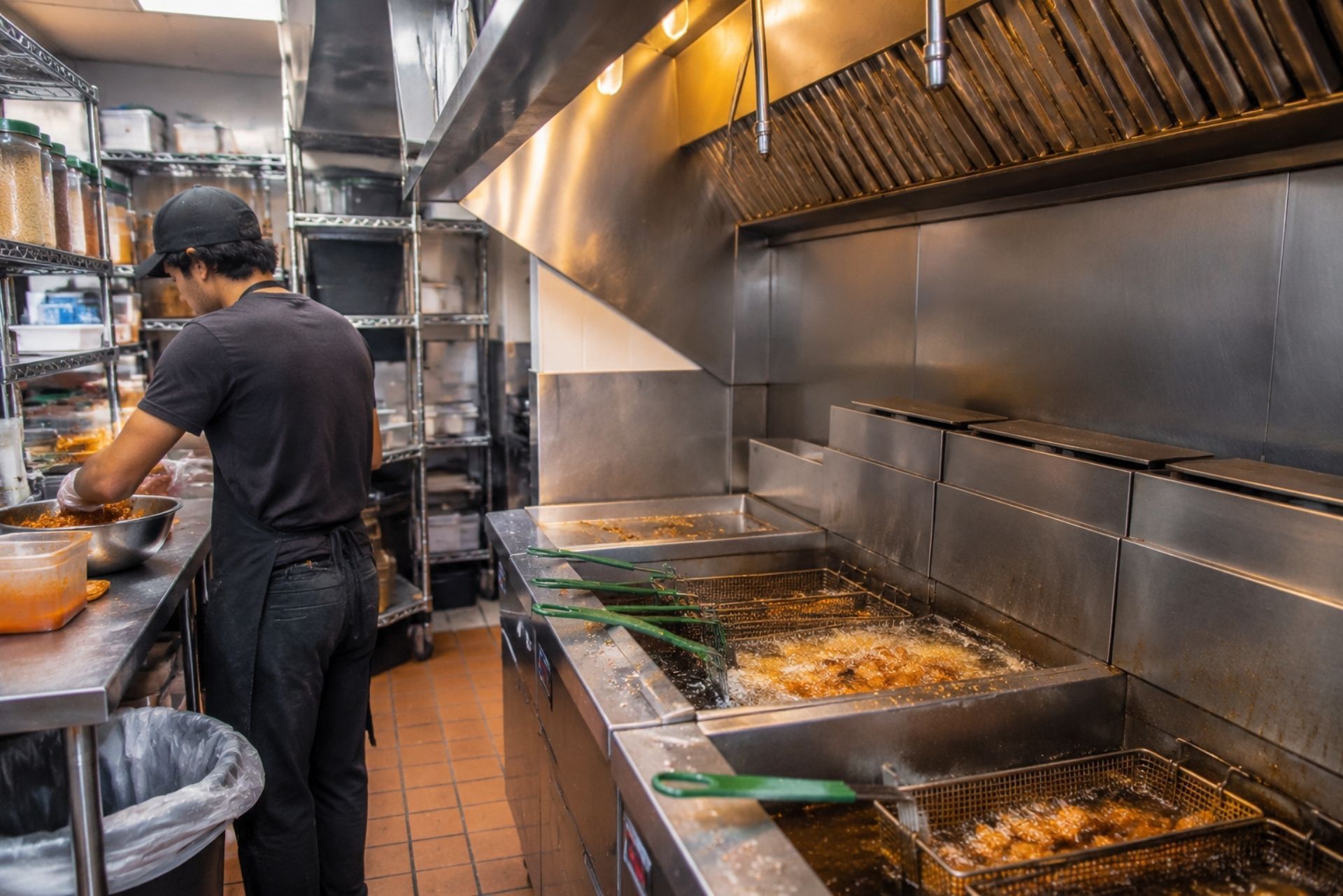
Grease is fuel. Every batch of wings sends oil vapor into your hood, filters, and ductwork, and that residue builds up faster than most new owners expect. When a duct fire starts, it can travel through the exhaust system and reach the roof.
High-volume fast-casual restaurants are generally required to have professional hood and duct cleaning quarterly because constant frying creates heavy grease accumulation. Your fire suppression system also needs regular inspection by a certified technician. Underwriters will ask for these records, and adjusters will ask for them after a fire.
Keep a binder or digital folder with cleaning certificates, suppression inspection tags, and K-class extinguisher service dates. A missed cleaning cycle won't always void coverage, but it gives the carrier room to dispute a claim. A clean maintenance record can also help you negotiate better premiums at renewal.
Business Interruption and Equipment Breakdown
A kitchen fire that takes eight weeks to repair doesn't just cost you equipment. It costs you eight weeks of revenue while rent, loan payments, and key salaries keep coming due. Business income coverage replaces lost net income and pays continuing expenses during the restoration period.
Pay attention to the waiting period, usually 72 hours, and the coverage period limit. Ask for extended period of indemnity so payments continue after you reopen while sales ramp back up.
Equipment breakdown coverage fills a separate gap. Standard property policies exclude mechanical and electrical failure, so a compressor dying in your walk-in cooler won't be covered unless you've added this endorsement. It typically pays for repair, spoiled inventory, and related income loss.
Liability Essentials: From Product Safety to Slip-and-Falls
General liability covers bodily injury and property damage to third parties. For a Wingstop, that includes customer slip-and-falls near the drink station, a hot sauce splash that burns a customer, or damage to a neighboring tenant's space.
Product liability, usually included within your general liability policy as products-completed operations coverage, handles claims tied to the food you serve. Think foodborne illness from undercooked chicken or an allergic reaction to a dip that contained an undisclosed ingredient. A single outbreak affecting a dozen customers can produce a six-figure claim once medical bills and lost wages add up.
Many franchise agreements and leases specify limits such as $1 million per occurrence and $2 million aggregate. Confirm your exact figures in your franchise documents. A commercial umbrella policy sits on top and extends those limits, which matters when a serious injury exceeds your base coverage.
Liquor liability is worth a look if your location sells beer. General liability typically excludes alcohol-related claims for businesses that serve it. Food safety training like ServSafe certification for managers also helps with underwriting and gives you a defensible record if a claim lands.
Managing Your Team: Workers' Comp and EPLI
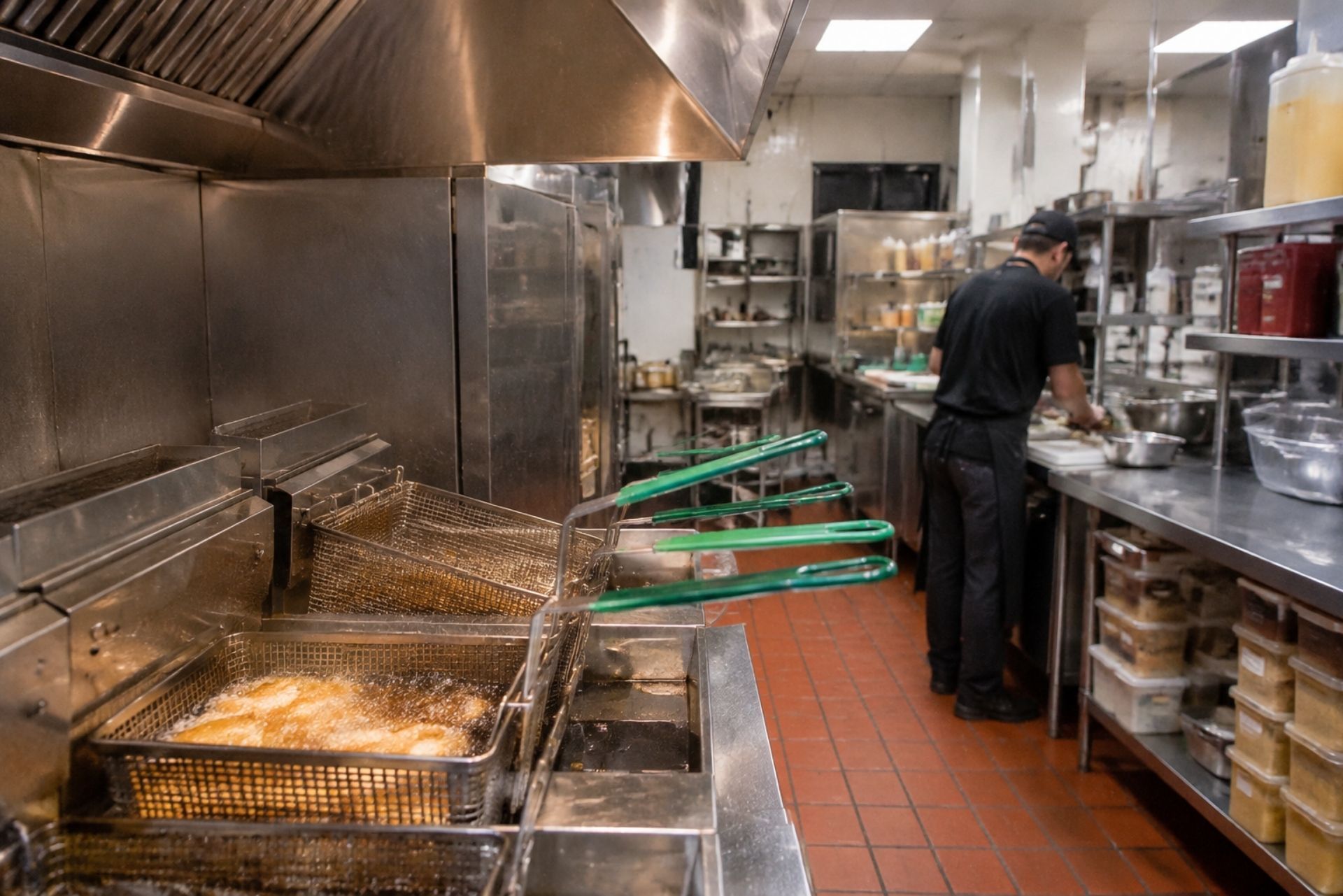
Workers' compensation is mandatory for employers in nearly every state, and a wing kitchen generates frequent claims. Burns from fryer oil, knife cuts, and slips on greasy floors are the usual suspects. Comp pays medical costs and lost wages, and it generally protects you from being sued directly by the injured employee.
Heat is now a regulatory issue, not just a comfort issue. On April 10, 2026, OSHA released an updated National Emphasis Program for heat-related hazards, which requires documented acclimatization plans for workers in high-heat environments like kitchens. OSHA also conducts inspections on heat priority days of 80°F and above. Put your acclimatization plan in writing, train new hires on it, and keep signed records.
Employment practices liability insurance (EPLI) covers a different exposure: claims of wrongful termination, harassment, discrimination, and wage disputes. Restaurants have high turnover and young workforces, which raises the odds of these claims. EPLI isn't part of a standard BOP, so you'll need to add it separately or by endorsement.
On the benefits side, the franchisor's preferred insurance program added a new health insurance plan for franchisees and employees as of August 27, 2026. It's worth comparing against what you can source on your own.
The Delivery Dilemma: Hired and Non-Owned Auto Liability
Delivery drives a large portion of wing sales, and it creates one of the biggest gaps in restaurant insurance. Your general liability policy excludes auto accidents. Your driver's personal auto policy may exclude business use. When a driver rear-ends someone while carrying your order, the injured party will look for the business with the most assets, which is you.
Hired and non-owned auto (HNOA) liability covers your business when employees use their personal vehicles or rented vehicles for work. It does not cover damage to the driver's car, and it sits in excess of the driver's personal policy in most cases.
If you rely only on third-party delivery apps, your exposure shrinks but doesn't disappear. Review the platform terms for indemnification language. If you employ your own drivers, take these steps:
- Collect proof of personal auto insurance from every driver.
- Run motor vehicle record checks before hiring and annually.
- Add HNOA coverage to your package.
- Put a written delivery policy in place covering phone use and speed.
Comparing Wingstop Franchise Insurance Requirements
Your franchise agreement sets the floor, and your lease often adds its own conditions. The franchisor designates a preferred broker program built to meet the specific limits in the franchise agreement. You're free to shop elsewhere in most cases, but your policy has to match those requirements.
| Coverage | Who Requires It | What to Watch |
|---|---|---|
| General Liability | Franchisor, landlord | Additional insured wording |
| Property | Franchisor, lender | Replacement cost, brand build-out |
| Workers' Comp | State law | Class codes, payroll accuracy |
| HNOA | Franchisor if delivering | Driver records |
| Umbrella | Often franchisor | Follow-form terms |
| EPLI | Often recommended | Wage-and-hour sublimits |
| Cyber | Growing expectation | MFA and EDR proof |
Landlords nearly always require additional insured status, waiver of subrogation, and specific limits. Read the lease insurance clause before signing, and push back on unreasonable demands such as limits far above the franchisor's baseline. If you're signing a personal guarantee, adequate coverage protects your personal assets too.
On cyber: carriers in 2026 typically require proof of multi-factor authentication and endpoint detection and response before writing a policy. Online ordering and card payments make this a real exposure.
Common Questions About Insuring Your Wingstop
Do I have to use the franchisor's preferred insurance broker? Usually not. You can use an independent broker as long as your policies meet the limits and terms in your franchise agreement.
Will my claim be denied if I miss a hood cleaning? It depends on your policy wording and the cause of the fire. A missed cleaning gives the carrier grounds to dispute or investigate, so keep your records current.
Does a BOP cover delivery accidents? No. A BOP excludes auto liability. You need hired and non-owned auto coverage for drivers using personal vehicles.
What does "additional insured" mean on my lease? It extends your liability coverage to protect the landlord for claims arising from your operations. Your broker adds it by endorsement and issues a certificate.
Is workers' comp required if I only have a few employees? In most states, yes. Some states set small-employer thresholds, so check your state's rules.
Should I work with a restaurant specialist broker?
A broker with QSR and franchise experience will know fryer class codes, brand build-out values, and how to match franchise requirements without overbuying.
Securing Your Investment for the Long Term
Your Wingstop insurance program should match how the restaurant operates, not just tick boxes on a franchise checklist. Insure property at replacement cost and document brand-required finishes. Keep hood cleaning and suppression records airtight. Add equipment breakdown, HNOA, and EPLI where standard policies leave gaps, and put your heat acclimatization plan in writing before inspectors ask.
Good coverage also builds trust. Landlords, lenders, and the franchisor all want proof you can absorb a loss and reopen. Customers benefit when a bad night doesn't close a neighborhood favorite for good.
Your next step is simple. Pull your franchise agreement and lease, list every insurance requirement, and sit down with a broker who knows restaurant operations. Review limits, valuation, and exclusions line by line. Then revisit the program every year, because a second fryer bank or a new delivery setup can change your exposure overnight.
About The Author:
Dustin Hulett
As Owner of Cuisine Coverage powered by Hulett Insurance, I specialize in protecting restaurants, bars, and hospitality businesses with smart, reliable insurance solutions. With years of experience serving the food and beverage industry, my goal is to make coverage simple, transparent, and built around the unique risks that owners face every day.
Contact Us
Business Coverage
Protection for Every Part of Your Food Business
Cuisine Coverage provides specialized insurance for restaurants, food trucks, catering services, and other hospitality businesses. We help owners protect their property, staff, and reputation with policies built around the most common industry risks.

General Liability Insurance
Protects your business from claims related to injury, property damage, or accidents that happen during operations.
General Liability
Liquor Liability Insurance
Covers alcohol-related incidents for restaurants, bars, or venues that serve or sell alcohol.
Liquor Liability
Workers Compensation Insurance
Provides wage replacement and medical benefits to employees injured on the job.
Workers Compensation
Business Interruption Insurance
Helps replace lost income and cover ongoing expenses if your business operations are temporarily halted.
Business Interruption
Product Liability Insurance
Protects against claims related to foodborne illness, contamination, or product defects.
Product Liability
Cyber Liability Insurance
Covers data breaches, online payment issues, and digital risks that can affect modern food businesses.
Cyber Liability
Serving the Food and Hospitality Industry
Insurance Solutions for Every Type of Food Business
Cuisine Coverage provides specialized insurance for restaurants, cafés, and food service professionals across the country. Whether you run a casual kitchen or a mobile food truck, we offer coverage that fits your operations and risk level.
How It Works
Insurance Made Easy for Food Business Owners
We know you don’t have time to deal with complicated insurance forms. That’s why our process is built for speed and simplicity — so you can get back to running your kitchen.
Your Insurance Questions Answered
What Restaurant and Food Business Owners Ask Most
What types of insurance do restaurants and food businesses need?
Most food businesses need general liability, property, and workers’ compensation coverage. These protect against injuries, equipment damage, and employee-related incidents. Businesses serving alcohol should also include liquor liability insurance for extra protection.
Having the right mix of policies helps reduce financial risks. We’ll help you identify the specific coverages your business needs based on your setup, size, and operations.
Do you provide insurance for food trucks and mobile kitchens?
Yes. We specialize in insurance for food trucks, trailers, and mobile vendors. Our coverage includes vehicle protection, cooking equipment, and liability for events or customer interactions.
We can also help you meet licensing and vendor requirements by issuing certificates of insurance quickly — often the same day.
How fast can I get a quote or start coverage?
In most cases, quotes are ready within 24 hours once we have your business details. After approval, coverage and certificates can be issued immediately.
Our process is fully digital but supported by real agents who review each policy for accuracy. You’ll always know exactly what you’re getting before coverage starts.
Do you offer liquor liability insurance for bars or restaurants?
Yes. We provide liquor liability insurance for bars, taverns, and restaurants that sell or serve alcohol. This coverage protects against claims involving intoxicated patrons or alcohol-related incidents.
It’s essential for maintaining compliance with local laws and protecting your business from costly lawsuits. We’ll ensure your policy meets all licensing requirements.
How can I reduce my insurance costs?
You can often lower premiums by bundling multiple coverages, maintaining clean safety records, and conducting regular policy reviews. Many insurers also offer discounts for installing safety systems and training employees.
At Cuisine Coverage, we proactively review your policy before renewal to help you keep costs down without reducing protection.
Do you help with certificates of insurance (COIs)?
Yes. We provide same-day certificates for vendors, landlords, and event partners. You can request them by phone or email anytime.
Having your COI ready keeps your business compliant and avoids delays in operations. Our team handles these requests quickly so you can stay focused on running your business.
From the Kitchen to Coverage
Real Advice for the Food and Hospitality Industry
We share tips, updates, and real-world stories from the food and insurance industries. Whether you’re managing a restaurant or rolling out a food truck, our articles give you useful guidance to protect your business and grow with confidence.
Contact Us
Phone
Location