Little Caesars Franchise INSURANCE
OR call us: (214) 667-2729
A single cooler compressor failure on a Friday afternoon can wipe out hundreds of pounds of cheese, dough, and pepperoni before your service tech even returns your call. For a Hot-N-Ready store built on volume and speed, that's not a minor hiccup. It's a lost weekend of revenue, a pile of spoiled inventory, and possibly a crew you still have to pay.
Most new franchisees put their energy into site selection, staffing, and getting through training. Insurance gets handled late, often by whoever the landlord or lender recommends. That's where the gaps start. Coverage is built to satisfy a checklist rather than to protect a high-volume, carryout-heavy pizza operation with expensive equipment and a large part-time workforce.
This guide breaks down Little Caesars franchise insurance by category: property, equipment, liability, employees, delivery, and the franchisor's own requirements. You'll see where standard policies fall short, what claims tend to hit pizza stores, and how to build a program that holds up when something goes wrong.
The stakes are high. The total estimated initial investment for a Little Caesars restaurant runs from $376,500 to $1,769,200. A policy that's underbuilt by even a few coverage lines can leave a serious share of that exposed.
Risk Management for the Little Caesars Franchise Model
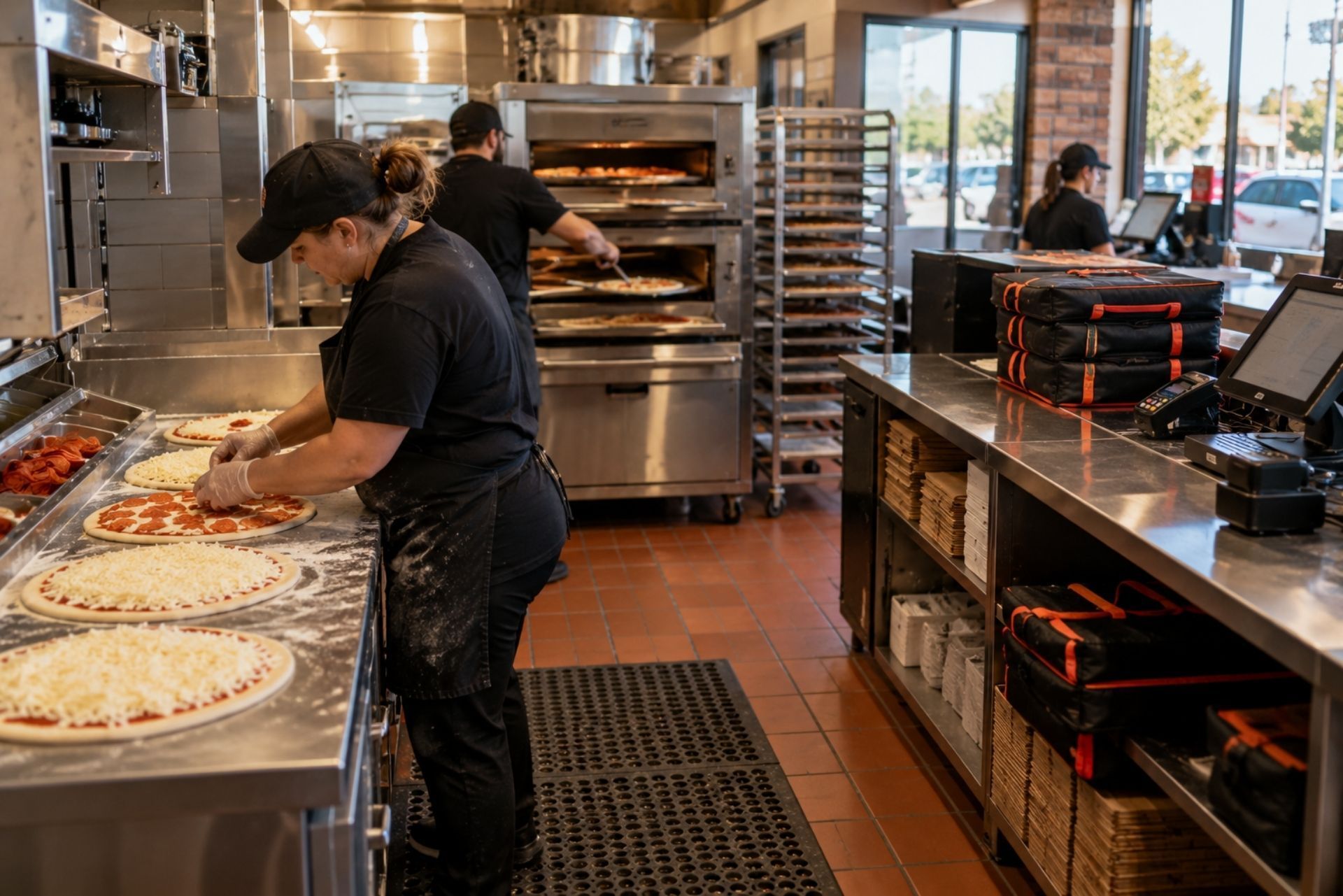
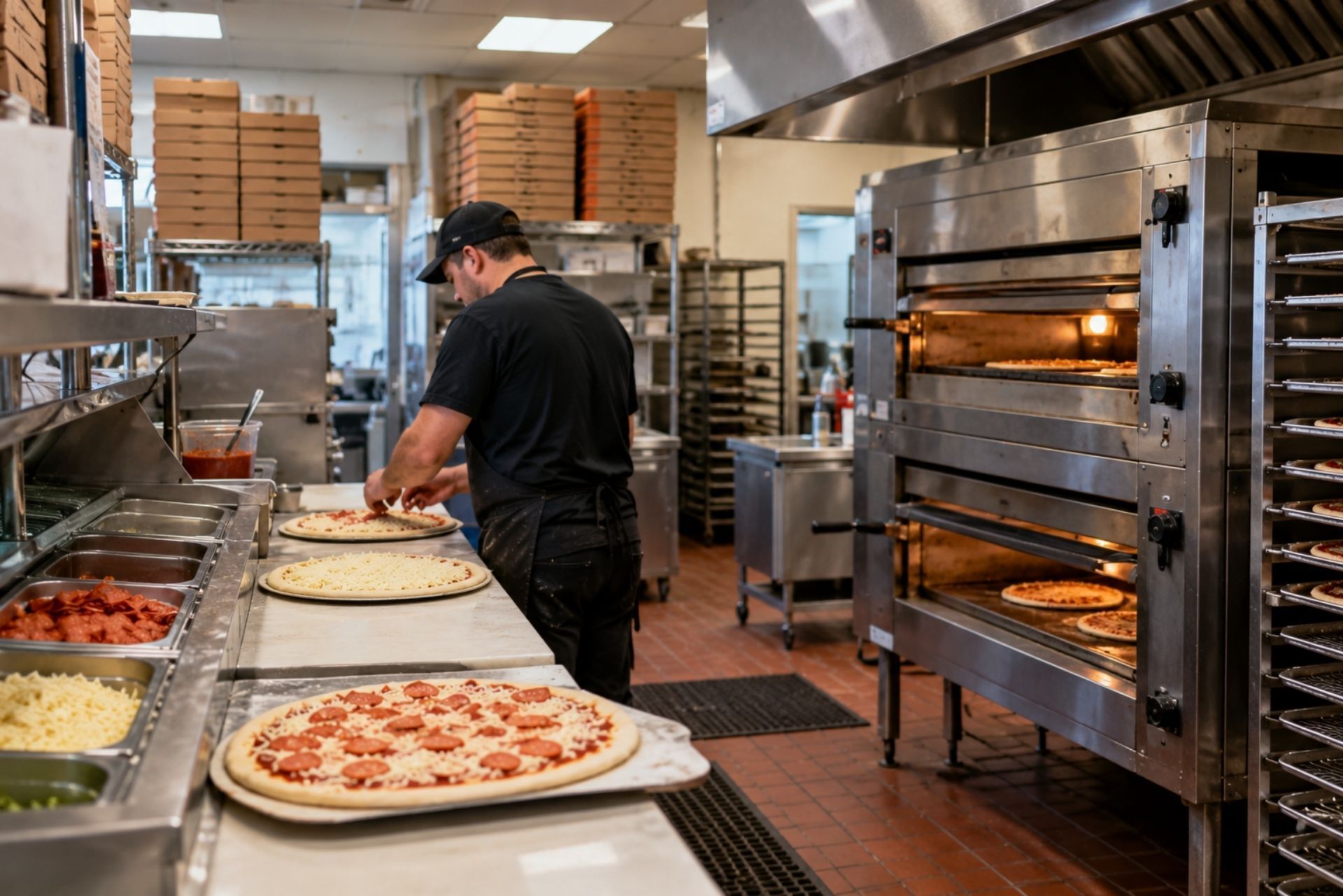
The Little Caesars model differs from most pizza franchises, and your insurance should reflect that. It runs on carryout volume, a lunch and dinner rush, and pizzas sitting ready in warmers. That means heavy foot traffic, constant oven use, and a lot of hands moving fast in a small kitchen.
Each of those traits creates a specific exposure. Busy lobbies lead to slip-and-fall claims. Conveyor ovens running for 12 or more hours a day wear out faster and draw more power. A young part-time crew working around hot surfaces and slicers produces burn and laceration injuries at a steady clip.
Here's how the main risks line up with coverage types:
- Customer injuries in the lobby or parking lot: General liability
- Illness traced to food: Product liability, usually part of the GL policy
- Fire, theft, or storm damage to the building and contents: Commercial property
- Oven, cooler, or electrical failure: Equipment breakdown endorsement
- Forced closure after a covered loss: Business interruption
- Employee injuries: Workers' compensation
- Delivery accidents in personal vehicles: Hired and non-owned auto
- Wrongful termination or harassment claims: Employment practices liability (EPLI)
A good risk management plan starts with this map. Then you match each line to a policy, confirm the limits meet franchisor and landlord minimums, and look for the overlaps and gaps between them.

By: Dustin Hulett
Founder & CEO of Cuisine Coverage
Core Liability Protections for Pizza Operations
Liability coverage is the baseline of any restaurant program. It pays legal defense costs and settlements when a customer, vendor, or member of the public says your business hurt them. For a pizza franchise, two areas matter most: physical injuries on your premises and problems traced back to your food.
General Liability and Customer Safety
Commercial general liability (CGL) covers bodily injury and property damage to third parties. The classic pizza-store claim is a customer slipping on a wet floor near the drink cooler or tripping on a curb at the drive-up window. A broken wrist can turn into a five-figure claim once medical bills, lost wages, and attorney fees are added. A hip fracture for an older customer can reach six figures.
Standard compliance for franchisees includes a CGL policy with limits of $1,000,000 per occurrence and a $2,000,000 general aggregate. Per occurrence is the most the policy pays for one incident. The aggregate is the total it pays across all claims in a policy year.
One mistake shows up again and again. Owners assume the landlord's policy covers the parking lot. Often it doesn't, or the lease shifts that responsibility onto you. Read the indemnification clause before you sign.
Product Liability and Foodborne Illness
Product liability covers injury caused by what you sell. For a pizza store, that means foodborne illness, an undeclared allergen, or a foreign object like a piece of metal from a worn mixer blade baked into the crust. These claims are usually folded into the CGL policy under the "products-completed operations" aggregate, which has its own limit.
Allergen claims deserve attention. A customer with a dairy allergy who gets cross-contaminated toppings may have a serious reaction, and the claim will look at your labeling and prep practices. Documented ServSafe training and written allergen procedures help your defense and can help with underwriting too.
Safeguarding Property and Hot-N-Ready Equipment
Your equipment package is likely the largest physical asset you own. Franchisees buy equipment and technology from the brand's required distributor, with costs between $235,000 and $460,000. If your property policy undervalues that equipment, a fire or major loss could leave you short on the funds to reopen.
Commercial property insurance covers the building (if you own it), tenant improvements, equipment, furniture, signage, and inventory against perils like fire, theft, vandalism, and wind. Most franchisees lease, so the focus shifts to business personal property and the build-out you paid for. That build-out includes branded décor, counters, menu boards, and the warmer stations that define the Hot-N-Ready format.
Insure on a replacement cost basis, not actual cash value. Actual cash value subtracts depreciation, so a three-year-old conveyor oven might pay out a fraction of what a new one costs. Keep an equipment schedule with serial numbers, invoices, and photos. Update it whenever you add or replace a unit. When a claim hits, that file speeds up the adjuster's work and closes off disputes over value.
Oven and Walk-in Cooler Breakdown Coverage
Standard property policies exclude mechanical and electrical breakdown. If your oven motor burns out or a power surge fries the cooler compressor, the base policy won't pay. You need an equipment breakdown endorsement for that.
The endorsement typically covers repair or replacement of the damaged unit, plus spoilage of food lost when refrigeration fails. Check the spoilage sublimit. A walk-in packed for a weekend rush can hold more product than a low default sublimit covers. Ask whether the policy covers losses from utility service interruption, since a neighborhood outage that spoils your inventory falls under a separate clause.
Business Interruption and Lost Revenue
Business interruption coverage replaces lost net income and pays ongoing expenses while you're closed after a covered loss. That includes rent, loan payments, and payroll for key staff you want to keep. For a store that depends on daily volume, even a two-week closure after a kitchen fire hurts.
Pay attention to the waiting period, often 72 hours, before coverage begins. Ask about extended period of indemnity too. Customers who drift to a competitor during a closure don't all come back on reopening day, and this extension covers the slow ramp back to normal sales.
Managing Delivery and Hired Auto Risks
Delivery has become a major liability area for pizza operators, and 2026 brought new pressure. If your drivers use their own cars, their personal auto policies may deny a claim that happens during business use. When that happens, the injured party comes after your business.
Hired and non-owned auto (HNOA) coverage fills that gap. It protects the business when an employee causes an accident in a vehicle the company doesn't own. It does not repair the driver's car or cover the driver's own injuries, a point many owners misunderstand. If you own delivery vehicles, you need a full commercial auto policy instead.
Driver reimbursement has also changed. A January 2026 federal court decision in New Mexico held that pizza employers must reimburse delivery drivers for actual vehicle costs such as gas, maintenance, and insurance, instead of relying on "reasonable approximations." Here's what that means for you: your reimbursement method is now a legal exposure, not just a payroll detail. Talk with an employment attorney about how the ruling applies in your state.
Before any driver takes an order out:
- Pull a motor vehicle record and set clear disqualifying criteria.
- Collect proof of personal auto insurance and track renewal dates.
- Confirm your HNOA limits match your CGL limits.
- Document your reimbursement method and review it against current law.
If you use third-party delivery apps, review those contracts. Many push liability back onto the restaurant.
Workers' Compensation and Employee Safety Standards
Workers' compensation is required in nearly every state once you have employees. It pays medical bills and lost wages for work-related injuries and, in most cases, keeps the employee from suing you directly. In a pizza kitchen, the common claims are burns from oven conveyors and pans, cuts from pizza cutters and slicers, and strains from lifting dough and cheese cases.
Your premium is based on payroll and your job classification codes. Misclassifying workers, or failing to separate drivers from in-store staff when your state allows it, can inflate or understate your premium. Either way, an audit will catch it later.
Several practices cut claims:
- Cut-resistant gloves at every prep and slicing station
- Non-slip footwear required for every shift
- Burn protection like oven mitts and sleeves near conveyor exits
- Lifting training for anyone unloading supply deliveries
- Written incident reporting so minor injuries get treated before they worsen
Employee benefits run separately from workers' comp, though both affect retention. Franchisees can access group medical, dental, and vision plans through the brand's benefits partnership. That's a meaningful recruiting tool in a tight labor market.
Don't overlook EPLI either. Restaurants with high turnover and young workers see frequent wrongful termination, harassment, and wage-related claims, which general liability excludes.
Meeting Little Caesars Corporate Insurance Requirements
Your franchise agreement sets out insurance requirements that you must meet before opening and keep in force throughout the term. Lapses can count as a default under the agreement. Treat this section of your franchise documents as seriously as your royalty terms.
The specific requirements appear in your Franchise Disclosure Document and franchise agreement. Your broker should read those documents directly, not work from a summary. Requirements change between FDD versions, and the one you signed is the one that governs.
Mandatory Minimum Coverage Limits
The general liability baseline is $1,000,000 per occurrence and $2,000,000 aggregate. Franchise agreements commonly require additional lines as well. These often include property coverage, workers' comp at statutory limits, auto liability, and umbrella or excess liability on top.
Minimums are a floor, not a target. A serious delivery accident or a multi-victim illness outbreak can exceed $1 million fast. An umbrella policy extends your liability limits over GL, auto, and employer's liability for a relatively small extra premium. Many experienced multi-unit operators carry more than the franchisor requires for exactly that reason.
Understanding Additional Insured Status
Additional insured status extends your policy's protection to another party, usually the franchisor and your landlord. If a customer sues both you and the brand over a slip in your store, your policy defends the franchisor too. That's why both parties require it.
The details matter. Look at the endorsement wording, whether coverage is primary and non-contributory, and whether a waiver of subrogation is required. Your landlord may ask for terms beyond what the franchisor requests. Lease negotiations are the time to push back on unusual demands, along with personal guarantee terms that put your own assets at risk.
Comparison: Standard vs. Comprehensive Franchise Packages
A standard package covers what the franchise agreement requires. A comprehensive package closes the gaps that cause the most painful uninsured losses. Here's how they compare:
| Coverage Area | Standard Package | Comprehensive Package |
|---|---|---|
| General liability | $1M / $2M minimum | $1M / $2M plus umbrella |
| Property valuation | Often actual cash value | Replacement cost |
| Equipment breakdown | Not included | Included with spoilage |
| Business interruption | Basic, short period | Extended period of indemnity |
| Delivery exposure | Sometimes missing | HNOA matched to GL limits |
| Employment claims | Not covered | EPLI included |
| Cyber / card data | Not covered | Data breach coverage |
| Utility outage spoilage | Excluded | Endorsed |
Many owners start with a Business Owner's Policy (BOP), which bundles general liability, property, and business interruption at a lower price than buying each separately. BOPs work well for single-unit stores. Larger operators or multi-unit owners may outgrow BOP eligibility limits and move to a commercial package policy with more flexible limits.
Cyber coverage earns its place on the comprehensive side. Online ordering and card payments create breach notification costs that general liability won't touch.
The market has shifted unevenly. Global commercial insurance rates fell 5% in the third quarter of 2026, but US casualty rates rose 1% in the same period. For franchisees, that likely means some relief on building coverage while delivery and liability costs keep climbing. Use that split to aim your cost-cutting where it'll have the most effect.
These steps produce results with underwriters:
- Bundle into a BOP where eligible to lower combined premiums.
- Maintain hood fire suppression with documented semiannual inspections.
- Certify managers in ServSafe and keep certificates on file.
- Install monitored alarms and cameras to reduce theft and fraud claims.
- Raise deductibles on property where your cash reserves can absorb it.
- Screen drivers rigorously and keep MVR records current.
- Report and document incidents promptly to keep your loss history clean.
Work with a broker who places restaurant and franchise accounts. A generalist may not know how to present your safety program, and that presentation affects pricing. Shop your policy every two to three years. Don't switch carriers every year, though, since stable relationships can help at claim time.
Frequently Asked Questions About Pizza Franchise Insurance
Do I need insurance before I sign my lease? Usually yes. Most landlords require a certificate of insurance before you get the keys or begin build-out, so start quoting early.
Does general liability cover my delivery drivers? No. General liability excludes auto accidents, so you need hired and non-owned auto or commercial auto coverage for deliveries.
Why was my spoiled food claim denied? The most common reason is a missing equipment breakdown or utility service endorsement. A base property policy often excludes refrigeration failures and off-premises power outages.
Can I use the same broker as other franchisees? Often that's a smart move. Brokers familiar with the brand already know the franchise requirements, which speeds up compliance and reduces certificate errors.
What's the difference between a BOP and a package policy? A BOP bundles standard coverages for smaller businesses at a set structure. A package policy lets you customize limits and add lines, which suits larger or multi-unit operations.
Does EPLI cover wage disputes?
Many EPLI policies exclude wage and hour claims or offer only limited defense coverage. Ask your broker specifically, given the new driver reimbursement rules.
The Bottom Line for New Franchisees
A Little Caesars store moves fast, runs hot, and serves a lot of people. Those same traits that drive sales also create the claims that hit pizza operators: lobby falls, kitchen burns, cooler failures, and delivery accidents. Meeting the franchisor's checklist keeps you compliant. It doesn't keep you protected.
Build your coverage around the real risks. Insure equipment at replacement cost, add breakdown and spoilage coverage, match your auto limits to your liability limits, and review your driver reimbursement practices against the 2026 ruling. Then put a safety program in place that underwriters can see and reward.
Your next step: pull your franchise agreement and lease, hand both to a restaurant-focused broker, and ask for a written gap analysis before your opening date. Insurance done right is part of your operating plan, protecting your investment and the customers who trust your store.
About The Author:
Dustin Hulett
As Owner of Cuisine Coverage powered by Hulett Insurance, I specialize in protecting restaurants, bars, and hospitality businesses with smart, reliable insurance solutions. With years of experience serving the food and beverage industry, my goal is to make coverage simple, transparent, and built around the unique risks that owners face every day.
Contact Us
Business Coverage
Protection for Every Part of Your Food Business
Cuisine Coverage provides specialized insurance for restaurants, food trucks, catering services, and other hospitality businesses. We help owners protect their property, staff, and reputation with policies built around the most common industry risks.

General Liability Insurance
Protects your business from claims related to injury, property damage, or accidents that happen during operations.
General Liability
Liquor Liability Insurance
Covers alcohol-related incidents for restaurants, bars, or venues that serve or sell alcohol.
Liquor Liability
Workers Compensation Insurance
Provides wage replacement and medical benefits to employees injured on the job.
Workers Compensation
Business Interruption Insurance
Helps replace lost income and cover ongoing expenses if your business operations are temporarily halted.
Business Interruption
Product Liability Insurance
Protects against claims related to foodborne illness, contamination, or product defects.
Product Liability
Cyber Liability Insurance
Covers data breaches, online payment issues, and digital risks that can affect modern food businesses.
Cyber Liability
Serving the Food and Hospitality Industry
Insurance Solutions for Every Type of Food Business
Cuisine Coverage provides specialized insurance for restaurants, cafés, and food service professionals across the country. Whether you run a casual kitchen or a mobile food truck, we offer coverage that fits your operations and risk level.
How It Works
Insurance Made Easy for Food Business Owners
We know you don’t have time to deal with complicated insurance forms. That’s why our process is built for speed and simplicity — so you can get back to running your kitchen.
Your Insurance Questions Answered
What Restaurant and Food Business Owners Ask Most
What types of insurance do restaurants and food businesses need?
Most food businesses need general liability, property, and workers’ compensation coverage. These protect against injuries, equipment damage, and employee-related incidents. Businesses serving alcohol should also include liquor liability insurance for extra protection.
Having the right mix of policies helps reduce financial risks. We’ll help you identify the specific coverages your business needs based on your setup, size, and operations.
Do you provide insurance for food trucks and mobile kitchens?
Yes. We specialize in insurance for food trucks, trailers, and mobile vendors. Our coverage includes vehicle protection, cooking equipment, and liability for events or customer interactions.
We can also help you meet licensing and vendor requirements by issuing certificates of insurance quickly — often the same day.
How fast can I get a quote or start coverage?
In most cases, quotes are ready within 24 hours once we have your business details. After approval, coverage and certificates can be issued immediately.
Our process is fully digital but supported by real agents who review each policy for accuracy. You’ll always know exactly what you’re getting before coverage starts.
Do you offer liquor liability insurance for bars or restaurants?
Yes. We provide liquor liability insurance for bars, taverns, and restaurants that sell or serve alcohol. This coverage protects against claims involving intoxicated patrons or alcohol-related incidents.
It’s essential for maintaining compliance with local laws and protecting your business from costly lawsuits. We’ll ensure your policy meets all licensing requirements.
How can I reduce my insurance costs?
You can often lower premiums by bundling multiple coverages, maintaining clean safety records, and conducting regular policy reviews. Many insurers also offer discounts for installing safety systems and training employees.
At Cuisine Coverage, we proactively review your policy before renewal to help you keep costs down without reducing protection.
Do you help with certificates of insurance (COIs)?
Yes. We provide same-day certificates for vendors, landlords, and event partners. You can request them by phone or email anytime.
Having your COI ready keeps your business compliant and avoids delays in operations. Our team handles these requests quickly so you can stay focused on running your business.
From the Kitchen to Coverage
Real Advice for the Food and Hospitality Industry
We share tips, updates, and real-world stories from the food and insurance industries. Whether you’re managing a restaurant or rolling out a food truck, our articles give you useful guidance to protect your business and grow with confidence.
Contact Us
Phone
Location