Qdoba Franchise INSURANCE
OR call us: (214) 667-2729
Most new Qdoba franchisees spend months on site selection, build-out bids, and financing, then treat insurance as a box to check the week before opening. That's backwards. The certificate of insurance often has to be approved before you get the keys, and a weak policy can leave a six-figure gap the first time a walk-in cooler fails on a Friday night.
This guide covers Qdoba
franchise insurance across property, product liability, employees, catering, delivery, and franchise requirements. It's written for people who are new to
commercial insurance but don't want a watered-down explanation. You'll see where the real gaps tend to hide, which policies franchisors and landlords expect, and how to talk to a broker without overpaying for coverage you don't need. Every recommendation here comes from the way
fast-casual claims tend to play out in practice. That means grease fires, foodborne illness complaints, slip-and-falls near the
salsa bar, and the delivery driver who rear-ends someone while carrying a
catering order for 80 people. If you're early in your planning, read it before you sign the lease.
Understanding Qdoba Franchise Insurance Requirements
Before you buy a single policy, you need to know who's setting the rules. Three parties typically dictate your minimums: the franchisor, your landlord, and your lender. Each one wants to be protected, and each one will ask for proof.
The financial stakes explain why. A traditional Qdoba restaurant carries an initial investment between $548,100 and $1,294,000, while non-traditional locations like airports or campuses run from $236,500 to $939,000. Single-unit operators also need at least $1,000,000 in net worth and $350,000 in liquid assets to qualify. The franchise system screens hard for capital because a poorly insured operator can lose that capital in a single bad claim.
Your franchise agreement will spell out required coverage types, minimum limits, and who must be named as an additional insured. Expect the franchisor to request additional insured status on your general liability policy, which means their entity can be defended under your policy if they're dragged into a lawsuit at your location. Landlords usually ask for the same thing, plus a waiver of subrogation.
Here's where new owners get burned. The lease and the franchise agreement don't always ask for the same limits, and your policy must satisfy the stricter of the two. Read both documents side by side with your broker before binding coverage.
A few practical points to check in your lease:
- Additional insured wording: Does the landlord require a specific endorsement form, or will a blanket endorsement work?
- Minimum limits: Many commercial leases ask for $1 million per occurrence and $2 million aggregate on general liability, but confirm the exact figures in your document.
- Personal guarantees: If you're signing personally, a coverage gap becomes your personal problem. Negotiate this point early.
- Notice of cancellation: Some leases require 30 days' written notice to the landlord before any policy change.

By: Dustin Hulett
Founder & CEO of Cuisine Coverage
Protecting the Physical Restaurant and Assets
Your build-out is the largest single asset you'll own, and it's the part most owners underinsure. Property coverage protects the physical restaurant, while income coverage protects the cash flow that pays your royalties, rent, and loan. You need both.
Commercial Property and Equipment Breakdown
Commercial property insurance covers your building improvements, furniture, kitchen equipment, signage, and inventory against fire, theft, vandalism, and certain weather events. If you lease, you're usually responsible for tenant improvements, which can include the custom millwork, menu boards, lighting, and branded décor that make your location look like a Qdoba.
The mistake I see constantly is insuring at a rough guess. Document every high-value item with make, model, serial number, and purchase price. That includes the flat-top grill, steam tables, the walk-in cooler, the hood and fire suppression system, the tortilla press, and POS hardware. Custom interior finishes, like reclaimed wood accents or specialty tile, cost far more to replace than generic finishes, and an adjuster won't know that unless you prove it.
Pay attention to valuation method. Replacement cost pays to replace damaged property with new property of similar quality. Actual cash value subtracts depreciation, which can leave you thousands short. Following March 2026 updates from Fannie Mae and Freddie Mac, property insurers are moving toward actual cash value for high-risk elements like roofs as a way to manage rising premiums. That shift started in the residential market, but commercial underwriters watch the same loss trends. Ask your broker directly how your roof and exterior are valued.
Equipment breakdown coverage is a separate endorsement that most owners skip until they need it. Standard property policies exclude mechanical and electrical failure. If your walk-in compressor dies, equipment breakdown pays for the repair and often the spoiled food inside, which can easily run into the thousands for a fully stocked unit of proteins, queso, and guacamole.
Business Interruption and Loss of Income
A kitchen fire doesn't just destroy equipment. It shuts you down for weeks or months while you still owe rent, loan payments, and payroll for key staff. Business income coverage replaces lost net income and pays continuing expenses during the restoration period.
Look closely at three details. The waiting period, often 72 hours, determines when coverage kicks in. The period of restoration should be long enough to cover a realistic rebuild, including franchisor approval of the new build-out. Extended period of indemnity coverage pays while your sales recover after reopening, which matters because regulars don't all come back on day one.
Civil authority and utility service interruption endorsements round out the picture. If a power outage in your strip center forces closure, or a nearby fire triggers an evacuation order, these additions can respond where the base policy won't.
Liability Coverage for Food Safety and Product Risk
General liability is the policy everyone asks for, and it's the one that responds to the most common restaurant claims. That includes a customer slipping on a wet floor near the drink station, a child burning a hand on a hot plate, or a delivery van damaging a neighbor's storefront. It also includes products-completed operations coverage, which is the part that handles foodborne illness.
Here's the nuance. Product liability for a restaurant isn't usually a separate policy. It sits inside your general liability coverage under the products-completed operations aggregate. That aggregate has its own limit, so check that it matches what your franchise agreement requires.
A food illness claim often starts small and grows. One customer reports getting sick after eating a chicken burrito bowl. The local health department investigates. Then three more people come forward, and suddenly you're facing multiple claims, a temporary closure, and local news coverage. Your liability policy covers the bodily injury claims and defense costs, but it won't cover your lost sales during the closure. That's why many operators add a contamination or food spoilage endorsement that pays for lost income and recall costs after a health-department-ordered shutdown.
Allergen exposure is another real risk. Qdoba menus include dairy, wheat tortillas, and ingredients that may contact common allergens on shared prep surfaces. A severe reaction can turn into a five-figure or six-figure claim depending on the outcome.
A few liability pieces to consider beyond the baseline:
- Liquor liability: Required if your location serves beer or margaritas. General liability typically excludes alcohol-related claims.
- Umbrella or excess liability: Sits on top of your GL, auto, and employers' liability to raise limits. Franchisors and landlords sometimes require it.
- Cyber liability: Covers data breaches involving customer payment cards and online ordering accounts.
Food safety training also shows up in pricing. Underwriters look for current ServSafe certifications, documented temperature logs, and written cleaning schedules. These records won't eliminate claims, but they help your defense and can help your renewal.
Managing Risks for Employees and Workforce
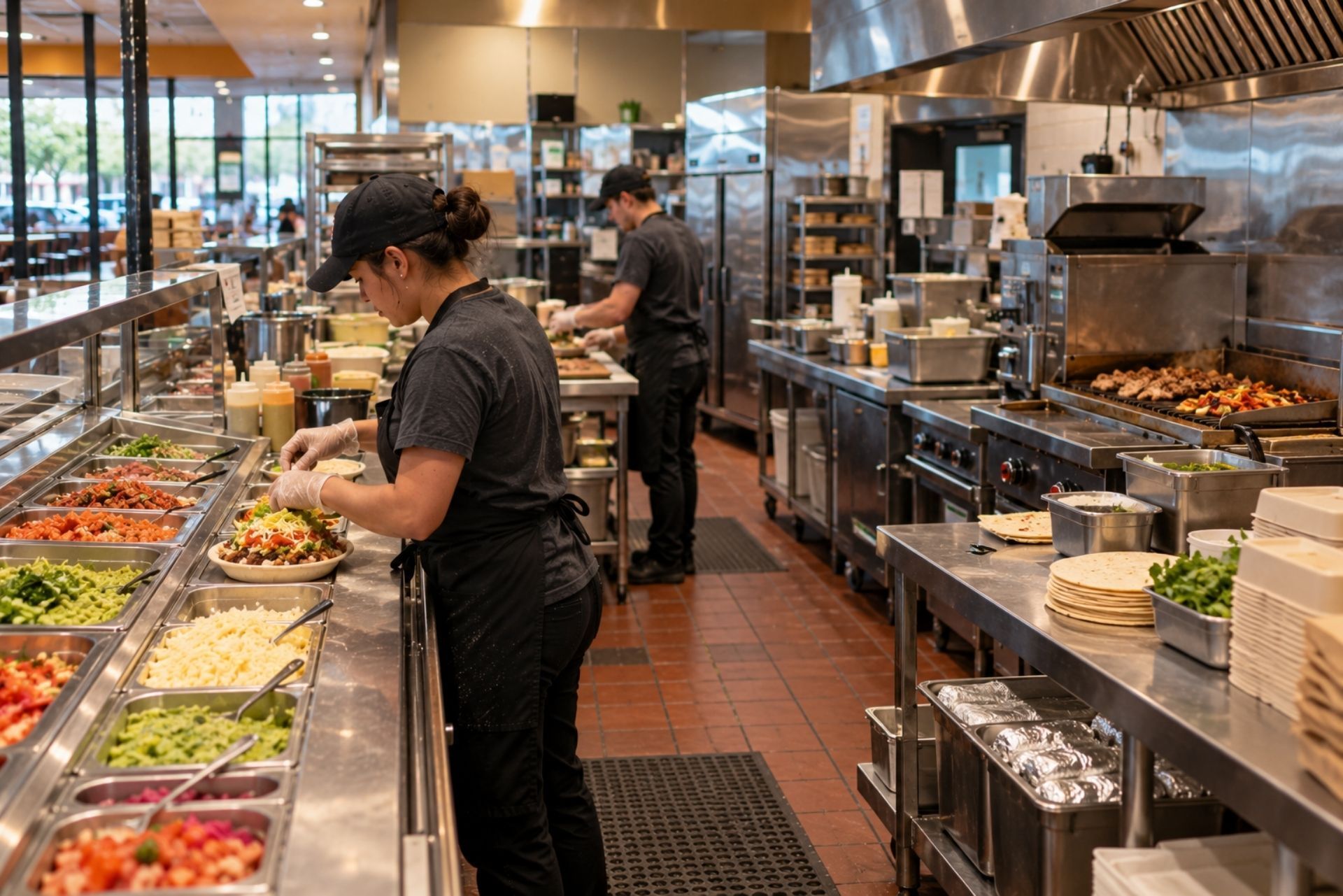
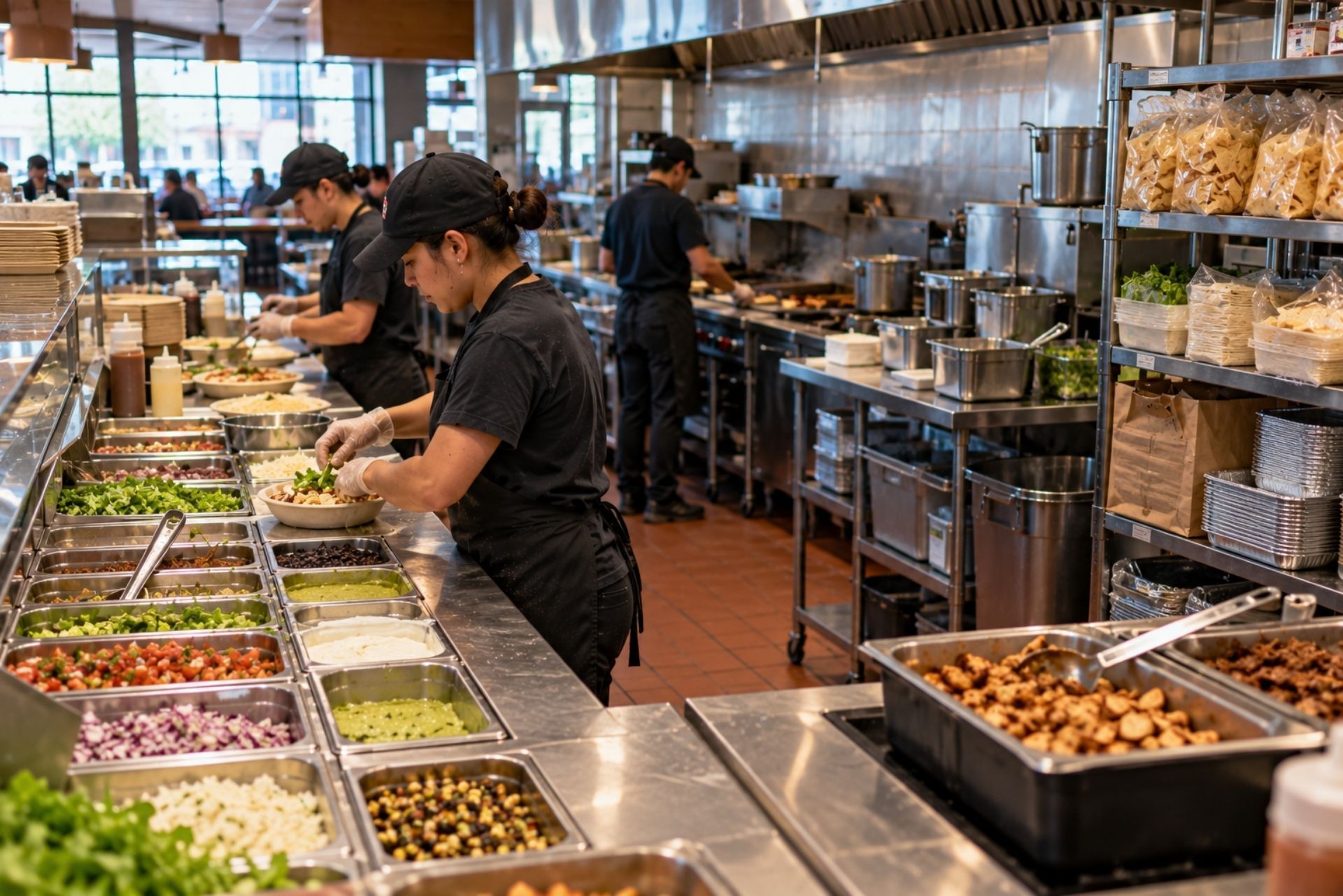
A busy Qdoba runs on hourly staff working near hot surfaces, sharp knives, and slick floors. Your workforce creates two separate risk categories: physical injuries on the job and legal claims about how you treat people. Each needs its own coverage.
Workers' Compensation and Employers' Liability
Workers' compensation pays medical bills and lost wages for employees injured at work. Common restaurant claims include knife cuts during prep, burns from the grill or fryer, back strains from lifting cases of produce, and slip-and-falls in the back of house. Part one of the policy covers those statutory benefits. Part two, employers' liability, covers lawsuits from employees alleging your negligence caused their injury.
State rules vary, and they matter. Texas is the outlier because most private employers there can choose whether to carry workers' compensation, but employers who opt out lose important legal defenses if an injured worker sues. That's a bad trade for a restaurant. Your franchise agreement will almost certainly require coverage anyway, regardless of state law.
California sits at the other end. The state treats workers' comp as a strict obligation, and licensing bodies there require proof of workers' compensation coverage or a valid exemption. Restaurant owners in California should expect careful audits and higher rates than in many other states.
Premiums are based on payroll and job classification. A common mistake is misclassifying cashiers and kitchen staff, or estimating payroll too low at policy inception. Your carrier will audit at year end, and an underestimate turns into a surprise bill. Report payroll accurately, and update your carrier when you add staff for a busy season.
Employment Practices Liability Insurance (EPLI)
EPLI covers claims related to wrongful termination, harassment, discrimination, retaliation, and failure to promote. Restaurants have high turnover and a lot of young, part-time workers, which increases the chance that someone files a complaint.
Think about a shift lead who fires an employee after a heated argument, then the employee claims the real reason was a pregnancy or a complaint about wage practices. Even if you did nothing wrong, defense costs add up fast. EPLI pays for your legal defense and any settlement.
Check whether your EPLI policy includes third-party coverage, which responds when a customer alleges harassment by your staff. Also ask about wage-and-hour defense coverage. Most EPLI policies exclude wage-and-hour claims, but some offer a limited sublimit for defense costs. Written handbooks, documented discipline, and anti-harassment training will help you get better terms at renewal.
Insuring Catering and Delivery Operations
Catering orders and delivery can lift your sales meaningfully, but they push your risk outside the four walls of the restaurant. Before you start, confirm what your franchise system allows: franchisees may only offer catering and delivery services that the franchisor has expressly approved. Running an unapproved service can create a franchise compliance problem and an insurance coverage problem at the same time.
Hired and Non-Owned Auto Liability
If your employees use their own cars to drop off catering trays or handle local delivery, you need hired and non-owned auto coverage. Franchisees offering self-delivery must carry HNOA insurance, because personal auto policies typically deny claims when the driver was making a commercial delivery.
Here's how a claim plays out in real-world context. Your employee runs a red light while delivering a 60-person office catering order and injures another driver. The employee's personal insurer denies the claim because of a business-use exclusion. The injured party then sues your restaurant. Without HNOA, you're paying defense costs and any judgment yourself.
HNOA covers your liability for accidents in vehicles you don't own, including employee cars and rented vans. It doesn't cover physical damage to the employee's car. If your business owns a branded catering van, you need a full commercial auto policy instead.
When you rely on third-party delivery apps, read the platform's terms carefully. Their coverage may protect the driver but may not name your restaurant as an insured. Ask your broker whether a contractual liability review makes sense.
Off-Premises Spoilage and Equipment Floaters
Catering creates property risks that your base policy might not reach. Chafing dishes, insulated carriers, warming boxes, and portable serving equipment travel to offices, schools, and event venues. Standard property coverage often limits or excludes property away from your premises.
An inland marine floater, sometimes called an equipment floater, follows your equipment wherever it goes. It covers theft from a delivery vehicle, damage during transport, and loss at a client's site. The cost is usually modest compared with the replacement value of a full catering kit.
Food spoilage during transport is another overlooked gap. A refrigerated van breaks down on a hot afternoon, and you lose an entire catering order plus the event revenue. Spoilage endorsements can cover the food, but read the wording, because many only respond to spoilage caused by equipment breakdown or a power outage at your premises.
Comparison of Essential vs. Comprehensive Coverage
Not every operator needs the same package on day one. The table below separates the baseline that most franchise agreements and leases require from the broader coverage that protects your income and long-term stability.
| Coverage Area | Essential (Baseline) | Comprehensive (Recommended) |
|---|---|---|
| General Liability | Per-occurrence and aggregate limits matching your lease and franchise agreement | Adds umbrella coverage and contamination endorsement |
| Property | Building improvements and equipment | Replacement cost valuation, documented custom finishes |
| Equipment Breakdown | Often excluded | Included, with spoilage coverage |
| Business Income | Basic loss of income | Extended indemnity, civil authority, utility interruption |
| Workers' Comp | Statutory coverage where required | Accurate classifications, safety programs |
| EPLI | Not always required | Includes third-party and limited wage-and-hour defense |
| Auto | HNOA if employees deliver | Commercial auto for owned vans, plus HNOA |
| Catering Equipment | Limited off-premises coverage | Inland marine floater |
| Cyber | Often skipped | Covers payment data and online ordering breaches |
A Business Owner's Policy, or BOP, can bundle general liability, property, and business income into a single policy at a lower combined cost. The catch is that some carriers won't write a BOP for a restaurant with higher sales volume or extensive cooking operations, so you may need a commercial package policy instead. Either way, bundling usually beats buying each line separately. Installing and maintaining a UL 300 compliant fire suppression system over the cooking line is one of the most effective ways to improve your property rates.
Common Questions About Qdoba Franchise Insurance
Does Qdoba require a specific insurance carrier? Franchisors usually set minimum coverage types and limits rather than naming a carrier. Check your franchise agreement for any approved vendor or rating requirements, such as a minimum carrier financial strength rating.
What happens if my insurance doesn't meet my landlord's requirements? You could be in breach of your lease, which may give the landlord the right to buy coverage and bill you or even terminate the lease. Fix gaps before signing, not after.
Will my general liability policy cover food poisoning claims? Usually yes, through the products-completed operations portion of general liability. It won't cover your lost income during a health department closure unless you add a contamination endorsement.
Do I need HNOA if I only use third-party delivery apps? It depends on the platform's terms and whether your own staff ever deliver. If an employee ever drives an order in a personal car, you need HNOA.
Why was my insurance claim denied? Common reasons include equipment breakdown exclusions, late notice of a claim, unapproved business activities, and payroll misreporting. Reading your policy exclusions with your broker before a loss prevents most surprises.
Should I use a broker who specializes in restaurants?
Yes. A broker with franchise restaurant experience will understand franchise agreement requirements, lease insurance clauses, and the specific endorsements fast-casual operations need.
What This Means for Your Business
Insurance for a Qdoba location isn't a single policy. It's a coordinated set of coverages that has to satisfy your franchisor, your landlord, and your lender while protecting the investment you've worked to build. The franchise requirements set the floor. Your actual exposure, from a failed walk-in cooler to a catering driver accident, should set the ceiling.
Start by reading your franchise agreement and lease together, then build a schedule of every piece of equipment and custom finish in the restaurant. Ask your broker hard questions about valuation methods, equipment breakdown, HNOA, and EPLI. Keep your ServSafe certifications, temperature logs, and safety records current, because they matter at renewal and in court.
Good coverage does more than satisfy a contract. It gives your customers confidence, protects your employees, and keeps your doors open when something goes wrong. Get it right before opening day, and review it every year as your sales and services grow.
About The Author:
Dustin Hulett
As Owner of Cuisine Coverage powered by Hulett Insurance, I specialize in protecting restaurants, bars, and hospitality businesses with smart, reliable insurance solutions. With years of experience serving the food and beverage industry, my goal is to make coverage simple, transparent, and built around the unique risks that owners face every day.
Contact Us
Business Coverage
Protection for Every Part of Your Food Business
Cuisine Coverage provides specialized insurance for restaurants, food trucks, catering services, and other hospitality businesses. We help owners protect their property, staff, and reputation with policies built around the most common industry risks.

General Liability Insurance
Protects your business from claims related to injury, property damage, or accidents that happen during operations.
General Liability
Liquor Liability Insurance
Covers alcohol-related incidents for restaurants, bars, or venues that serve or sell alcohol.
Liquor Liability
Workers Compensation Insurance
Provides wage replacement and medical benefits to employees injured on the job.
Workers Compensation
Business Interruption Insurance
Helps replace lost income and cover ongoing expenses if your business operations are temporarily halted.
Business Interruption
Product Liability Insurance
Protects against claims related to foodborne illness, contamination, or product defects.
Product Liability
Cyber Liability Insurance
Covers data breaches, online payment issues, and digital risks that can affect modern food businesses.
Cyber Liability
Serving the Food and Hospitality Industry
Insurance Solutions for Every Type of Food Business
Cuisine Coverage provides specialized insurance for restaurants, cafés, and food service professionals across the country. Whether you run a casual kitchen or a mobile food truck, we offer coverage that fits your operations and risk level.
How It Works
Insurance Made Easy for Food Business Owners
We know you don’t have time to deal with complicated insurance forms. That’s why our process is built for speed and simplicity — so you can get back to running your kitchen.
Your Insurance Questions Answered
What Restaurant and Food Business Owners Ask Most
What types of insurance do restaurants and food businesses need?
Most food businesses need general liability, property, and workers’ compensation coverage. These protect against injuries, equipment damage, and employee-related incidents. Businesses serving alcohol should also include liquor liability insurance for extra protection.
Having the right mix of policies helps reduce financial risks. We’ll help you identify the specific coverages your business needs based on your setup, size, and operations.
Do you provide insurance for food trucks and mobile kitchens?
Yes. We specialize in insurance for food trucks, trailers, and mobile vendors. Our coverage includes vehicle protection, cooking equipment, and liability for events or customer interactions.
We can also help you meet licensing and vendor requirements by issuing certificates of insurance quickly — often the same day.
How fast can I get a quote or start coverage?
In most cases, quotes are ready within 24 hours once we have your business details. After approval, coverage and certificates can be issued immediately.
Our process is fully digital but supported by real agents who review each policy for accuracy. You’ll always know exactly what you’re getting before coverage starts.
Do you offer liquor liability insurance for bars or restaurants?
Yes. We provide liquor liability insurance for bars, taverns, and restaurants that sell or serve alcohol. This coverage protects against claims involving intoxicated patrons or alcohol-related incidents.
It’s essential for maintaining compliance with local laws and protecting your business from costly lawsuits. We’ll ensure your policy meets all licensing requirements.
How can I reduce my insurance costs?
You can often lower premiums by bundling multiple coverages, maintaining clean safety records, and conducting regular policy reviews. Many insurers also offer discounts for installing safety systems and training employees.
At Cuisine Coverage, we proactively review your policy before renewal to help you keep costs down without reducing protection.
Do you help with certificates of insurance (COIs)?
Yes. We provide same-day certificates for vendors, landlords, and event partners. You can request them by phone or email anytime.
Having your COI ready keeps your business compliant and avoids delays in operations. Our team handles these requests quickly so you can stay focused on running your business.
From the Kitchen to Coverage
Real Advice for the Food and Hospitality Industry
We share tips, updates, and real-world stories from the food and insurance industries. Whether you’re managing a restaurant or rolling out a food truck, our articles give you useful guidance to protect your business and grow with confidence.
Contact Us
Phone
Location