Panera Franchise INSURANCE
OR call us: (214) 667-2729
A franchisee who signs for a Panera location is buying into a system that can require between $1,337,139 and $4,569,880 for a Core Bakery-Cafe in 2026. That's real estate, buildout, ovens, refrigeration and working capital tied up in one address. Yet many new operators treat insurance as a box to check before opening day, then learn about their coverage gaps during a claim.
The risks at a bakery-cafe are layered. You have high-heat equipment running before sunrise, a dining room full of customers, catering vans in traffic and a large hourly staff. The franchisor also sets minimum coverage standards, and your landlord and lender will add their own. Miss one requirement and you could face a default notice before any loss occurs.
This guide to Panera
franchise insurance covers property,
bakery equipment, liability, employees, delivery, and franchise requirements in practical terms. It's written for owners who want to understand what each policy does, where claims get denied and how to structure coverage so a single bad day doesn't erase years of equity. Think of it as risk planning, not paperwork.
Essential Insurance for Panera Bread Franchise Owners
Every Panera location needs a baseline stack of policies before the doors open. Here's what that core stack typically includes.
- Commercial property: Covers the building (if owned), tenant improvements, furniture, fixtures and inventory.
- Equipment breakdown: Pays for mechanical or electrical failure of ovens, proofers, walk-ins and HVAC.
- General liability: Handles customer injuries, like a slip near the beverage station, and property damage claims.
- Workers' compensation: Required by state law for employees in nearly every state, and essential for kitchen burns and lifting injuries.
- Hired and non-owned auto: Protects the business when staff drive personal or rented vehicles for work.
- Umbrella liability: Sits above your liability and auto policies for catastrophic claims.
- Employment practices liability (EPLI): Covers wrongful termination, harassment and discrimination allegations.
Many smaller operators start with a
Business Owner's Policy (BOP), which bundles property, liability and business interruption at a lower combined cost. The catch is that a high-volume Panera location may exceed BOP eligibility limits on revenue or square footage. In that case, you'll need a commercial package policy built from separate lines. That isn't a bad thing. It often gives you higher limits and more flexibility to add endorsements specific to bakery operations.

By: Dustin Hulett
Founder & CEO of Cuisine Coverage
Protecting the Bakery-Cafe: Property and Specialized Equipment
Property coverage is where most franchise owners underinsure. The two subsections below cover the equipment and food losses that drive the largest property claims at bakery-cafes.
Start with replacement cost valuation, not actual cash value. Actual cash value subtracts depreciation, so a five-year-old deck oven might pay out a fraction of what a new one costs. Also insure your tenant improvements fully. The custom millwork, branded menu boards, fireplace seating areas and lighting packages that Panera's design standards require can represent a large share of your buildout investment, and your landlord's policy won't cover them.
Document everything at opening. Keep invoices, serial numbers and photos for every major piece of equipment and every finish. After a fire, adjusters ask for proof of value, and owners without records end up negotiating from a weak position.
Coverage for Ovens and Industrial Kitchen Machinery
Standard property policies cover fire, theft and storm damage. They don't cover a motor burning out or a control board shorting on a rack oven. That's an equipment breakdown claim, and you need the separate coverage or endorsement to collect.
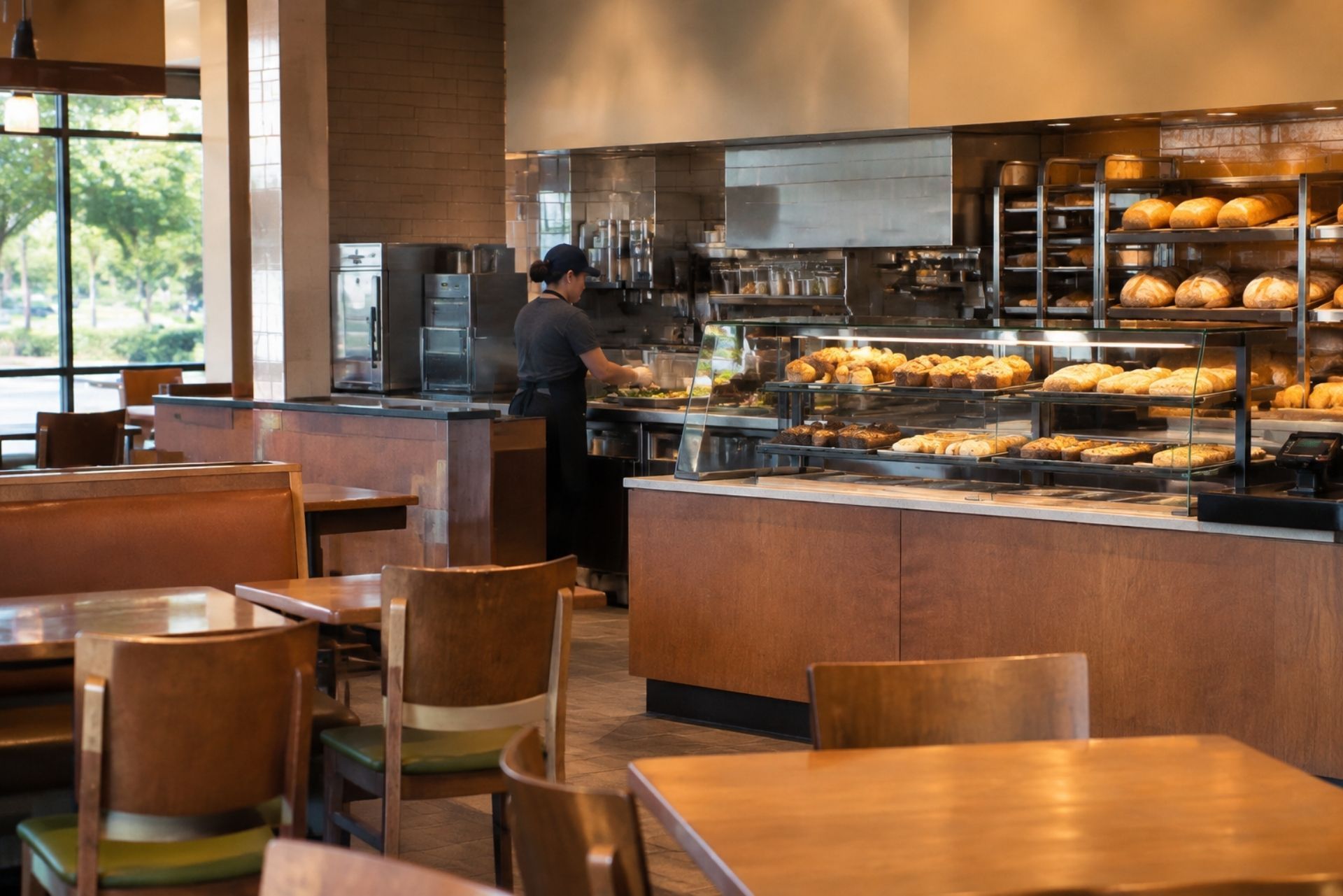
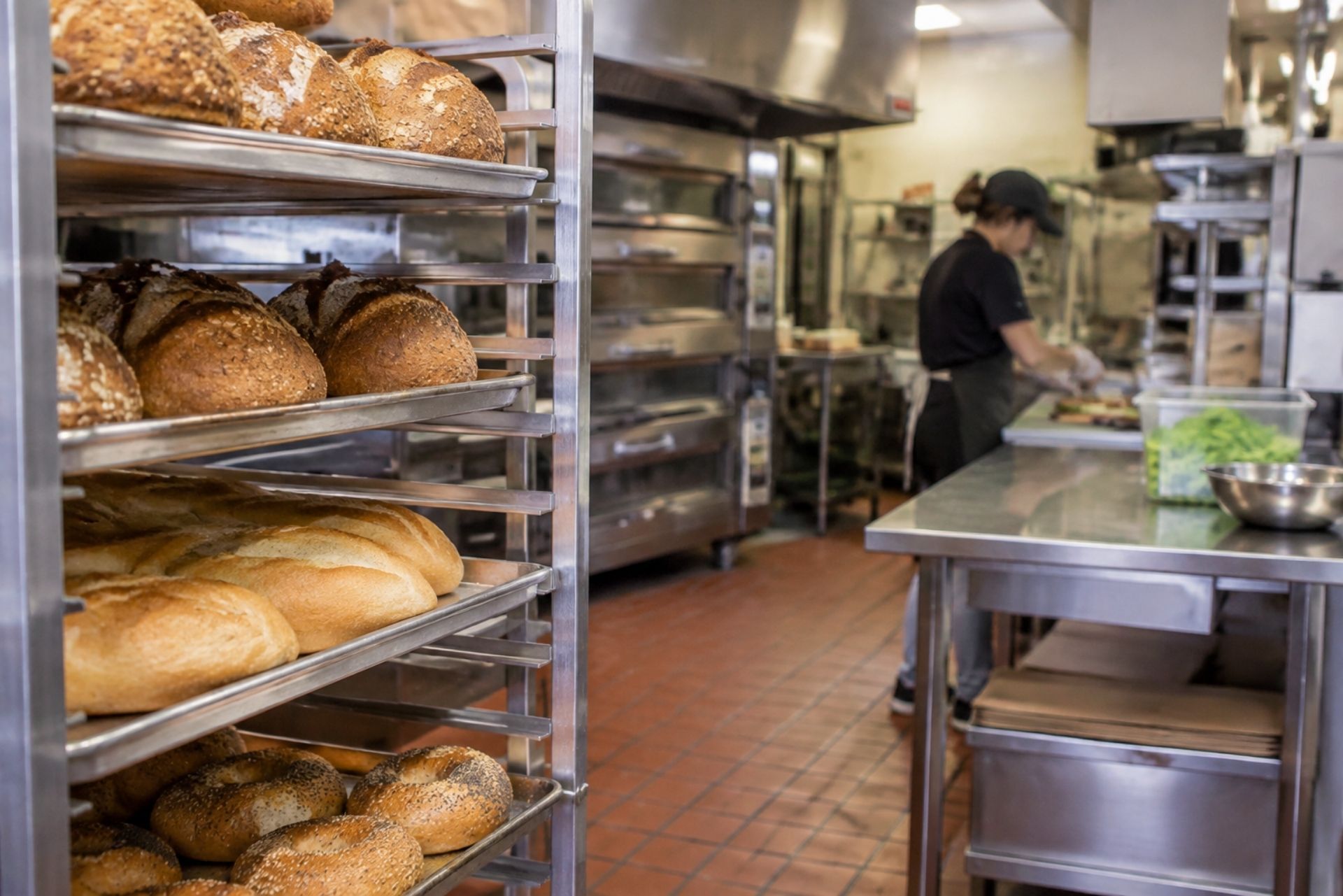
This matters more now because of how Panera bakes. The company is closing fresh dough manufacturing facilities in favor of par-baked dough partially baked and frozen by third-party suppliers. With bread finished on-site rather than made from scratch, your finishing ovens and freezer capacity become single points of failure. If an oven goes down at 5 a.m., you have no bread for the morning rush. Make sure your equipment breakdown policy includes business income coverage tied to the breakdown, not only the repair bill.
Spoilage and Food Contamination Protection
A walk-in freezer full of par-baked loaves is now one of your most valuable inventory items. A compressor failure or a utility outage over a holiday weekend can wipe it out. Spoilage coverage pays for that lost product, but read the trigger language. Some policies only cover power loss originating on your premises, which excludes a grid failure down the street. Ask for off-premises utility interruption coverage.
Food contamination coverage is different. It responds when a health department closes your location after a suspected foodborne illness, paying for disposal, cleanup, lost income and sometimes employee testing. It's often available as an endorsement at a modest cost relative to the exposure.
General Liability and Delivery Risks
General liability is your defense against third-party injury and property damage claims, and a bakery-cafe generates plenty of them. Picture a customer slipping on spilled iced tea, a child burned by a hot soup bowl or an allergic reaction tied to a mislabeled sandwich. Each can become a five-figure claim quickly, and a serious allergen case can climb far higher.
Make sure your policy includes products-completed operations coverage, which protects you after food leaves your counter. Check for liquor liability if your location ever serves alcohol at events. A common market structure for restaurant GL is $1 million per occurrence with a $2 million aggregate, though your franchise agreement and lease will dictate the actual minimums you must carry.
Pair GL with an umbrella policy. A single bad injury verdict can exceed primary limits, and the umbrella extends coverage over GL, auto and employer's liability.
Hired and Non-Owned Auto Liability for Delivery
Here's a gap that catches owners off guard. When an employee drives their own car to drop off a catering order and causes an accident, the injured party will sue your business as well as the driver. The employee's personal auto policy may deny the claim because it excludes business use.
Franchisees offering delivery or catering
must maintain Hired and Non-Owned Auto insurance to protect the business when employees use personal vehicles. HNOA doesn't repair the employee's car or cover their injuries. It covers your liability. If you own a catering van, you need a full commercial auto policy on that vehicle. For third-party delivery apps, review the platform's contract to see whose insurance applies.
Meeting Corporate Franchise and Employee Requirements
Your franchise agreement spells out required coverages, minimum limits and who must be named as additional insured. Read it alongside your lease, because both documents will impose requirements and the stricter one controls.
Expect these common requirements:
- Named additional insured status for the franchisor and your landlord on GL and umbrella policies
- Waiver of subrogation, so your insurer can't sue the franchisor or landlord after paying a claim
- Primary and non-contributory wording, meaning your policy pays first
- Certificates of insurance delivered before opening and at each renewal
- Advance notice of cancellation or material change
Landlords often push harder than franchisors. Some demand higher umbrella limits or a personal guarantee if you can't meet them. That's a negotiation point. Ask whether a higher umbrella limit can replace the guarantee.
On the employee side, workers' compensation is mandatory and claims are frequent: oven burns, knife cuts, back strains from flour and dough cases. EPLI matters with a large hourly workforce, since a wrongful termination suit can run into six figures in defense costs alone. Factor premiums into your budget alongside the ongoing 5% royalty fee on net sales and 3.5% advertising fund contribution.
Comparing Core vs. Specialized Franchise Coverage
The table below separates baseline policies from those that fill bakery-specific gaps.
| Coverage | Core or Specialized | What It Protects | Common Gap |
|---|---|---|---|
| Commercial property | Core | Building, improvements, inventory | Actual cash value instead of replacement cost |
| General liability | Core | Customer injuries, property damage | Missing products-completed operations |
| Workers' comp | Core | Employee injuries, lost wages | Misclassified payroll at audit |
| Equipment breakdown | Specialized | Oven, freezer, HVAC failure | No business income tied to breakdown |
| Spoilage | Specialized | Frozen par-baked inventory | Excludes off-premises power loss |
| Food contamination | Specialized | Health department shutdowns | Not included in base BOP |
| HNOA | Specialized | Employee driving for catering | Assumed covered by personal auto |
| EPLI | Specialized | Employment lawsuits | Excludes wage and hour claims |
| Umbrella | Core for most | Claims above primary limits | Doesn't sit over all underlying policies |
Core policies keep you compliant. Specialized ones keep you open. Most Panera operators need both.
Common Questions About Panera Franchise Insurance
Does Panera require specific insurance carriers? Franchisors usually set minimum carrier ratings and limits rather than naming a carrier. Check your franchise disclosure document for exact standards.
Can I just buy a BOP and be done? A BOP is a good start for smaller locations, but it often lacks HNOA, EPLI and adequate equipment breakdown limits. High-revenue stores may not qualify at all.
Why would a spoilage claim get denied? The most common reason is that the power failure started off your premises and the policy only covers on-site causes. Read the trigger before you buy.
Does my landlord's insurance cover my equipment? No. The landlord insures the building shell. Your ovens, furniture, improvements and inventory need your own property policy.
How can I lower my premiums? Bundle policies, keep hood fire suppression systems inspected, maintain ServSafe certification for managers and run documented safety training. Carriers reward a clean loss history.
Should I use a specialized broker? Yes. A broker who works with restaurant franchises will know common franchisor requirements and the endorsements that general agents tend to miss.
Securing Your Investment for Long-Term Growth
A Panera location represents a seven-figure commitment, and the right coverage protects that investment from a single bad event. The par-baked transition makes ovens and frozen storage more critical than ever, so equipment breakdown and spoilage coverage deserve as much attention as liability. Delivery adds auto exposure most owners don't see until an accident happens.
Insurance also builds trust. Landlords, lenders and the franchisor all want proof you're financially resilient, and customers benefit when an injury claim is handled fairly instead of turning into a dispute.
Your next steps are simple. Pull your franchise agreement and lease, list every required coverage and limit, and compare them against your current policies. Then sit down with a broker who understands bakery-cafe risks. Review coverage every year, especially when you add catering routes, remodel or open a second unit. The time to find a gap is before the claim, not after.
About The Author:
Dustin Hulett
As Owner of Cuisine Coverage powered by Hulett Insurance, I specialize in protecting restaurants, bars, and hospitality businesses with smart, reliable insurance solutions. With years of experience serving the food and beverage industry, my goal is to make coverage simple, transparent, and built around the unique risks that owners face every day.
Contact Us
Business Coverage
Protection for Every Part of Your Food Business
Cuisine Coverage provides specialized insurance for restaurants, food trucks, catering services, and other hospitality businesses. We help owners protect their property, staff, and reputation with policies built around the most common industry risks.

General Liability Insurance
Protects your business from claims related to injury, property damage, or accidents that happen during operations.
General Liability
Liquor Liability Insurance
Covers alcohol-related incidents for restaurants, bars, or venues that serve or sell alcohol.
Liquor Liability
Workers Compensation Insurance
Provides wage replacement and medical benefits to employees injured on the job.
Workers Compensation
Business Interruption Insurance
Helps replace lost income and cover ongoing expenses if your business operations are temporarily halted.
Business Interruption
Product Liability Insurance
Protects against claims related to foodborne illness, contamination, or product defects.
Product Liability
Cyber Liability Insurance
Covers data breaches, online payment issues, and digital risks that can affect modern food businesses.
Cyber Liability
Serving the Food and Hospitality Industry
Insurance Solutions for Every Type of Food Business
Cuisine Coverage provides specialized insurance for restaurants, cafés, and food service professionals across the country. Whether you run a casual kitchen or a mobile food truck, we offer coverage that fits your operations and risk level.
How It Works
Insurance Made Easy for Food Business Owners
We know you don’t have time to deal with complicated insurance forms. That’s why our process is built for speed and simplicity — so you can get back to running your kitchen.
Your Insurance Questions Answered
What Restaurant and Food Business Owners Ask Most
What types of insurance do restaurants and food businesses need?
Most food businesses need general liability, property, and workers’ compensation coverage. These protect against injuries, equipment damage, and employee-related incidents. Businesses serving alcohol should also include liquor liability insurance for extra protection.
Having the right mix of policies helps reduce financial risks. We’ll help you identify the specific coverages your business needs based on your setup, size, and operations.
Do you provide insurance for food trucks and mobile kitchens?
Yes. We specialize in insurance for food trucks, trailers, and mobile vendors. Our coverage includes vehicle protection, cooking equipment, and liability for events or customer interactions.
We can also help you meet licensing and vendor requirements by issuing certificates of insurance quickly — often the same day.
How fast can I get a quote or start coverage?
In most cases, quotes are ready within 24 hours once we have your business details. After approval, coverage and certificates can be issued immediately.
Our process is fully digital but supported by real agents who review each policy for accuracy. You’ll always know exactly what you’re getting before coverage starts.
Do you offer liquor liability insurance for bars or restaurants?
Yes. We provide liquor liability insurance for bars, taverns, and restaurants that sell or serve alcohol. This coverage protects against claims involving intoxicated patrons or alcohol-related incidents.
It’s essential for maintaining compliance with local laws and protecting your business from costly lawsuits. We’ll ensure your policy meets all licensing requirements.
How can I reduce my insurance costs?
You can often lower premiums by bundling multiple coverages, maintaining clean safety records, and conducting regular policy reviews. Many insurers also offer discounts for installing safety systems and training employees.
At Cuisine Coverage, we proactively review your policy before renewal to help you keep costs down without reducing protection.
Do you help with certificates of insurance (COIs)?
Yes. We provide same-day certificates for vendors, landlords, and event partners. You can request them by phone or email anytime.
Having your COI ready keeps your business compliant and avoids delays in operations. Our team handles these requests quickly so you can stay focused on running your business.
From the Kitchen to Coverage
Real Advice for the Food and Hospitality Industry
We share tips, updates, and real-world stories from the food and insurance industries. Whether you’re managing a restaurant or rolling out a food truck, our articles give you useful guidance to protect your business and grow with confidence.
Contact Us
Phone
Location